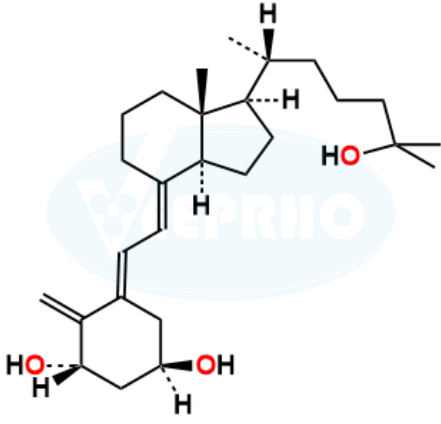
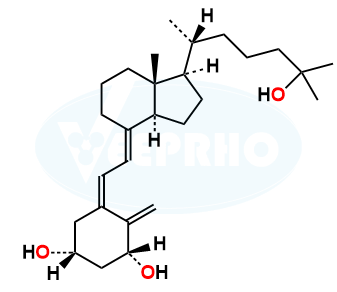
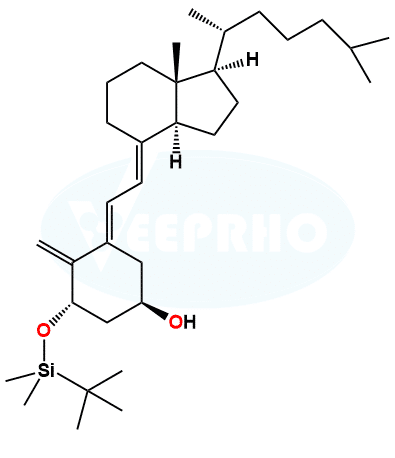
Calcitriol is the active form of vitamin D₃ (1,25-dihydroxycholecalciferol) and plays a critical role in calcium and phosphate homeostasis. It enhances the intestinal absorption of calcium and phosphate, promotes bone mineralization, and regulates parathyroid hormone (PTH) secretion. Calcitriol is used in conditions where vitamin D metabolism is impaired or where there is a need for active vitamin D analogs.
It is administered orally or intravenously, depending on the indication.
Indications include:
∙ Hypocalcemia in patients with chronic kidney disease (CKD)
∙ Secondary hyperparathyroidism
∙ Rickets or osteomalacia (vitamin D–resistant)
∙ Hypoparathyroidism
∙ Osteoporosis (as part of vitamin D supplementation in certain cases)
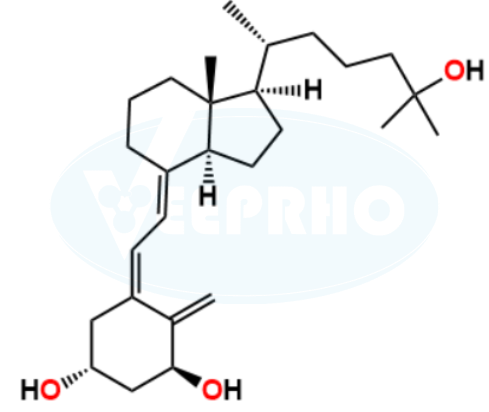
Parent: Calcitriol
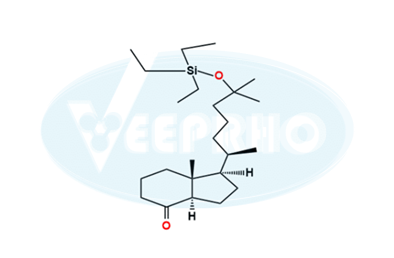
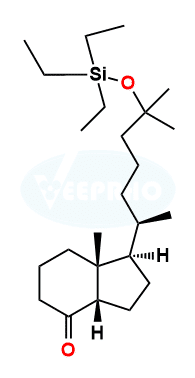
Impurities in calcitriol arise from its complex multi-step synthesis from cholesterol or other sterol precursors, and from degradation, as the molecule is highly sensitive to light, heat, and oxidation. As a potent hormone used in very low doses, impurities must be tightly controlled according to ICH Q3A/B, USP, and EP specifications.
Process-Related Impurities
Degradation Impurities
Elemental Impurities
Analytical Techniques for Impurity Detection
Calcitriol is used to manage calcium deficiency, secondary hyperparathyroidism, and bone disorders associated with impaired vitamin D metabolism, especially in patients with kidney disease.
It increases the intestinal absorption of calcium and phosphate, supports bone mineralization, and suppresses PTH secretion, helping to maintain calcium-phosphate balance.
No. Calcitriol is the active hormonal form of vitamin D₃, while over-the-counter vitamin D supplements are typically cholecalciferol (inactive form).
No. Calcitriol is light-sensitive, heat-sensitive, and easily oxidized. It should be stored in airtight, light-resistant containers, refrigerated or at controlled room temperature, depending on the formulation.