Clopidogrel, sold under the brand name Plavix among others, is an oral antiplatelet medication used to lower the risk of heart disease and stroke in individuals at high risk. It is also commonly prescribed alongside aspirin in cases of heart attack and after the placement of coronary artery stents. Clopidogrel works by preventing platelets in the blood from clumping together, which reduces the formation of harmful blood clots.
This medication is an essential component of treatment protocols for preventing cardiovascular events and improving outcomes in patients with acute coronary syndrome or those undergoing percutaneous coronary interventions.

Parent: Amlodipine

Parent: Clopidogrel

Parent: Clopidogrel Besilate / Clopidogrel

Parent: Clopidogrel

Parent: Clopidogrel

Parent: Clopidogrel

Parent: Clopidogrel

Parent: Clopidogrel

Parent: Clopidogrel

Parent: Clopidogrel

Parent: Clopidogrel

Parent: Clopidogrel

Parent: Clopidogrel Hydrochloride / Clopidogrel

Parent: Clopidogrel
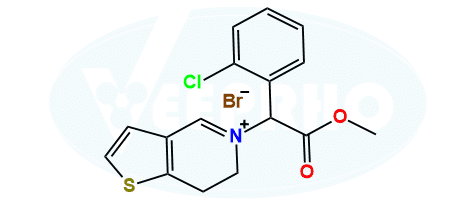
Parent: Clopidogrel

Parent: Clopidogrel

Parent: Clopidogrel

Parent: Clopidogrel

Parent: Clopidogrel

Parent: Clopidogrel

Parent: Clopidogrel

Parent: Clopidogrel

Parent: Clopidogrel

Parent: Clopidogrel

Parent: Clopidogrel

Parent: Clopidogrel

Parent: Clopidogrel

Parent: Clopidogrel

Parent: Clopidogrel
During the manufacturing and storage of clopidogrel, impurities may form that must be carefully controlled to maintain its safety, efficacy, and quality. Regulatory agencies such as the U.S. FDA and EMA have established guidelines to limit impurity levels in pharmaceutical products.
Types of Impurities in Clopidogrel
Related Substances
These are chemically similar compounds or byproducts formed during the synthesis of clopidogrel. Controlling these impurities ensures the drug’s therapeutic effectiveness and purity.
Degradation Products
Clopidogrel may degrade over time due to exposure to environmental factors like heat, light, and moisture. Degradation products can affect the stability and efficacy of the medication, necessitating proper storage.
Residual Solvents
Trace amounts of solvents used during manufacturing may remain in the final product. Regulatory standards ensure that residual solvents are within safe limits to minimize potential health risks.
Analytical Methods for Monitoring Impurities
Techniques such as High-Performance Liquid Chromatography (HPLC) and Mass Spectrometry (LC-MS) are used to identify and quantify impurities, ensuring clopidogrel meets stringent quality standards.
Avoid consuming grapefruit or grapefruit juice as it can interfere with the metabolism of clopidogrel, reducing its effectiveness. Additionally, avoid taking nonsteroidal anti-inflammatory drugs (NSAIDs) such as ibuprofen or naproxen, as these can increase the risk of bleeding.
Clopidogrel should not be taken if you have active bleeding, such as a peptic ulcer or intracranial hemorrhage. It is also contraindicated in individuals with known hypersensitivity to clopidogrel or any of its components.
The most serious adverse effect of clopidogrel is severe bleeding, which can occur in the gastrointestinal tract or other areas of the body. Rarely, it may cause a condition called thrombotic thrombocytopenic purpura (TTP), characterized by low platelet counts and blood clots in small blood vessels.
Clopidogrel is stopped 5 days before surgery to reduce the risk of excessive bleeding during the procedure. Its antiplatelet effects can last for several days after the last dose, so discontinuing it beforehand allows platelet function to partially recover.
Clopidogrel works by inhibiting the P2Y12 adenosine diphosphate (ADP) receptor on platelets, preventing platelet activation and aggregation. This reduces the formation of blood clots, lowering the risk of heart attacks and strokes.
Clopidogrel and ticagrelor are both antiplatelet medications, but ticagrelor is generally considered to have a faster onset of action and stronger antiplatelet effects. However, clopidogrel is often preferred in patients at higher risk of bleeding or those who cannot tolerate ticagrelor. The choice between these medications depends on the patient’s clinical situation and physician recommendations.


