Dexketoprofen is a nonsteroidal anti-inflammatory drug. It is manufactured by Menarini, under the tradename Keral. It is available in the UK, as dexketoprofen trometamol, as a prescription-only drug and in Latin America as Enantyum, produced by Menarini. Chemically the active moiety is the S enantiomer of ketoprofen; the trometamol salt form improves aqueous solubility and oral absorption. Dexketoprofen exerts analgesic, anti-inflammatory and antipyretic effects through inhibition of cyclooxygenase enzymes COX-1 and COX-2. Typical pharmaceutical presentation is a 25 mg immediate release dose for acute pain, with onset of analgesia commonly within 20 to 30 minutes and an elimination half-life in adults of roughly 1.5 to 2 hours. Quality control for API and finished product focuses on assay, chiral purity, related substances, residual solvents and microbial limits measured by validated HPLC, chiral chromatography and standard compendial methods.
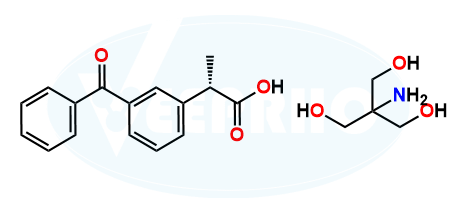
Parent: Dexketoprofen

Parent: Dexketoprofen/ Dexketoprofen Tromethamine
Typical manufacturing and pharmacopeial control strategies monitor enantiomeric and chemical related substances and set quantitative acceptance criteria to ensure safety and efficacy. Common related compounds and degradants that are assayed include the R enantiomer (R-ketoprofen), ketoprofen-related oxidation and hydrolysis products such as 4-hydroxyketoprofen, small decarboxylation products and certain process-related impurities associated with synthesis and the trometamol counterion. Typical specification ranges used by manufacturers and monographs are: enantiomeric impurity controlled at low single-digit percentages (commonly below 2.0%), individual identified impurities commonly limited in the 0.05 to 0.5 percent range and total impurities generally limited to about 1.0 percent or less; assay acceptance for the active substance is frequently in the 98.0 to 102.0 percent range. Residual solvents and elemental impurities are controlled in accordance with ICH guidance. Exact limits are product specific and defined in the product master file and applicable pharmacopeial monographs.
Dexketoprofen is used short term for the management of acute pain conditions such as musculoskeletal pain, dental pain, dysmenorrhea and postoperative pain where a rapid-acting NSAID is indicated; it is not intended for long term chronic therapy without physician oversight.
No, Both are nonsteroidal anti-inflammatory drugs and inhibit COX enzymes, but they are distinct chemical entities with different pharmacokinetic properties, potency and dosing regimens; dexketoprofen is the S enantiomer of ketoprofen while ibuprofen is a different propionic acid derivative.
Common adverse effects include gastrointestinal symptoms such as dyspepsia, nausea and abdominal pain, plus headache and dizziness; less common but serious risks include gastrointestinal bleeding and ulceration, renal impairment, hypersensitivity reactions and potential cardiovascular events in at-risk patients. Frequency and severity depend on dose, duration and individual patient risk factors.
Follow the prescribing information or a clinician’s instructions; dexketoprofen is commonly taken at the onset of acute pain and may be taken with or after food to reduce gastrointestinal discomfort, though food can modestly delay peak absorption. Do not exceed the recommended dose and consult a prescriber for timing in special populations such as the elderly, patients with renal impairment or during pregnancy.
