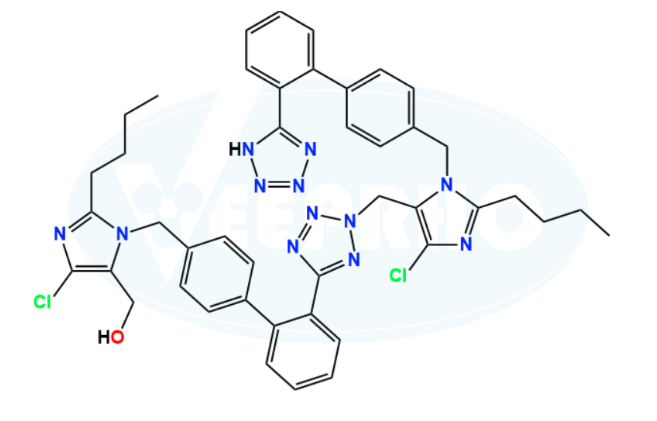
Losartan, sold under the brand name Cozaar among others, is a medication used to treat high blood pressure (hypertension). It belongs to the angiotensin receptor blocker (ARB) class of medications and works by blocking the effects of angiotensin II, a hormone that causes blood vessels to constrict. By relaxing blood vessels, losartan lowers blood pressure and reduces the risk of stroke and heart attack.
In addition to treating hypertension, losartan is considered protective of the kidneys and is commonly prescribed for patients with diabetes and proteinuria to prevent kidney damage. It is available in tablet form and is taken orally.

Parent: Losartan

Parent: Losartan

Parent: Losartan /Candesartan / Irbesartan

Parent: Losartan

Parent: Losartan

Parent: Losartan

Parent: Losartan

Parent: Losartan

Parent: Losartan

Parent: Irbesartan/ Losartan/ Valsartan
Like other pharmaceutical products, impurities may develop in losartan during manufacturing, storage, or handling. Regulatory agencies such as the U.S. FDA and EMA enforce stringent guidelines to monitor and control impurities, ensuring the medication’s safety, efficacy, and quality.
Types of Impurities in Losartan
Related Substances
These are chemically related compounds or byproducts that may form during the synthesis of losartan. Monitoring related substances is essential for maintaining the medication’s purity and effectiveness.
Degradation Products
Losartan may degrade over time due to environmental factors like light, heat, or moisture. Proper storage conditions are necessary to prevent the formation of degradation products that could compromise the medication’s stability.
Residual Solvents
Trace amounts of solvents used during the manufacturing process may remain in the final product. Regulatory standards ensure these solvents are within permissible limits to minimize risks to patients.
Analytical Techniques for Monitoring Impurities
Techniques like High-Performance Liquid Chromatography (HPLC) and Mass Spectrometry (LC-MS) are used to detect and quantify impurities, ensuring losartan meets strict quality and safety standards.
Avoid consuming grapefruit or grapefruit juice, as it may interfere with the metabolism of losartan. Additionally, limit the use of alcohol, as it can lower your blood pressure further and increase the risk of dizziness or fainting. Inform your doctor of any other medications or supplements you are taking to avoid potential interactions.
Losartan typically starts to lower blood pressure within 1 to 2 hours after the first dose, with its maximum effect occurring after 3 to 6 weeks of consistent use. Regular monitoring is important to evaluate its effectiveness and adjust the dosage if necessary.
Yes, it is advisable to limit your intake of bananas and other potassium-rich foods while taking losartan. The medication can increase potassium levels in the blood, and excessive potassium intake may lead to hyperkalemia, a potentially dangerous condition.
The amount by which losartan lowers blood pressure varies from person to person, depending on factors like baseline blood pressure, age, and other medical conditions. On average, a dose of 50 mg can lower systolic blood pressure by approximately 10-15 mmHg and diastolic pressure by 5-10 mmHg. Your doctor will determine the appropriate dose based on your individual needs.