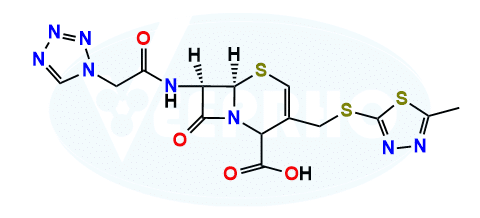
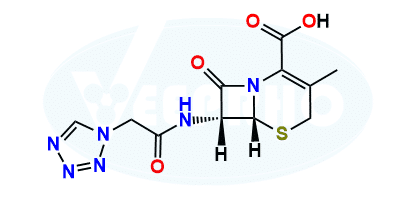
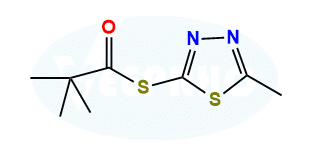
Cefazolin (also known as Cefazoline or Cephazolin) is a first-generation cephalosporin antibiotic used to treat a variety of bacterial infections. It is particularly effective against Gram-positive bacteria and is commonly used for:
• Cellulitis (skin infections)
• Urinary tract infections (UTIs)
• Pneumonia
• Endocarditis
• Joint infections
• Biliary tract infections
Cefazolin is often administered intravenously (IV) or intramuscularly (IM) and is frequently used preoperatively to prevent surgical site infections.
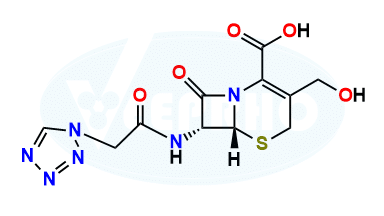
Parent: Cefazolin
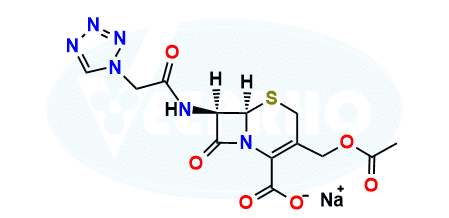
Parent: Cefazolin

Parent: Cefazolin Sodium / Cefazolin

Parent: Cefazolin
Impurities in Cefazolin can arise due to chemical synthesis, degradation, or storage conditions. Regulatory agencies such as the FDA, EMA, and ICH enforce impurity limits to ensure drug purity, stability, and efficacy.
Process-Related Impurities
• Unreacted precursors from synthesis
• Residual solvents (e.g., methanol, ethanol, acetone)
• By-products from cephalosporin ring formation
Degradation Impurities
• Hydrolysis products due to moisture exposure
• Beta-lactam ring degradation products from improper storage
• Oxidation impurities caused by light and air exposure
Elemental Impurities
• Heavy metal residues from catalysts used in synthesis
• Trace levels of lead, arsenic, cadmium, and mercury
Analytical Techniques for Impurity Detection
• High-Performance Liquid Chromatography (HPLC)
• Gas Chromatography (GC)
• Fourier-Transform Infrared Spectroscopy (FT-IR)
• Mass Spectrometry (MS)
• Check for allergies – Patients with a history of penicillin or cephalosporin allergy may have a higher risk of hypersensitivity reactions.
• Renal function monitoring – Dose adjustment is required in patients with kidney impairment to avoid toxicity.
• IV compatibility – Ensure proper dilution and administration to prevent vein irritation (phlebitis).
• Monitor for side effects – Common side effects include nausea, diarrhea, and pain at the injection site.
• Aminoglycosides (e.g., gentamicin, tobramycin) – May cause precipitation when mixed in the same IV line.
• Heparin and anticoagulants – Increased bleeding risk when used together.
• Lactated Ringer’s solution – Cefazolin may precipitate in LR solution, so normal saline (NS) or dextrose (D5W) is preferred.
• Probenecid – May increase cefazolin levels and prolong its effects.
• Monitor for allergic reactions – Watch for rash, itching, swelling, or anaphylaxis.
• Renal function tests – Check creatinine and BUN in patients with kidney disease.
• Injection site reactions – Observe for pain, swelling, or redness if given IV/IM.
• Superinfections – Look for signs of secondary infections, such as yeast infections or Clostridium difficile-associated diarrhea (CDAD).
• In patients with a known severe cephalosporin allergy (risk of anaphylaxis).
• In patients with serious penicillin allergies (cross-reactivity may occur).
• In neonates with hyperbilirubinemia (risk of bilirubin displacement and toxicity).
• In cases of severe renal impairment without dose adjustment (may lead to drug accumulation and toxicity).