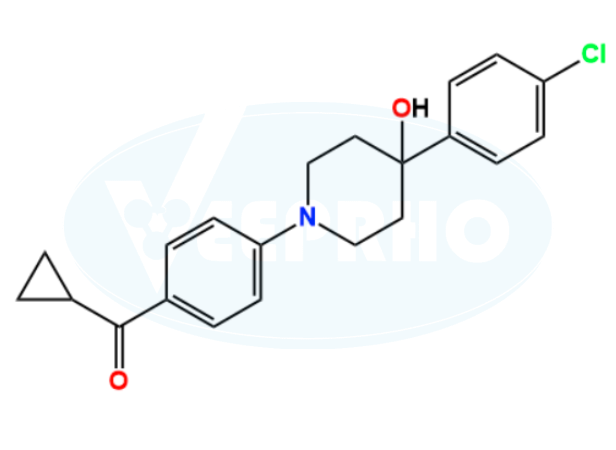
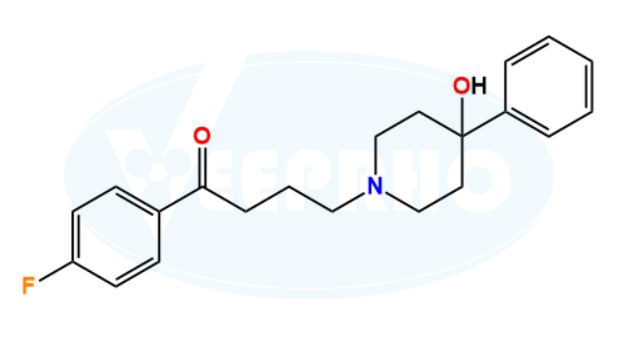
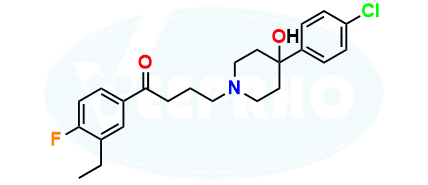
Haloperidol, sold under the brand name Haldol among others, is a typical (first-generation) antipsychotic medication used to manage a range of psychiatric and neurological disorders. It works by blocking dopamine D2 receptors in the brain, helping to reduce psychotic symptoms.
Haloperidol is commonly prescribed for:
• Schizophrenia and schizoaffective disorder
• Mania in bipolar disorder
• Delirium and agitation
• Acute psychosis
• Tics and vocal outbursts in Tourette syndrome
• Severe behavioral issues
• Alcohol withdrawal-induced hallucinations
It is available in oral tablets, injectable forms (IM/IV), and long-acting depot formulations.

Parent: Haloperidol

Parent: Haloperidol

Parent: Haloperidol

Parent: Haloperidol

Parent: Haloperidol / Haloperidol Decanoate
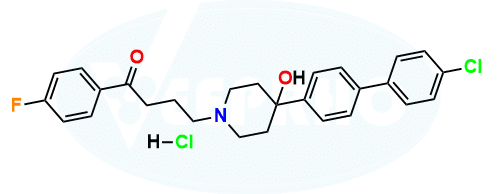
Parent: Haloperidol

Parent: Haloperidol
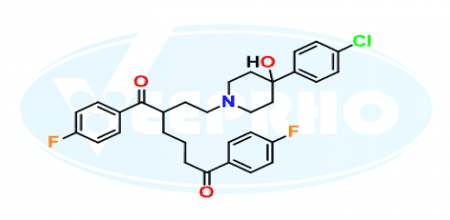
Parent: Haloperidol

Parent: Haloperidol

Parent: Haloperidol

Parent: Haloperidol
Impurities in Haloperidol can arise from synthetic steps, degradation during storage, or formulation interactions. Regulatory bodies such as the FDA, EMA, and ICH require tight control of these impurities to ensure safety and therapeutic reliability.
Process-Related Impurities
• Unreacted starting materials in butyrophenone synthesis
• Residual solvents (e.g., methanol, ethyl acetate)
• By-products of ketone and halogen substitution reactions
Degradation Impurities
• Oxidative degradation from exposure to light or oxygen
• Hydrolysis products in moist conditions
• Thermal degradation during improper storage or transport
Elemental Impurities
• Trace levels of heavy metals (e.g., arsenic, cadmium, mercury, lead) from catalysts or equipment
Analytical Techniques for Impurity Detection
• High-Performance Liquid Chromatography (HPLC)
• Gas Chromatography (GC)
• Mass Spectrometry (MS)
• Fourier-Transform Infrared Spectroscopy (FT-IR)
Avoid combining Haloperidol with:
• CNS depressants (e.g., alcohol, benzodiazepines, opioids) — may increase sedation and respiratory depression
• Drugs that prolong the QT interval (e.g., amiodarone, quinidine, methadone) — risk of serious heart arrhythmias
• Levodopa or dopamine agonists — may reduce effectiveness of both drugs
• Certain antidepressants (e.g., SSRIs) — increased risk of serotonin syndrome or cardiac effects
• Always consult a healthcare provider for drug interaction screening.
An overdose of Haloperidol can cause:
• Severe extrapyramidal symptoms (rigidity, tremors, dystonia)
• Extreme sedation or coma
• Respiratory depression
• Low blood pressure or cardiac arrhythmias
• Neuroleptic malignant syndrome (rare but life-threatening)
• Seek emergency medical help immediately if overdose is suspected.
• Oral haloperidol usually starts working within 30 to 60 minutes, with peak effects around 2 to 6 hours.
• Intramuscular (IM) injection works faster, often within 15 to 30 minutes for acute agitation or psychosis.
• Long-acting depot injections take several days to reach steady levels but last 2 to 4 weeks per dose.
Haloperidol should be avoided in:
• Patients with Parkinson’s disease or Lewy body dementia — may worsen motor symptoms
• Those with prolonged QT interval or a history of torsades de pointes
• Individuals with severe CNS depression or coma
• Children under 3 years old, unless specifically directed
• Patients with known hypersensitivity to haloperidol or its components