Amidotrizoic acid dihydrate, also known as diatrizoic acid dihydrate, is an iodinated contrast agent used in radiographic imaging. It belongs to the water-soluble ionic contrast media class and contains three iodine atoms per molecule, making it highly radiopaque.
It is commonly used in formulations like amidotrizoate meglumine or amidotrizoate sodium for oral or injectable administration, depending on the diagnostic requirement.
Indications include:
∙ Gastrointestinal tract imaging (oral or rectal administration)
∙ Intravenous urography
∙ Angiography and pyelography (when formulated with suitable salts)

Parent: Amidotrizoic Acid Dihydrate

Parent: Amidotrizoic Acid Dihydrate
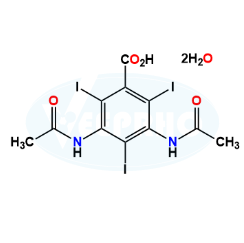
Parent: Amidotrizoic Acid

Parent: Amidotrizoic Acid Dihydrate

Parent: Amidotrizoic Acid Dihydrate
Impurities in amidotrizoic acid dihydrate can arise from the iodination process, side-chain modifications, and hydration state variations. Due to its use in injectable or ingestible medical diagnostics, impurity control is regulated under strict USP, EP, and ICH Q3A/B standards.
Process-Related Impurities
Degradation Impurities
Elemental Impurities
Analytical Techniques for Impurity Detection
It is used in diagnostic radiology as a contrast agent, especially for visualizing the gastrointestinal tract, urinary system, and blood vessels during X-ray or CT scans.
It contains iodine atoms that absorb X-rays, thereby increasing contrast in imaging and allowing clearer visualization of internal organs and structures.
Yes, but only in appropriate salt forms (e.g., amidotrizoate sodium or meglumine). Caution is needed in patients with renal impairment or iodine sensitivity.
Store at room temperature, protected from light and moisture, in airtight containers to maintain its dihydrate form and iodine stability.

