Chlorprothixene, sold under the brand name Truxal among others, is a typical antipsychotic of the thioxanthene group. It is a tricyclic thioxanthene derivative bearing a tertiary amine side chain that confers basicity and central nervous system penetration; pharmacologically it acts primarily as a dopamine D2 receptor antagonist with notable antagonism at histamine H1, muscarinic cholinergic, and alpha1-adrenergic receptors, which contributes to its sedative, anticholinergic, and orthostatic hypotension effects; it is commonly formulated as the maleate salt for oral and parenteral administration and is characterized by high lipophilicity, good blood brain barrier permeability, and hepatic metabolism to N-desalkylated and oxidized metabolites.

Parent: Chlorprothixene

Parent: Chlorprothixene

Parent: Chlorprothixene
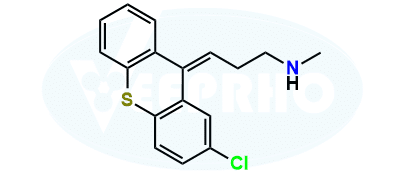
Parent: Chlorprothixene

Parent: Chlorprothixene
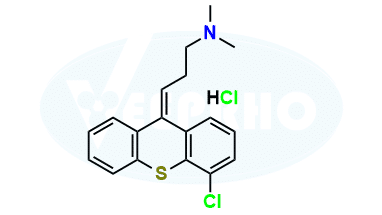
Parent: Chlorprothixene

Parent: Chlorprothixene

Parent: Chlorprothixene

Parent: Chlorprothixene

Parent: Chlorprothixene
Known related substances and degradation products for chlorprothixene include N-desmethyl (nor) chlorprothixene, sulfoxide and higher oxidation products, N-oxide species, minor thioxanthene ring impurities and a limited set of process-related intermediates such as chlorinated thioxanthene variants; typical quality specifications applied in analytical control follow ICH impurity conventions with reporting thresholds at 0.05 percent, identification commonly required at 0.2 percent and qualification thresholds often at 0.5 percent unless a lower dose-based limit applies, and routine finished material specifications frequently limit individual unspecified impurities to not more than 0.1 to 0.2 percent and total impurities to not more than about 1.0 percent w/w while also controlling residual solvents and elemental impurities to pharmacopeial limits.
Chlorprothixene is used clinically as an antipsychotic agent for the management of schizophrenia and other psychotic disorders and, in some regions, for severe agitation or behavioral disturbance; it has also been used off-label for short term symptomatic relief of severe insomnia or anxiety when sedation is required, but its use should be guided by an appropriate prescriber and local regulatory approvals.
Chlorprothixene exerts antipsychotic effects primarily by blocking dopamine D2 receptors in the central nervous system, reducing dopaminergic neurotransmission in pathways implicated in psychosis; concomitant antagonism at histamine H1, muscarinic cholinergic and alpha1-adrenergic receptors contributes to sedation, anticholinergic side effects and cardiovascular effects respectively.
Alternatives include other typical antipsychotics such as haloperidol, perphenazine or fluphenazine and atypical antipsychotics such as risperidone, olanzapine or quetiapine; choice of agent depends on the clinical indication, side effect profile, patient comorbidities and local treatment guidelines, so selection should be made by a clinician.
Yes, chlorprothixene, like other typical antipsychotics, carries a risk of tardive dyskinesia, a potentially persistent involuntary movement disorder associated with long term dopamine receptor blockade; risk increases with cumulative exposure and duration of treatment and patients should be monitored regularly for early signs of abnormal involuntary movements.
