Ethacrynic acid, also known as etacrynic acid and sold under the brand name Edecrin, is a loop diuretic used to treat conditions like high blood pressure and edema (swelling) associated with congestive heart failure, liver failure, and kidney failure. It works by increasing the excretion of water and electrolytes, such as sodium and potassium, from the kidneys, thereby reducing fluid retention and lowering blood pressure.
Ethacrynic acid is unique among loop diuretics because it is not a sulfonamide (sulfa drug), making it an alternative for patients with sulfa allergies.

Parent: Ethacrynic Acid
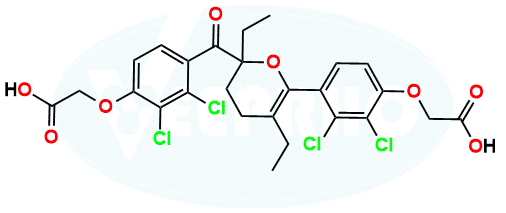
Parent: Ethacrynic Acid

Parent: Ethacrynic Acid

Parent: Ethacrynic Acid

Parent: Ethacrynic Acid

Parent: Ethacrynic Acid
As with all pharmaceutical compounds, impurities may develop in ethacrynic acid during manufacturing, storage, or handling. Regulatory authorities enforce stringent guidelines to monitor and control these impurities, ensuring the medication’s safety, efficacy, and quality.
Related Substances
These are chemically related compounds or byproducts formed during the synthesis of ethacrynic acid. Monitoring these related substances ensures the drug’s purity and therapeutic effectiveness.
Degradation Products
Ethacrynic acid may degrade over time due to exposure to environmental factors like heat, light, or moisture. Proper storage conditions are essential to prevent the formation of degradation products that could compromise the medication’s stability and safety.
Residual Solvents
Trace amounts of solvents used in the manufacturing process may remain in the final product. Regulatory standards ensure these solvents are within permissible limits to minimize risks to patients.
Analytical Techniques for Monitoring Impurities
Techniques such as High-Performance Liquid Chromatography (HPLC) and Mass Spectrometry (LC-MS) are used to detect and quantify impurities, ensuring ethacrynic acid meets stringent safety and quality standards.
Ethacrynic acid is used to treat high blood pressure and edema (fluid retention) caused by conditions such as congestive heart failure, liver failure, and kidney failure. It helps remove excess fluid and reduce swelling by promoting the excretion of water and electrolytes through the kidneys.
Ethacrynic acid inhibits the sodium-potassium-chloride co-transporter in the thick ascending loop of Henle in the kidneys. This action reduces sodium and chloride reabsorption, leading to increased water excretion and diuresis, which helps alleviate fluid retention and lower blood pressure.
No, ethacrynic acid is not a sulfa drug. Unlike other loop diuretics, it does not contain a sulfonamide group, making it a suitable option for patients with sulfa allergies.
Yes, ethacrynic acid is still used, although its use is less common due to the availability of newer loop diuretics. It remains a valuable option for patients who are allergic to sulfonamide-based diuretics or have specific medical conditions requiring its use.


