
Clevidipine-Verunreinigungen
Angebot für ein Set anfordern
- Angebot für dieses Set anfragen
Alle Nitrosamin-Verunreinigungen von Clevidipine
2 ProdukteDie 2 Produkte ansehen


1–14 von 14 Ergebnissen13 auf Lager
| Struktur | Produktname |
|---|---|
 | cis-Clevidipine Impurity 13VE0013777 · Auf Lager |
| Clevidipine Impurity 1CAS-Nr. 123853-39-4 · VE0013783 · Auf Lager | |
 | Clevidipine Impurity 2CAS-Nr. 253597-19-2 · VE0013784 · Auf Lager |
| Clevidipine Impurity 4CAS-Nr. 253597-20-5 · VE0013785 · Auf Lager | |
| Clevidipine Impurity 5CAS-Nr. 188649-48-1 · VE0013786 · Auf Lager | |
| Clevidipine Impurity 6CAS-Nr. 138279-32-0 · VE0013787 · Auf Lager | |
| Clevidipine Impurity 7CAS-Nr. 91854-02-3 · VE0013770 · Auf Lager | |
| Clevidipine Impurity 8CAS-Nr. 105383-68-4 · VE0013772 · Auf Lager | |
| Clevidipine Impurity 10CAS-Nr. 175688-79-6 · VE0018341 · Auf Lager | |
| Clevidipine Impurity 13 (Mixture of cis and trans Isomers)CAS-Nr. 1801167-49-6 · VE0013774 · Auf Lager | |
 | Clevidipine Impurity 15VE0013775 · Auf Lager |
| N-Nitroso ClevidipineVE0014062 | |
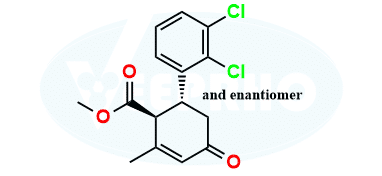 | trans-Clevidipine Impurity 13VE0013779 · Auf Lager |
| (Butyryloxy)methyl (Z)-2-(2,3-dichlorobenzylidene)-3-oxobutanoateCAS-Nr. 1346550-33-1 · VE0028174 · Auf Lager |
Clevidipine Related Compound
Impurities in clevidipine arise from its multi-step chemical synthesis, including esterification, nitration, and dihydropyridine ring formation, and from degradation, especially due to its ester moieties, which are hydrolytically unstable. As it is used intravenously in critically ill patients, impurity control must comply with ICH Q3A/B, USP, EP, and injectable drug regulations.
Types of Impurities in Clevidipine
Process-Related Impurities
- Residual starting materials like aryl aldehydes, malonates, or acid chlorides
- By-products from esterification, reduction, or ring cyclization steps
- Residual solvents such as methanol, ethyl acetate, or acetone
Degradation Impurities
- Hydrolysis products: primarily clevidipine carboxylic acid and clevidipine alcohol
- Oxidation products of the dihydropyridine ring
- Photodegradation under light exposure
- Isomeric impurities or tautomers under extreme pH or thermal conditions
Elemental Impurities
- Trace metals like iron, copper, or zinc from manufacturing equipment
- Controlled under ICH Q3D, with strict parenteral exposure limits
Analytical Techniques for Impurity Detection
- High-Performance Liquid Chromatography (HPLC) – for assay and related substances
- LC-MS/MS – for identifying low-level and unknown impurities
- Gas Chromatography (GC) – for residual solvent analysis
- ICP-MS – for elemental impurity detection
- Photostability and hydrolytic stress studies – due to high degradation sensitivity
Häufige Fragen
What is Clevidipine used for?
Clevidipine is used to rapidly and safely lower blood pressure in patients with severe hypertension , particularly during surgery or in critical care .
How does Clevidipine work?
It blocks L-type calcium channels in vascular smooth muscle , causing arterial vasodilation and reduction in systemic vascular resistance .
What are common side effects of Clevidipine?
Hypotension Reflex tachycardia Nausea Fever or injection site reactions Rare: Atrial fibrillation or allergic response to lipid emulsion
Is Clevidipine suitable for long-term use?
No. Due to its short half-life (1–2 minutes) and formulation as a lipid emulsion , it is indicated for short-term IV use only .
Is Clevidipine chemically stable?
No. It is highly sensitive to hydrolysis and light , and should be stored in its original light-protective vials under refrigerated conditions (2–8°C) . Once opened, the emulsion must be used within 12 hours .