
Desipramine-Verunreinigungen
Angebot für ein Set anfordern
- Angebot für dieses Set anfragen
Alle Nitrosamin-Verunreinigungen von Desipramine
7 ProdukteDie 7 Produkte ansehen
- N-Nitroso Clomipramine Impurity 5 VE009788
- N-Nitroso Clomipramine Impurity 11 VE009789
- N-Nitroso Desipramine VE0014166
CAS 57164-17-7 - Nitroso-DMPC Impurity VE007762
- 1-(5-Nitroso-10,11-dihydro-5H-dibenzo[b,f]azepin-3-yl)ethan-1-one VE009782
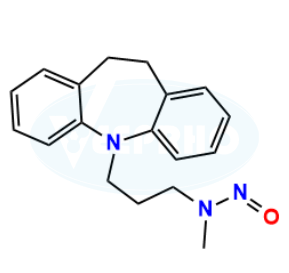
- N-(3-(10,11-dihydro-5H-dibenzo[b,f]azepin-5-yl)propyl)-N-methylnitrous amide VE009806
- N-(3-chloropropyl)-N-methylnitrous amide VE009809


1–12 von 12 Ergebnissen12 auf Lager
| Struktur | Produktname |
|---|---|
| Dehydro Desipramine ImpurityCAS-Nr. 2010-13-1 · VE008104 · Auf Lager | |
| Desipramine Ethyl CarbamateCAS-Nr. 27097-69-4 · VE0020728 · Auf Lager | |
| N-(3-(10,11-dihydro-5H-dibenzo[b,f]azepin-5-yl)propyl)-N-methylnitrous amideVE009806 · Auf Lager | |
| N-(3-chloropropyl)-N-methylnitrous amideVE009809 · Auf Lager | |
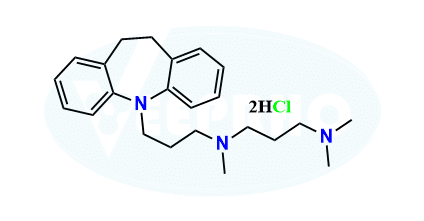 | N-(3-Dimethylaminopropyl)desipramine (2HCl)CAS-Nr. 1838-02-4 · VE0014368 · Auf Lager |
| N-Nitroso Clomipramine Impurity 5VE009788 · Auf Lager | |
| N-Nitroso Clomipramine Impurity 11VE009789 · Auf Lager | |
| N-Nitroso DesipramineCAS-Nr. 57164-17-7 · VE0014166 · Auf Lager | |
| Nitroso-DMPC ImpurityVE007762 · Auf Lager | |
| 1-(5-Nitroso-10,11-dihydro-5H-dibenzo[b,f]azepin-3-yl)ethan-1-oneVE009782 · Auf Lager | |
| 2-Hydroxy DesipramineCAS-Nr. 1977-15-7 · VE0014366 · Auf Lager | |
 | 2-Hydroxy Desipramine GlucuronideCAS-Nr. 25521-31-7 · VE0014367 · Auf Lager |
Desipramine and Related Compound
Typical pharmaceutical specifications for desipramine drug substance and finished product identify and control related compounds such as imipramine (parent tertiary amine), N-oxides, hydroxylated metabolites and positional isomers; assay purity is commonly specified at greater than 98.0 percent. Typical limits applied during manufacture and quality control follow ICH guidance ranges, for example specified related compounds often limited to 0.2 percent or less each, unspecified individual impurities reported at or above 0.05 to 0.10 percent, and total impurities usually kept below about 1.0 percent, with the final limits set by product specific pharmacopeial monographs and regulatory filings; routine impurity profiling is performed by HPLC with LC-MS confirmation for unknowns and by appropriate stability stress testing.
Häufige Fragen
What is the mechanism of action of desipramine?
Desipramine primarily inhibits the norepinephrine transporter, increasing synaptic norepinephrine concentration; it has relatively low affinity for the serotonin transporter compared with many other antidepressants, and additionally produces measurable antagonism at alpha1-adrenergic receptors and weak H1 and muscarinic blockade, which contribute to its side effect profile and clinical effects.
Does desipramine cause weight gain?
Some patients experience weight gain during treatment with desipramine, but the effect is variable; compared with certain tertiary amine TCAs and some antipsychotics, desipramine tends to have less antihistaminic and anticholinergic activity and therefore may cause less sedation related appetite increase, yet long term use can still be associated with weight changes.
What is another name for desipramine?
Desipramine is marketed under the brand name Norpramin among others and is also chemically referred to as N-desmethylimipramine.
Can desipramine help with anxiety?
Desipramine can reduce anxiety symptoms when they occur as part of depressive illness and has been used in certain anxiety-related conditions, but it is not the first line choice for many primary anxiety disorders; treatment response depends on the anxiety subtype and individual tolerability, and clinicians often prefer SSRIs or SNRIs for primary anxiety disorders because of tolerability and established efficacy data.