
Doxepin-Verunreinigungen
Angebot für ein Set anfordern
- Angebot für dieses Set anfragen
Alle EP-Verunreinigungen von Doxepin
6 ProdukteDie 6 Produkte ansehen
- Doxepin EP Impurity A VL2860003
CAS 4504-87-4 - Doxepin EP Impurity B VL2860004
CAS 4504-88-5 - Doxepin EP Impurity C (Free Base) VE0020780
CAS 67035-76-1 - Doxepin EP Impurity C (HCl Salt) VL2860005
CAS 4504-96-5 - Doxepin EP Impurity C (Maleate Salt) VE0022385
- Doxepin EP Impurity D VL2860002
CAS 25127-31-5
- Doxepin EP Impurity A VL2860003
- Angebot für dieses Set anfragen
Alle USP-Verunreinigungen von Doxepin
5 ProdukteDie 5 Produkte ansehen
- Doxepin EP Impurity A VL2860003
CAS 4504-87-4 - Doxepin EP Impurity B VL2860004
CAS 4504-88-5 - Doxepin EP Impurity C (HCl Salt) VL2860005
CAS 4504-96-5 - Doxepin EP Impurity C (Maleate Salt) VE0022385
- Doxepin Related Compound C VE0014565
CAS 2887-91-4
- Doxepin EP Impurity A VL2860003
- Angebot für dieses Set anfragen
Alle Nitrosamin-Verunreinigungen von Doxepin
2 ProdukteDie 2 Produkte ansehen
- N-Nitroso Desmethyl Cidoxepin VE0024642
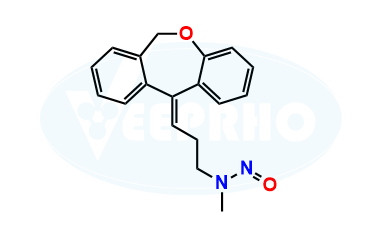
- N-Nitroso Doxepin EP Impurity C VE0014568
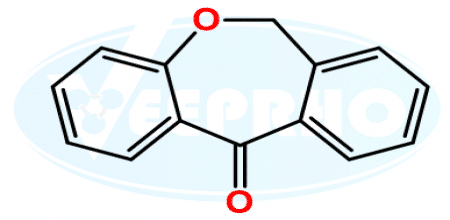
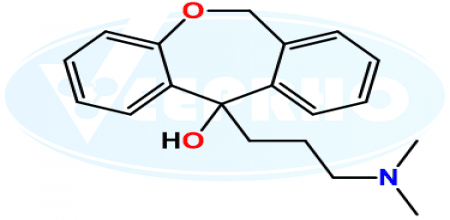
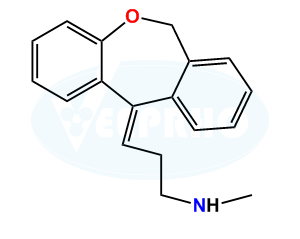
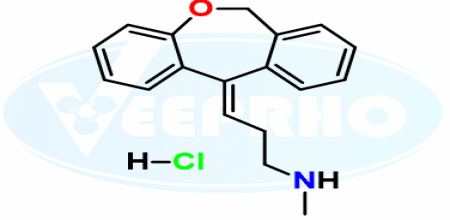

1–13 von 13 Ergebnissen13 auf Lager
| Struktur | Produktname |
|---|---|
| Doxepin EP Impurity ACAS-Nr. 4504-87-4 · VL2860003 · Auf Lager | |
| Doxepin EP Impurity BCAS-Nr. 4504-88-5 · VL2860004 · Auf Lager | |
| Doxepin EP Impurity C (Free Base)CAS-Nr. 67035-76-1 · VE0020780 · Auf Lager | |
| Doxepin EP Impurity C (HCl Salt)CAS-Nr. 4504-96-5 · VL2860005 · Auf Lager | |
| Doxepin EP Impurity C (Maleate Salt)VE0022385 · Auf Lager | |
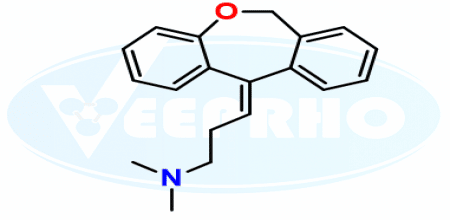 | Doxepin EP Impurity DCAS-Nr. 25127-31-5 · VL2860002 · Auf Lager |
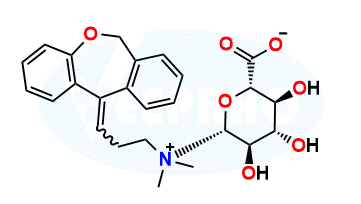 | Doxepin Glucuronide (Mixture of Z and E Isomers)CAS-Nr. 788790-52-3 · VE0014561 · Auf Lager |
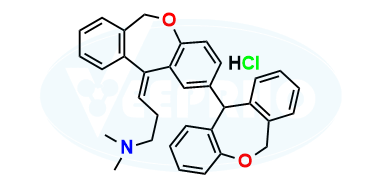 | Doxepin Impurity 2 (HCl Salt)VE0014563 · Auf Lager |
 | Doxepin N-OxideCAS-Nr. 22684-91-9 · VL2860001 · Auf Lager |
| Doxepin N-Oxide (HCl Salt)CAS-Nr. 2734342-87-9 · VE0022468 · Auf Lager | |
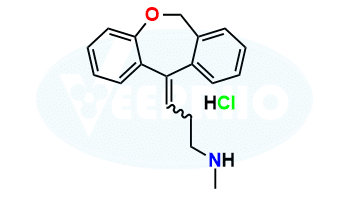 | Doxepin Related Compound CCAS-Nr. 2887-91-4 · VE0014565 · Auf Lager |
| N-Nitroso Desmethyl CidoxepinVE0024642 · Auf Lager | |
| N-Nitroso Doxepin EP Impurity CVE0014568 · Auf Lager |
Doxepin Impurities and Related Compound
The impurity profile for doxepin active pharmaceutical ingredient typically includes related substances derived from N-demethylation, N-oxidation, oxidative ring modifications and geometric isomerization, for example N-desmethyldoxepin (nordoxepin), doxepin N-oxide, E/Z isomeric impurities, and small amounts of oxidation products and process-related residuals. Typical quality control specifications applied by manufacturers and regulators control individual unspecified related impurities to low parts-per-thousand or parts-per-ten-thousand levels; a common control range is below 0.05 to 0.20 percent w/w for a single related compound and total impurities commonly limited to below 0.5 to 1.0 percent w/w depending on the monograph and stability data. Genotoxic impurity risk is assessed separately and any identified mutagenic impurities are controlled to threshold of toxicological concern levels or lower based on ICH guidance. Residual solvents and heavy metals are controlled to pharmacopeial limits and stability studies define degradation pathways and shelf-life related impurity limits.
Häufige Fragen
Is doxepin a strong sleeping pill?
Doxepin has potent H1 antihistamine activity which produces marked sedation at low doses used for insomnia; whether it is considered strong depends on dose and individual sensitivity, but low-dose doxepin formulations are specifically used for sleep because of reliable H1-mediated sedative effect with relatively low antidepressant dosing.
What is the drug doxepin used for?
Doxepin is used to treat major depressive disorder and, at lower doses, to treat insomnia; it is also used off-label in some cases for chronic pruritus and other conditions where antihistaminic or central sedative effects are beneficial.
Is doxepin the same as amitriptyline?
No. Doxepin and amitriptyline are both tricyclic antidepressants with broadly similar pharmacologic classes, but they are distinct chemical entities with different side effect profiles, receptor affinities, metabolic pathways and dosing characteristics.
Is doxepin an antihistamine?
Yes. Doxepin is a tricyclic antidepressant that also acts as a potent histamine H1 receptor antagonist, a property responsible for much of its sedative effect and for its use at low doses to treat insomnia and pruritus.