Lercanidipine-Verunreinigungen

Lercanidipine is a calcium channel blocker (CCB) used to treat high blood pressure (hypertension). By relaxing and widening the blood vessels, it helps lower blood pressure, which in turn reduces the risk of heart disease, heart attacks, strokes, and kidney damage. It belongs to the dihydropyridine class of calcium channel blockers and is available only by prescription, typically in tablet form. Lercanidipine is known for its long-acting and lipophilic properties, which allow for once-daily dosing and smooth blood pressure control with fewer side effects like reflex tachycardia.

Angebot für ein Set anfordern

1–32 von 32 Ergebnissen30 auf Lager

StrukturProduktnameCAS-Nr.Kat.-Nr.Verfügbarkeit
Struktur von Lercandipine Impurity 3Lercandipine Impurity 3C36H41N3O6VE006028VE006028Under Development
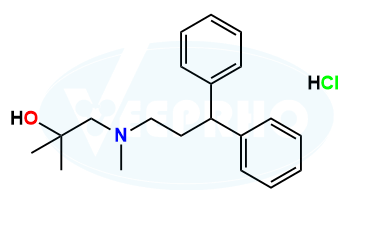
NOHLercanidipine 1-[(3,3-Diphenylpropyl)(methyl)amino]-2-methyl-2-propanol ImpurityC20H27NOCAS-Nr. 100442-33-9 · VE006874 · Auf Lager100442-33-9VE006874Auf Lager
OON+OO−OONHLercanidipine Diisopropyl Ester ImpurityC21H26N2O6VE009234 · Auf LagerVE009234Auf Lager
NHOONHOON+OO−Lercanidipine Dimethylethyl Ester ImpurityC21H27N3O6CAS-Nr. 887769-40-6 · VE0022830 · Auf Lager887769-40-6VE0022830Auf Lager
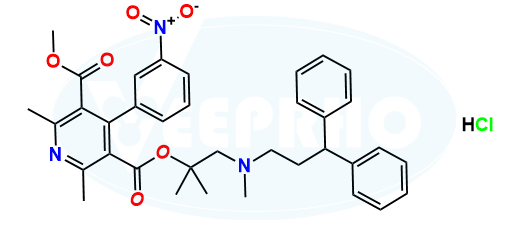
OONOONN+OO−ClHLercanidipine EP Impurity C (HCl Salt)C36H40ClN3O6CAS-Nr. 3030749-28-8 · VE0023093 · Auf Lager3030749-28-8VE0023093Auf Lager
OONHOONN+OO−Lercanidipine EP Impurity D (Free Base)C37H43N3O6CAS-Nr. 786625-22-7 · VE0016055 · Auf Lager786625-22-7VE0016055Auf Lager
Struktur von Lercanidipine EP Impurity E (Hydrochloride Salt)Lercanidipine EP Impurity E (Hydrochloride Salt)C20H28ClNOVE0021347 · Auf LagerVE0021347Auf Lager
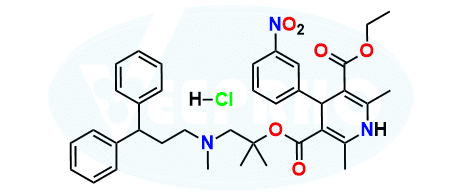
Struktur von Lercanidipine Ethyl ImpurityLercanidipine Ethyl ImpurityC37H43N3O6. HClCAS-Nr. 210579-71-8 · VE0015828 · Auf Lager210579-71-8VE0015828Auf Lager
OONHOON+OO−Lercanidipine Ethyl Methyl Ester ImpurityC18H20N2O6CAS-Nr. 39562-70-4 · VE0015827 · Auf Lager39562-70-4VE0015827Auf Lager
Struktur von Lercanidipine Impurity 1Lercanidipine Impurity 1C21H27N3O6VE0015833 · Auf LagerVE0015833Auf Lager
OONHOOHN+OO−Lercanidipine Impurity 2C19H22N2O6CAS-Nr. 74936-74-6 · VE0015825 · Auf Lager74936-74-6VE0015825Auf Lager
OONNOOHN+OO−Lercanidipine Impurity 6C36H41N3O6CAS-Nr. 2407630-84-4 · VE008125 · Auf Lager2407630-84-4VE008125Auf Lager
OONHOONHN+OO−Lercanidipine Impurity 8C35H39N3O6CAS-Nr. 320750-11-6 · VE008124 · Auf Lager320750-11-6VE008124Auf Lager
Struktur von Lercanidipine Impurity 9 (HCl Salt)Lercanidipine Impurity 9 (HCl Salt)C20H22N2O7. HClVE0015829 · Auf LagerVE0015829Auf Lager
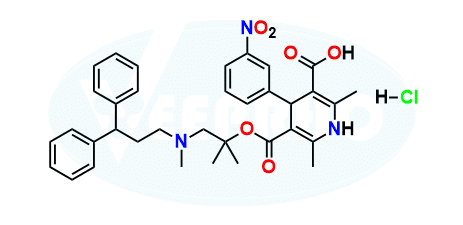
Struktur von Lercanidipine Impurity 10 (HCl Salt)Lercanidipine Impurity 10 (HCl Salt)C21H27N3O6. HClVE0015830 · Auf LagerVE0015830Auf Lager
Struktur von Lercanidipine Impurity 11 (HCl Salt)Lercanidipine Impurity 11 (HCl Salt)C20H27NO. HClVE0015831 · Auf LagerVE0015831Auf Lager
Struktur von Lercanidipine Impurity 12 (HCl Salt)Lercanidipine Impurity 12 (HCl Salt)C39H47N3O6. HClVE0015832 · Auf LagerVE0015832Auf Lager
Struktur von Lercanidipine Impurity 15 (HCl Salt)Lercanidipine Impurity 15 (HCl Salt)C35H37N3O6. HClVE0015852 · Auf LagerVE0015852Auf Lager
OOOOHOON+OO−Lercanidipine Impurity 20C17H19NO8CAS-Nr. 142592-09-4 · VE0015835 · Auf Lager142592-09-4VE0015835Auf Lager
Struktur von Lercanidipine Impurity 21 (HCl Salt)Lercanidipine Impurity 21 (HCl Salt)C35H39N3O6. HClVE0015839 · Auf LagerVE0015839Auf Lager
Struktur von Lercanidipine Impurity BLercanidipine Impurity BC35H39N3O6CAS-Nr. 1119226-97-9 , 855592-30-2 (Alternate) · VL1010001 · Auf Lager1119226-97-9 , 855592-30-2 (Alternate)VL1010001Auf Lager
OONHOONN+OO−Lercanidipine Impurity CC38H45N3O6CAS-Nr. 1797124-83-4 · VL1010002 · Auf Lager1797124-83-4VL1010002Auf Lager
OONHOONN+OO−ClHLercanidipine Impurity CC38H45N3O6. HClVE0015853 · Auf LagerVE0015853Auf Lager
OONOONN+OO−Lercanidipine Inhouse Impurity DC36H39N3O6CAS-Nr. 887769-34-8 · VL1010003 · Auf Lager887769-34-8VL1010003Auf Lager
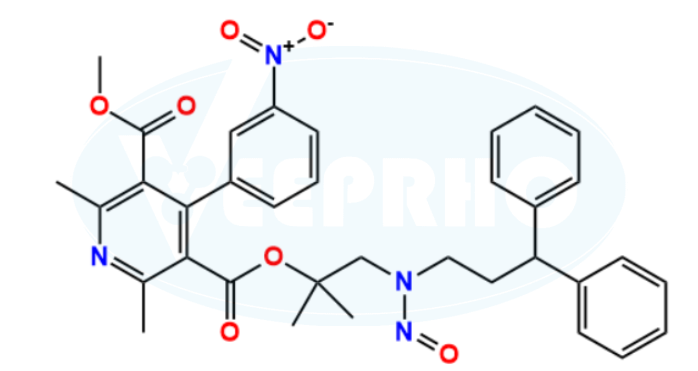
OONHOONNON+OO−Lercanidipine Nitroso Impurity 1C35H38N4O7VE0021541 · Auf LagerVE0021541Auf Lager
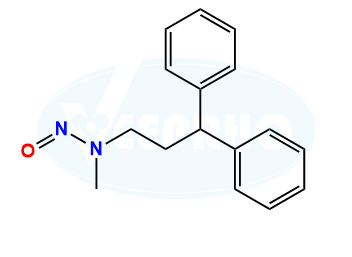
NNOLercanidipine Nitroso Impurity 1C₁₆H₁₈N₂OVE0024102 · Auf LagerVE0024102Auf Lager
OHNNON-(3,3-diphenylpropyl)-N-(2-hydroxy-2-methylpropyl)nitrous amideC19H24N2O2VE0021542 · Auf LagerVE0021542Auf Lager
OONOONNON+OO−N-Desmethyl N-Nitroso Lercanidipine EP Impurity CC35H36N4O7VE0023144 · Auf LagerVE0023144Auf Lager
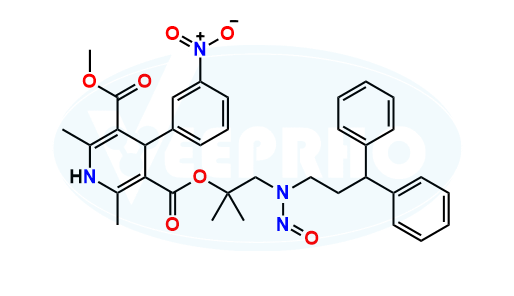
OONNOOONN+OO−N-Nitroso LercanidipineC36H40N4O7VE0011168VE0011168Report Available Immediately
OONNOOOHN+OO−N-Nitroso Lercanidipine EP Impurity AC16H15N3O7VE0021348 · Auf LagerVE0021348Auf Lager
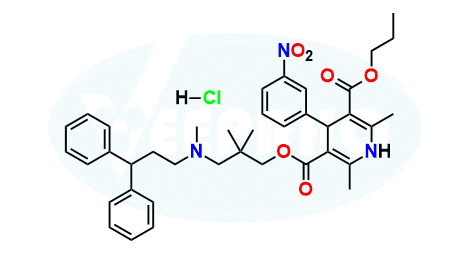
Struktur von 3-(1-((3,3-Diphenylpropyl)(methyl)amino)-2-methylpropan-2-yl) 5-isopropyl 2,6-dimethyl-4-(3-nitrophenyl)-1,4-dihydropyridine-3,5-dicarboxylate hydrochloride3-(1-((3,3-Diphenylpropyl)(methyl)amino)-2-methylpropan-2-yl) 5-isopropyl 2,6-dimethyl-4-(3-nitrophenyl)-1,4-dihydropyridine-3,5-dicarboxylate hydrochlorideC38H45N3O6 : HClVE009233 · Auf LagerVE009233Auf Lager
OONHOON+OO−3-Isopropyl 5-methyl 2,6-dimethyl-4-(3-nitrophenyl)-1,4-dihydropyridine-3,5-dicarboxylateC19H22N2O6CAS-Nr. 39562-18-0 · VE009232 · Auf Lager39562-18-0VE009232Auf Lager

Lercanidipine Related Compound

Impurities in Lercanidipine may form during chemical synthesis, storage, or formulation. These impurities are controlled as per ICH, FDA, and EMA guidelines to ensure efficacy, safety, and stability of the final pharmaceutical product.

Types of Impurities in Lercanidipine

Process-Related Impurities

  • Unreacted starting materials used in dihydropyridine ring formation
  • Residual solvents such as methanol, ethyl acetate
  • Synthesis by-products from esterification or nitration steps

Degradation Impurities

  • Oxidative degradation products due to air or light exposure
  • Hydrolysis products in the presence of moisture
  • Thermal degradation at elevated temperatures

Elemental Impurities

  • Trace levels of heavy metals (e.g., lead, cadmium, arsenic, mercury) from equipment or catalysts

Analytical Techniques for Impurity Detection

  • High-Performance Liquid Chromatography (HPLC)
  • Gas Chromatography (GC)
  • Mass Spectrometry (MS)
  • Fourier-Transform Infrared Spectroscopy (FT-IR)

UV-Vis Spectroscopy for photodegradation monitoring

Häufige Fragen

What is Lercanidipine used for?

Lercanidipine is prescribed for: Managing high blood pressure (hypertension) Reducing cardiovascular risks such as stroke , heart attack , and heart failure It may also be used in patients with mild-to-moderate kidney impairment for blood pressure control

Is Lercanidipine the same as Amlodipine?

No , but both belong to the dihydropyridine class of calcium channel blockers . Amlodipine has a longer half-life and is more commonly prescribed, while Lercanidipine is more lipophilic and may have a lower incidence of side effects like ankle swelling. The choice between the two depends on patient response and tolerability .

Does Lercanidipine slow heart rate?

No , Lercanidipine does not significantly slow the heart rate . It primarily works by relaxing the blood vessels , not directly affecting the heart’s pacemaker activity. It may slightly increase heart rate (reflex tachycardia) in some individuals, but this effect is generally mild.

Is Lercanidipine an ACE inhibitor?

No , Lercanidipine is not an ACE inhibitor . It is a calcium channel blocker , whereas ACE inhibitors (e.g., enalapril, lisinopril) lower blood pressure by blocking the renin-angiotensin system . Sometimes, both types of drugs are used together for better blood pressure control .