
Nefopam-Verunreinigungen
Angebot für ein Set anfordern
- Angebot für dieses Set anfragen
Alle Nitrosamin-Verunreinigungen von Nefopam
3 ProdukteDie 3 Produkte ansehen

1–8 von 8 Ergebnissen7 auf Lager
| Struktur | Produktname |
|---|---|
| N-Desmethyl NefopamCAS-Nr. 46868-19-3 · VE0021617 · Auf Lager | |
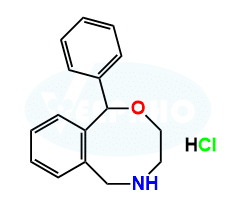 | N-Desmethyl Nefopam (HCl)CAS-Nr. 147656-98-2 · VE0017315 · Auf Lager |
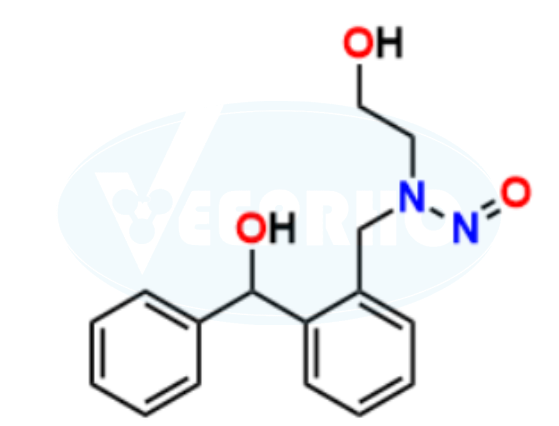
| N-Desmethyl Nitroso NefopamVE0024888 · Auf Lager | |
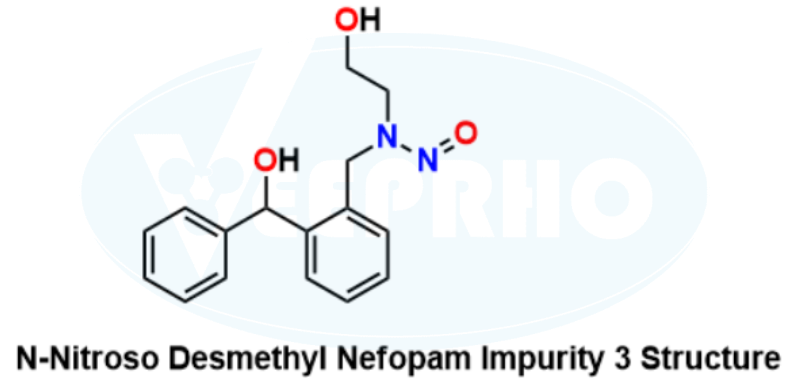
| N-Nitroso Desmethyl Nefopam Impurity 3VE0028879 | |
| Nefopam Deoxy ImpurityCAS-Nr. 13831-42-0 · VE0021618 · Auf Lager | |
| Nefopam Keto Amine ImpurityCAS-Nr. 76528-10-4 · VE0021621 · Auf Lager | |
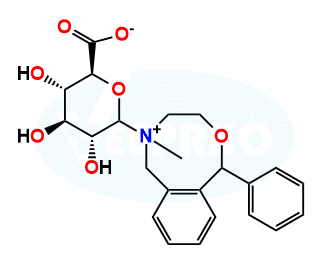 | Nefopam N-Glucuronide (Mixture of Diastereomers)VE0017312 · Auf Lager |
| Nefopam N-OxideCAS-Nr. 66091-32-5 · VE0017314 · Auf Lager |
Nefopam Related Compound
Impurities in Nefopam may arise during synthesis, formulation, or storage. Regulatory guidelines from agencies like the FDA, EMA, and ICH specify impurity thresholds to ensure product safety, efficacy, and stability.
Types of Impurities in Nefopam
Process-Related Impurities • Unreacted intermediates in phenylamine or benzoxazocine synthesis • Residual solvents such as ethanol, methanol, or chloroform • Synthetic by-products from ring closure and alkylation steps Degradation Impurities • Oxidation by-products from air or light exposure • Hydrolysis products in humid conditions • Heat-induced degradation compounds Elemental Impurities • Heavy metals (e.g., lead, cadmium, arsenic, mercury) from catalysts or processing equipment Analytical Techniques for Impurity Detection • High-Performance Liquid Chromatography (HPLC) • Gas Chromatography (GC) • Fourier-Transform Infrared Spectroscopy (FT-IR) • Mass Spectrometry (MS)
Häufige Fragen
Is Nefopam a strong painkiller?
• Nefopam is considered a moderate-strength painkiller. • It is stronger than paracetamol or ibuprofen, but weaker than opioids like morphine. • It’s often used when NSAIDs or mild analgesics are not sufficient, but opioids are not yet necessary. • It is especially useful because it does not cause drowsiness or respiratory depression like opioids.
Why is Nefopam banned?
• Nefopam is not banned in most countries, but its use is restricted or not approved in some regions due to: o Side effects, including nausea, dizziness, confusion, and hallucinations o Limited clinical trial data compared to other analgesics o Potential for misuse, though it is non-opioid • In some countries, alternative pain management options are preferred due to regulatory or safety concerns.
Is Nefopam stronger than Tramadol?
• Tramadol is generally considered stronger than Nefopam, as it has opioid activity in addition to serotonin/norepinephrine reuptake inhibition. • However, Nefopam has the advantage of avoiding opioid-related side effects, such as dependence and respiratory depression. • The choice between the two depends on pain severity, patient history, and side effect profile.
How does Nefopam make you feel?
• Nefopam typically relieves pain without causing sedation. • Some users report mild stimulation, dizziness, or euphoria, especially at higher doses. • Possible side effects include: o Nausea o Dry mouth o Sweating o Insomnia or nervousness • Rarely, it can cause hallucinations or confusion, particularly in elderly patients or those sensitive to CNS effects.