
Propyl Gallate-Verunreinigungen
Angebot für ein Set anfordern
- Angebot für dieses Set anfragen
Alle EP-Verunreinigungen von Propyl Gallate
2 ProdukteDie 2 Produkte ansehen
- Propyl Gallate EP Impurity A VE0023548
CAS 149-91-7 - Propyl Gallate EP Impurity A (Hydrate) VE0023556
CAS 5995-86-8
- Propyl Gallate EP Impurity A VE0023548
- Angebot für dieses Set anfragen
Alle Nitrosamin-Verunreinigungen von Propyl Gallate
2 ProdukteDie 2 Produkte ansehen
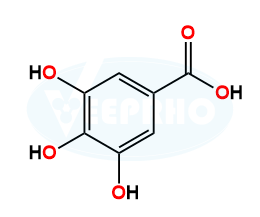


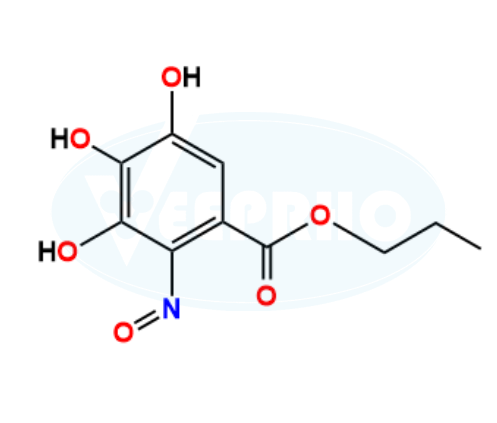
1–7 von 7 Ergebnissen7 auf Lager
| Struktur | Produktname |
|---|---|
| Di-C-Nitroso Derivatives Of Propyl GallateVE0028297 · Auf Lager | |
| Ethyl GallateCAS-Nr. 831-61-8 · VE0023555 · Auf Lager | |
| Methyl GallateCAS-Nr. 99-24-1 · VE0023553 · Auf Lager | |
| Mono-C-Nitroso Derivatives of Propyl GallateVE0028295 · Auf Lager | |
| Propyl GallateCAS-Nr. 121-79-9 · VL2420001 · Auf Lager | |
| Propyl Gallate EP Impurity ACAS-Nr. 149-91-7 · VE0023548 · Auf Lager | |
| Propyl Gallate EP Impurity A (Hydrate)CAS-Nr. 5995-86-8 · VE0023556 · Auf Lager |
Propyl Gallate Related Compound
Impurities in propyl gallate can arise from raw materials, esterification conditions, or degradation during storage. Proper control of these impurities is essential to meet pharmacopeial standards (USP, EP, JP) and ICH Q3A/B impurity limits for excipients and APIs.
Types of Impurities in Propyl Gallate
Process-Related Impurities • Unreacted gallic acid • Unreacted propanol or over-esterified by-products • Residual solvents like ethanol, methanol, or toluene • By-products from acidic or basic catalysis used during esterification Degradation Impurities • Oxidation products (quinones or polymeric species) under air/light exposure • Hydrolysis of the ester bond leading to free gallic acid and propanol • Discoloration due to polymerization or breakdown of phenolic structure Elemental Impurities • Trace metals like iron, copper, or tin that can catalyze oxidation • Must comply with ICH Q3D limits, particularly for oral/topical use Analytical Techniques for Impurity Detection
- HPLC – for assay and related substances (gallic acid and oxidized derivatives) • LC-MS – to identify unknown or trace-level degradation products • GC – for analysis of residual solvents • UV-Vis spectroscopy – to monitor oxidative degradation and discoloration • ICP-MS – for elemental impurity profiling • Stability testing (ICH Q1A/Q1B) – to assess degradation under heat, humidity, and light
Häufige Fragen
What is Propyl Gallate used for?
Propyl Gallate is used as an antioxidant to prevent oxidation of fats, oils, and sensitive pharmaceutical or cosmetic ingredients.
How does Propyl Gallate work?
It scavenges free radicals and interrupts oxidative chain reactions, thereby preserving product integrity and extending shelf life.
What are the side effects or concerns with Propyl Gallate?
Rare allergic skin reactions (in sensitive individuals) • Possible irritation in topical applications • Regulatory concern for high-dose intake in food (within limits, it is considered safe)
Is Propyl Gallate natural or synthetic?
It is semi-synthetic—derived from gallic acid , which can be obtained from natural sources, but chemically esterified with propanol .
How should Propyl Gallate be stored?
Store in a tightly closed container, protected from light, moisture, and air. Recommended storage temperature is below 25°C.