
Risdiplam-Verunreinigungen
Angebot für ein Set anfordern
- Angebot für dieses Set anfragen
Alle Nitrosamin-Verunreinigungen von Risdiplam
2 ProdukteDie 2 Produkte ansehen
- N-Nitroso Risdiplam VE0014168
- N-Nitroso Risdiplam Impurity 1 VE0024723

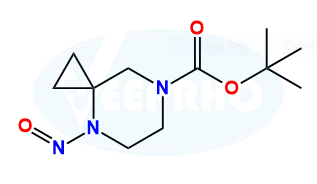
1–4 von 4 Ergebnissen3 auf Lager
| Struktur | Produktname |
|---|---|
| N-Hydroxy RisdiplamCAS-Nr. 2250441-24-6 · VE0014572 · Auf Lager | |
| N-Nitroso RisdiplamVE0014168 · Auf Lager | |
| N-Nitroso Risdiplam Impurity 1VE0024723 · Auf Lager | |
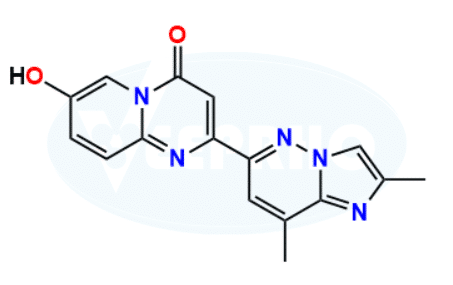 | 2-(2,8-dimethylimidazo[1,2-b]pyridazin-6-yl)-7-hydroxy-4H-pyrido[1,2-a]pyrimidin-4-oneVE0015633 |
Risdiplam Related Compound
Impurities in risdiplam arise from its complex multi-step synthesis, involving heterocyclic ring construction, functional group substitutions, and chiral resolution, as well as from degradation under thermal, photolytic, or oxidative conditions. Given its use in pediatric and long-term therapy, impurity levels must strictly comply with ICH Q3A/B, FDA, and EMA guidelines.
Types of Impurities in Risdiplam
Process-Related Impurities • Residual starting materials such as aryl halides, amines, or boronic acids • By-products from Suzuki coupling, amide bond formation, or regioisomeric substitutions • Residual solvents like dimethylacetamide (DMAc), acetonitrile, or ethyl acetate Degradation Impurities • Oxidation products of the aromatic rings or nitrogen-containing groups • Hydrolysis products of amide or ether linkages • Photodegradation products (light-sensitive groups present in the structure) • Chiral impurities resulting from racemization or incomplete stereoselective synthesis Elemental Impurities • Trace metals such as palladium, copper, iron, or nickel from catalytic reactions • Controlled under ICH Q3D, with strict limits due to chronic oral exposure in children Analytical Techniques for Impurity Detection • High-Performance Liquid Chromatography (HPLC) – for assay and related substance profiling • LC-MS/MS (Liquid Chromatography–Tandem Mass Spectrometry) – for structural elucidation of low-level impurities and degradants • Chiral HPLC – to detect enantiomeric impurities • Gas Chromatography (GC) – for residual solvent detection • ICP-MS – for elemental impurities • Photostability and forced degradation studies – to ensure product stability
Häufige Fragen
What is Risdiplam used for?
Risdiplam is used to treat spinal muscular atrophy (SMA) by increasing SMN protein levels through modulation of SMN2 pre-mRNA splicing.
How is Risdiplam administered?
It is taken orally once daily, in liquid form, and can be administered at home.
What are common side effects of Risdiplam?
• Fever • Diarrhea • Rash • Mouth ulcers • Joint or muscle pain • Upper respiratory infections
Is Risdiplam suitable for infants?
Yes, it is approved for patients as young as 2 months old, and dosing is weight-based.
Is Risdiplam chemically stable?
Risdiplam is light-sensitive and should be stored in its original container, refrigerated, and protected from light. Once opened, it has a limited shelf life (as per label instructions).