Ruxolitinib-Verunreinigungen

Ruxolitinib ist eine Art zielgerichteter Krebswirkstoff, ein sogenannter Wachstumsblocker bei Krebs. Es wirkt, indem es die Wachstumsfaktoren blockiert, die Krebszellen zur Teilung und zum Wachstum anregen. Ruxolitinib hemmt gezielt die Aktivität der Janus-Kinasen (JAK), insbesondere JAK1 und JAK2, die eine entscheidende Rolle bei der Bildung von Blutzellen spielen. Dieser Wirkmechanismus macht es wirksam bei Erkrankungen wie Myelofibrose, Polycythaemia vera und der Graft-versus-Host-Krankheit.

Angebot für ein Set anfordern

1–21 von 21 Ergebnissen19 auf Lager
StrukturProduktnameCAS-Nr.Kat.-Nr.Verfügbarkeit
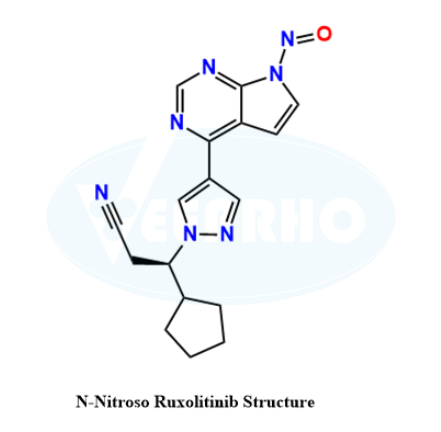
NNNNNNONN-Nitroso RuxolitinibC17H17N7OVE0011162VE0011162Report Available Immediately
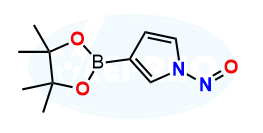
OBNNOON-Nitroso Ruxolitinib Impurity 3C10H15BN2O3VE0024346VE0024346Under Development
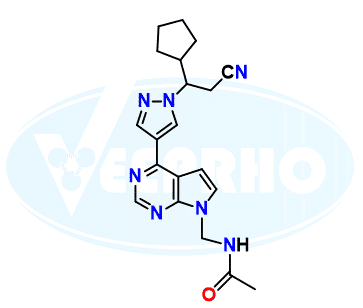
Struktur von Ruxolitinib Acetamide ImpurityRuxolitinib Acetamide ImpurityC20H23N7OVE0010620 · Auf LagerVE0010620Auf Lager
OOHNNNHNNRuxolitinib Acid ImpurityC17H19N5O2CAS-Nr. 3016399-21-3 · VE0010618 · Auf Lager3016399-21-3VE0010618Auf Lager
SiONNNNNNRuxolitinib Acrylo pyrimidine ImpurityC23H32N6OSiCAS-Nr. 941685-39-8 · VE0022324 · Auf Lager941685-39-8VE0022324Auf Lager
NH2ONNNHNNRuxolitinib AmideC17H20N6OCAS-Nr. 1911644-32-0 · VE0010319 · Auf Lager1911644-32-0VE0010319Auf Lager
NNNHHNNRuxolitinib Diamine ImpurityC9H7N5CAS-Nr. 952518-97-7 · VE008095 · Auf Lager952518-97-7VE008095Auf Lager
SiONNNNNNOOOHOOOOHORuxolitinib Dibenzoyl SEM Pyrimidine ImpurityC41H46N6O9SiVE0010622 · Auf LagerVE0010622Auf Lager
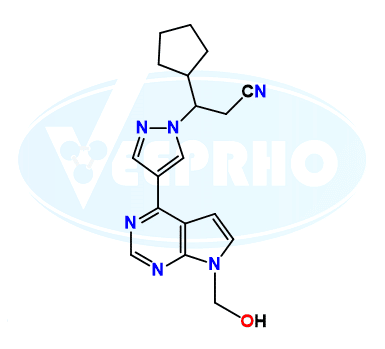
Struktur von Ruxolitinib Hydroxy Pyrimidine ImpurityRuxolitinib Hydroxy Pyrimidine ImpurityC18H20N6OVE0010621 · Auf LagerVE0010621Auf Lager
NNNNNHONRuxolitinib Hydroxy Pyrimidine ImpurityC18H20N6OCAS-Nr. 1236033-03-6 · VE0018187 · Auf Lager1236033-03-6VE0018187Auf Lager
NNNNNH2OOHNRuxolitinib Impurity 6C16H18N6O2CAS-Nr. 2606144-44-7 · VE0010322 · Auf Lager2606144-44-7VE0010322Auf Lager
NNNNH2NONRuxolitinib Impurity 7C16H18N6OCAS-Nr. 2606144-45-8 · VE0010320 · Auf Lager2606144-45-8VE0010320Auf Lager
NH2ONNNHNNRuxolitinib Impurity 9C17H20N6OCAS-Nr. 2102675-42-1 · VE0012185 · Auf Lager2102675-42-1VE0012185Auf Lager
NNNNHNNRuxolitinib Impurity AC17H18N6CAS-Nr. 941685-37-6 · VE0020964 · Auf Lager941685-37-6VE0020964Auf Lager
OOOOOHOOOOOHRuxolitinib Impurity HC20H18O10CAS-Nr. 191605-10-4 · VE0020965 · Auf Lager191605-10-4VE0020965Auf Lager
NNNHNHONNRuxolitinib Impurity OC18H20N6OVE0021070 · Auf LagerVE0021070Auf Lager
ONNOHNNRuxolitinib Nitroso Impurity 2C6H4N4O2VE0024345 · Auf LagerVE0024345Auf Lager
SiONNNNONNRuxolitinib Nitroso Impurity 4C15H20N6O2SiVE0024347 · Auf LagerVE0024347Auf Lager
Struktur von (R)-methyl 3-(4-(7H-pyrrolo[2,3-d]pyrimidin-4-yl)-1H-pyrazol-1-yl)-3-cyclopentylpropanoate(R)-methyl 3-(4-(7H-pyrrolo[2,3-d]pyrimidin-4-yl)-1H-pyrazol-1-yl)-3-cyclopentylpropanoateC18H21N5O2VE0011667 · Auf LagerVE0011667Auf Lager
OOHNNNHNN(βR)-β-Cyclopentyl-4-(7H-pyrrolo[2,3-d]pyrimidin-4-yl)-1H-pyrazole-1-propanoic AcidC₁₇H₁₉N₅O₂CAS-Nr. 2102675-40-9 · VE0010321 · Auf Lager2102675-40-9VE0010321Auf Lager
SiONNNHNN4-(1H-Pyrazol-4-yl)-7-((2-(trimethylsilyl)ethoxy)methyl)-7H-pyrrolo[2,3-d]pyrimidineC15H21N5OSiCAS-Nr. 941685-27-4 · VE0022323 · Auf Lager941685-27-4VE0022323Auf Lager

Ruxolitinib Related Compound

During the production and storage of Ruxolitinib, related compounds and impurities may form, which must be controlled to ensure the medication’s safety and efficacy. Regulatory authorities provide stringent guidelines for monitoring these impurities in pharmaceutical formulations. Key aspects of Ruxolitinib-related compounds and impurities include:

  1. Related Substances: These are chemically similar compounds that may form during the synthesis of Ruxolitinib. Monitoring these related substances ensures the product’s safety and effectiveness.
  2. Degradation Products: Ruxolitinib may degrade over time due to environmental factors such as heat, light, or moisture. Degradation products can impact the drug’s stability and potency.
  3. Residual Solvents: Trace amounts of solvents used during manufacturing may remain in the final product. Regulatory standards specify acceptable limits to ensure safety.

Advanced analytical techniques, such as High-Performance Liquid Chromatography (HPLC), are used to detect and quantify Ruxolitinib-related compounds and impurities, ensuring compliance with stringent quality standards.

Häufige Fragen

What is the drug Ruxolitinib used for?

Ruxolitinib is used to treat conditions such as myelofibrosis, polycythemia vera, and graft-versus-host disease. It works by inhibiting the JAK enzymes, reducing abnormal blood cell production and inflammation.

Is Ruxolitinib a JAK2 inhibitor?

Yes, Ruxolitinib is a JAK2 inhibitor. It blocks the activity of JAK1 and JAK2 enzymes, which are involved in blood cell production and inflammation, making it effective for certain blood cancers and related disorders.

Is Ruxolitinib a chemotherapy?

No, Ruxolitinib is not traditional chemotherapy. It is a targeted therapy known as a cancer growth blocker, which specifically inhibits molecular pathways critical for cancer cell growth.

Is Ruxolitinib expensive?

No, Ruxolitinib is not traditional chemotherapy. It is a targeted therapy known as a cancer growth blocker, which specifically inhibits molecular pathways critical for cancer cell growth.