
Impurezas de Benidipine
Solicitar cotización de un conjunto
- Solicitar cotización de este conjunto
Todas las impurezas de nitrosaminas de Benidipine
2 productosVer los 2 productos

1–12 de 12 resultados10 en stock
| Estructura | Nombre del producto |
|---|---|
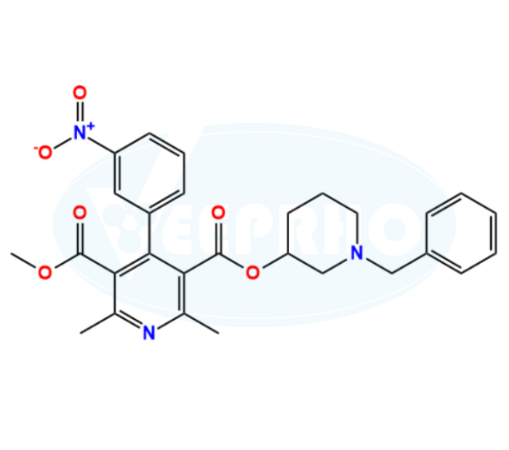 | Benidipine Dehydro DerivativeN.º CAS 118935-44-7 · VL2590002 · En stock |
| Benidipine Diastereomer ImpurityN.º CAS 105979-18-8 · VE0027565 · En stock | |
| Benidipine Impurity 1N.º CAS 91599-75-6 · VE0012622 · En stock | |
| Benidipine Impurity 11 (Mixture of Diastereomers)N.º CAS 121138-43-0 · VE0012618 · En stock | |
| Benidipine Impurity 12N.º CAS 166808-97-5 · VE0012619 · En stock | |
| Benidipine Impurity 13N.º CAS 74936-71-3 · VE0013539 · En stock | |
| Benidipine Impurity 16N.º CAS 14813-01-5 · VE0012620 · En stock | |
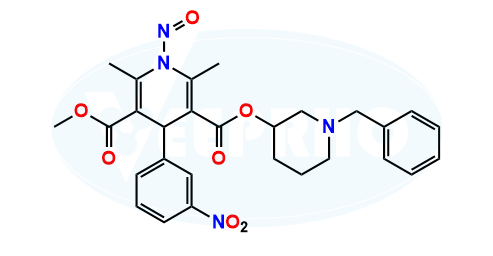
| N-Nitroso BenidipineVE0021413 | |
| (-)-alpha-Benidipine hydrochlorideN.º CAS 119065-62-2 · VE0023075 · En stock | |
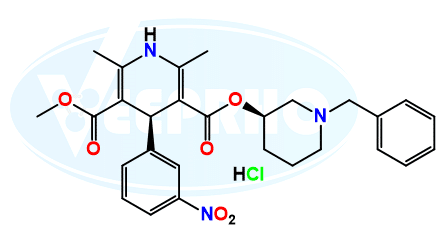 | (3R,4’S)-Benidipine HClN.º CAS 119065-61-1 · VE0012623 · En stock |
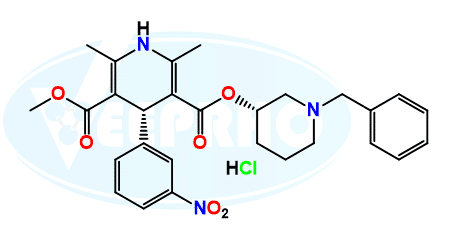 | (3S,4’R)-Benidipine HClN.º CAS 119009-45-9 · VE0012626 · En stock |
 | (S,S)-Benidipine HClN.º CAS 129262-08-4 · VE0012621 |
Benidipine and Related Compound
Active pharmaceutical ingredient specifications for benidipine hydrochloride typically target high purity with assay values of 98.0 percent or greater. Related substances are quantified by validated reversed phase HPLC methods; common control limits used by manufacturers and quality control laboratories are individual unspecified impurities not greater than 0.2 percent and total impurities not greater than 1.0 percent. Known related compounds and degradation products monitored include the N oxide, dealkylated and demethylated derivatives, de-esterified hydrolysis products including the corresponding carboxylic acid, the oxidized pyridine analog formed by dihydropyridine oxidation, and low level positional isomers. Typical individual limits for specified related compounds range from 0.05 to 0.5 percent depending on qualification data, with residual solvents and heavy metals controlled to pharmacopeial or ICH guideline limits; final drug product specifications adopt tighter limits appropriate to the marketed formulation and therapeutic daily dose.
Preguntas frecuentes
What is benidipine used for?
Benidipine is used to treat hypertension by lowering systemic vascular resistance; it is also used where renoprotective or cardioprotective benefit is desired in hypertensive patients.
What is the use of benidipine medicine?
Benidipine medicine is prescribed to reduce blood pressure and to protect kidney and heart function in patients with chronic hypertension, often as monotherapy or in combination with other antihypertensive agents.
What is the difference between amlodipine and benidipine?
Amlodipine is a long acting dihydropyridine that is largely selective for L-type calcium channels and is widely used internationally; benidipine blocks L, T, and N calcium channel subtypes, has higher lipophilicity with greater tissue retention, and has been reported to exert additional renoprotective effects and reduce proteinuria beyond simple blood pressure lowering. Clinical choice depends on patient characteristics, comorbidities, drug interactions, and regulatory availability.
Is benidipine FDA approved?
Benidipine is not approved for marketing by the US Food and Drug Administration. It is approved and marketed in several other countries and territories under national regulatory authorizations.