
Impurezas de Clevidipine
Solicitar cotización de un conjunto
- Solicitar cotización de este conjunto
Todas las impurezas de nitrosaminas de Clevidipine
2 productosVer los 2 productos


1–14 de 14 resultados13 en stock
| Estructura | Nombre del producto |
|---|---|
 | cis-Clevidipine Impurity 13VE0013777 · En stock |
| Clevidipine Impurity 1N.º CAS 123853-39-4 · VE0013783 · En stock | |
 | Clevidipine Impurity 2N.º CAS 253597-19-2 · VE0013784 · En stock |
| Clevidipine Impurity 4N.º CAS 253597-20-5 · VE0013785 · En stock | |
| Clevidipine Impurity 5N.º CAS 188649-48-1 · VE0013786 · En stock | |
| Clevidipine Impurity 6N.º CAS 138279-32-0 · VE0013787 · En stock | |
| Clevidipine Impurity 7N.º CAS 91854-02-3 · VE0013770 · En stock | |
| Clevidipine Impurity 8N.º CAS 105383-68-4 · VE0013772 · En stock | |
| Clevidipine Impurity 10N.º CAS 175688-79-6 · VE0018341 · En stock | |
| Clevidipine Impurity 13 (Mixture of cis and trans Isomers)N.º CAS 1801167-49-6 · VE0013774 · En stock | |
 | Clevidipine Impurity 15VE0013775 · En stock |
| N-Nitroso ClevidipineVE0014062 | |
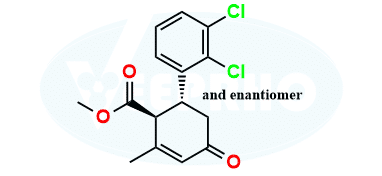 | trans-Clevidipine Impurity 13VE0013779 · En stock |
| (Butyryloxy)methyl (Z)-2-(2,3-dichlorobenzylidene)-3-oxobutanoateN.º CAS 1346550-33-1 · VE0028174 · En stock |
Clevidipine Related Compound
Impurities in clevidipine arise from its multi-step chemical synthesis, including esterification, nitration, and dihydropyridine ring formation, and from degradation, especially due to its ester moieties, which are hydrolytically unstable. As it is used intravenously in critically ill patients, impurity control must comply with ICH Q3A/B, USP, EP, and injectable drug regulations.
Types of Impurities in Clevidipine
Process-Related Impurities
- Residual starting materials like aryl aldehydes, malonates, or acid chlorides
- By-products from esterification, reduction, or ring cyclization steps
- Residual solvents such as methanol, ethyl acetate, or acetone
Degradation Impurities
- Hydrolysis products: primarily clevidipine carboxylic acid and clevidipine alcohol
- Oxidation products of the dihydropyridine ring
- Photodegradation under light exposure
- Isomeric impurities or tautomers under extreme pH or thermal conditions
Elemental Impurities
- Trace metals like iron, copper, or zinc from manufacturing equipment
- Controlled under ICH Q3D, with strict parenteral exposure limits
Analytical Techniques for Impurity Detection
- High-Performance Liquid Chromatography (HPLC) – for assay and related substances
- LC-MS/MS – for identifying low-level and unknown impurities
- Gas Chromatography (GC) – for residual solvent analysis
- ICP-MS – for elemental impurity detection
- Photostability and hydrolytic stress studies – due to high degradation sensitivity
Preguntas frecuentes
What is Clevidipine used for?
Clevidipine is used to rapidly and safely lower blood pressure in patients with severe hypertension , particularly during surgery or in critical care .
How does Clevidipine work?
It blocks L-type calcium channels in vascular smooth muscle , causing arterial vasodilation and reduction in systemic vascular resistance .
What are common side effects of Clevidipine?
Hypotension Reflex tachycardia Nausea Fever or injection site reactions Rare: Atrial fibrillation or allergic response to lipid emulsion
Is Clevidipine suitable for long-term use?
No. Due to its short half-life (1–2 minutes) and formulation as a lipid emulsion , it is indicated for short-term IV use only .
Is Clevidipine chemically stable?
No. It is highly sensitive to hydrolysis and light , and should be stored in its original light-protective vials under refrigerated conditions (2–8°C) . Once opened, the emulsion must be used within 12 hours .