
Impurezas de Furosemide
Solicitar cotización de un conjunto
- Solicitar cotización de este conjunto
Todas las impurezas EP de Furosemide
5 productosVer los 5 productos
- Furosemide EP Impurity A (Free Base) VL61003
CAS 4818-59-1 - Furosemide EP Impurity B VL61005
CAS 2736-23-4 - Furosemide EP Impurity C VL61004
CAS 3086-91-7 - Furosemide EP Impurity D VL61001
CAS 5046-19-5 - Furosemide EP Impurity E VL61002
CAS 50-84-0
- Furosemide EP Impurity A (Free Base) VL61003
- Solicitar cotización de este conjunto
Todas las impurezas USP de Furosemide
2 productosVer los 2 productos
- Furosemide EP Impurity A (Free Base) VL61003
CAS 4818-59-1 - Furosemide EP Impurity C VL61004
CAS 3086-91-7
- Furosemide EP Impurity A (Free Base) VL61003
- Solicitar cotización de este conjunto
Todas las impurezas de nitrosaminas de Furosemide
2 productosVer los 2 productos
- N-Nitroso Furosemide VE007632
CAS 2708280-93-5 - N-Nitroso Furosemide (Sodium Salt) VE0016427
- N-Nitroso Furosemide VE007632
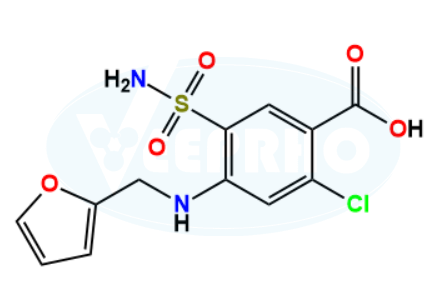


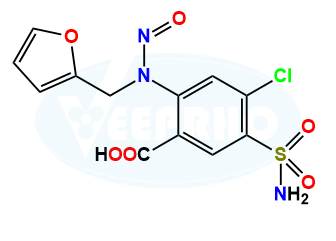
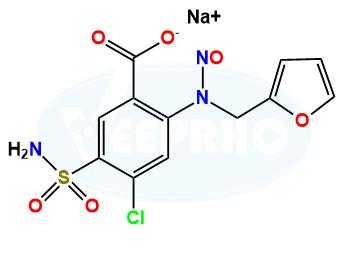
1–19 de 19 resultados19 en stock
| Estructura | Nombre del producto |
|---|---|
| Ethyl 2,4-Dichloro-5-sulphamoylbenzoateN.º CAS 4793-25-3 · VE0022740 · En stock | |
 | Furosemide Acyl GlucuronideVE0016429 · En stock |
| Furosemide EP Impurity A (Free Base)N.º CAS 4818-59-1 · VL61003 · En stock | |
| Furosemide EP Impurity BN.º CAS 2736-23-4 · VL61005 · En stock | |
| Furosemide EP Impurity CN.º CAS 3086-91-7 · VL61004 · En stock | |
| Furosemide EP Impurity DN.º CAS 5046-19-5 · VL61001 · En stock | |
| Furosemide EP Impurity EN.º CAS 50-84-0 · VL61002 · En stock | |
| Furosemide Impurity 2N.º CAS 41332-59-6 · VE0016423 · En stock | |
| Furosemide Impurity 4 (Sodium Salt)VE0016424 · En stock | |
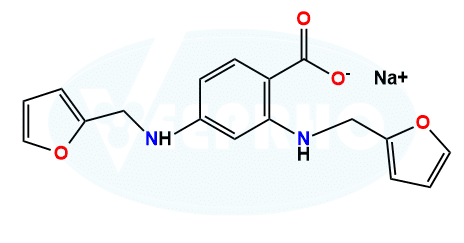 | Furosemide Impurity 7 (Sodium Salt)VE0016425 · En stock |
| Furosemide Impurity 10N.º CAS 133989-65-8 · VE0016426 · En stock | |
| Furosemide Impurity 19 (Disodium Salt)VE0016428 · En stock | |
| Furosemide Impurity 38N.º CAS 2760-11-4 · VE0024409 · En stock | |
| Furosemide Impurity 41N.º CAS 3740-18-9 · VE0024407 · En stock | |
| N-Nitroso FurosemideN.º CAS 2708280-93-5 · VE007632 · En stock | |
| N-Nitroso Furosemide (Sodium Salt)VE0016427 · En stock | |
| TetrahydrofurfurylamineN.º CAS 4795-29-3 · VE0020133 · En stock | |
| 2-Chloro-5-chlorosulfonylbenzoic AcidN.º CAS 137-64-4 · VE0024411 · En stock | |
| 4-Amino-2-chlorobenzoic acidN.º CAS 2457-76-3 · VE0024413 · En stock |
Furosemide Related Compound
As with all pharmaceutical products, impurities may develop in furosemide during its manufacturing, storage, or handling. Monitoring and controlling these impurities is essential to ensure the medication’s safety, efficacy, and quality.
Types of Impurities in Furosemide
Related Substances These are chemically related compounds or byproducts formed during the synthesis of furosemide. Monitoring these ensures the drug’s purity and effectiveness. Degradation Products Furosemide may degrade under improper storage conditions, such as exposure to light, heat, or moisture, which can reduce its efficacy or alter its safety profile. Residual Solvents Trace amounts of solvents used during manufacturing may remain in the final product. Regulatory guidelines ensure these solvents are within permissible limits to minimize patient risks. Analytical Techniques for Monitoring Impurities Techniques like High-Performance Liquid Chromatography (HPLC) and Mass Spectrometry (LC-MS) are commonly used to detect and quantify impurities, ensuring furosemide meets stringent safety and quality standards.
Preguntas frecuentes
What not to do when taking furosemide?
Avoid consuming large amounts of salt or salt substitutes, as they can counteract the medication’s effects. Refrain from drinking alcohol, as it may increase the risk of dehydration or dizziness. Always follow your healthcare provider’s instructions.
What do I need to know before giving furosemide?
Before administering furosemide, check the patient’s electrolyte levels, kidney function, and blood pressure, as the drug can cause imbalances and dehydration. Be cautious in patients with severe liver or kidney conditions and those at risk of low blood pressure.
How long should you wait to eat after taking furosemide?
Furosemide can be taken with or without food. However, if it causes an upset stomach, taking it with food may help. Consult your healthcare provider for specific recommendations.
What is the most common side effect of furosemide?
The most common side effect of furosemide is frequent urination , which is expected due to its diuretic effect. Other common side effects include dehydration, low blood pressure, and electrolyte imbalances such as low potassium or magnesium levels.