
Impurezas de Ivacaftor
Solicitar cotización de un conjunto
- Solicitar cotización de este conjunto
Todas las impurezas de nitrosaminas de Ivacaftor
6 productosVer los 6 productos
- Ethyl 1-nitroso-4-oxo-1,4-dihydroquinoline-3-carboxylate VE0011351
- N-nitroso 3,5-Ivacaftor VE0011349
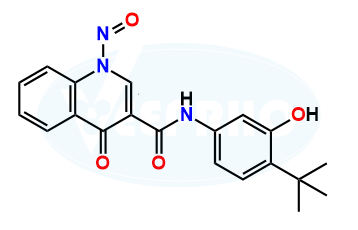
- N-Nitroso De-alkylated Ivacaftor VE0024848
- N-Nitroso Ivacaftor VE0010062
- N-Nitroso Ivacaftor Impurity 5 VE0015138
- 1-nitroso-4-oxo-1,4-dihydroquinoline-3-carboxylic acid VE0011350


1–12 de 12 resultados5 en stock
| Estructura | Nombre del producto |
|---|---|
| Ethyl 1-nitroso-4-oxo-1,4-dihydroquinoline-3-carboxylateVE0011351 | |
| N-(3,5-Di-tert-butyl-2-hydroxyphenyl)-4-oxo-1,4-dihydroquinoline-3-carboxamideN.º CAS 873051-52-6 · VE0010211 | |
| N-nitroso 3,5-IvacaftorVE0011349 | |
| N-Nitroso De-alkylated IvacaftorVE0024848 · En stock | |
| N-Nitroso IvacaftorVE0010062 | |
| N-Nitroso Ivacaftor Impurity 5VE0015138 | |
| 1-nitroso-4-oxo-1,4-dihydroquinoline-3-carboxylic acidVE0011350 | |
| 1,4-Dihydro-4-oxo-3-quinolinecarboxylic Acid Ethyl EsterN.º CAS 52980-28-6 · VE0024654 · En stock | |
| 2,4-Di-tert-butyl-5-nitrophenolN.º CAS 873055-57-3 · VE0010210 · En stock | |
| 4-Hydroxyquinoline-3-carboxylic acid ethyl esterN.º CAS 26892-90-0 · VE0010208 · En stock | |
| 4-oxo-1,4-dihydroquinoline-3-carboxylic acidN.º CAS 13721-01-2 · VE0011065 · En stock | |
| 5-Amino-2,4-di-tert-butylphenolN.º CAS 873055-58-4 · VE0010209 |
Ivacaftor Related Compound
During the production and storage of Ivacaftor, impurities may form, which must be controlled to ensure the drug’s safety and efficacy. Regulatory authorities, including the U.S. Food and Drug Administration (FDA) and the European Medicines Agency (EMA), set guidelines for permissible impurity levels in Ivacaftor formulations.
Preguntas frecuentes
What foods should you avoid while taking TRIKAFTA?
While taking TRIKAFTA, which includes Ivacaftor, it’s recommended to avoid grapefruit and Seville oranges, as these fruits can interfere with the medication’s metabolism. Patients should take Ivacaftor-containing therapies with high-fat foods to enhance absorption.
How effective is Ivacaftor?
Ivacaftor has been shown to significantly improve lung function and quality of life in cystic fibrosis patients with specific CFTR mutations. Its effectiveness varies depending on individual mutations, but in responsive patients, it can reduce respiratory infections and improve overall health outcomes.
How do you use Ivacaftor?
Ivacaftor is typically taken orally, twice daily, with a high-fat meal to improve absorption. Patients should follow the prescribed dosage and instructions from their healthcare provider to ensure optimal effectiveness.
Is Ivacaftor an orphan drug?
Yes, Ivacaftor has been designated as an orphan drug, as it treats cystic fibrosis, a rare disease. Orphan drug status provides certain regulatory and financial incentives to encourage the development of treatments for rare conditions.