
Impurezas de Rotigotine
Solicitar cotización de un conjunto
- Solicitar cotización de este conjunto
Todas las impurezas EP de Rotigotine
10 productosVer los 10 productos
- Rotigotine EP Impurity C VE0022334
CAS 153409-14-4 - Rotigotine EP Impurity C (HCl Salt) VE0025653
- Rotigotine EP Impurity D VE0019952
CAS 1369625-04-6 - Rotigotine EP Impurity E VE0019949
CAS 2708278-87-7 - Rotigotine EP Impurity F VE0019953
CAS 835654-68-7 - Rotigotine EP Impurity G (Free Base) VE0025230
CAS 1422357-33-2 - Rotigotine EP Impurity H (Free Base) VE0025229
CAS 1148154-91-9 - Rotigotine EP Impurity I (HCl Salt) VE0025656
- Rotigotine EP Impurity J VE0019954
- Rotigotine EP Impurity K (Free Base) VE0025652
CAS 51927-48-1
- Rotigotine EP Impurity C VE0022334
- Solicitar cotización de este conjunto
Todas las impurezas USP de Rotigotine
6 productosVer los 6 productos
- Rotigotine EP Impurity C VE0022334
CAS 153409-14-4 - Rotigotine EP Impurity C (HCl Salt) VE0025653
- Rotigotine EP Impurity G (Free Base) VE0025230
CAS 1422357-33-2 - Rotigotine EP Impurity H (Free Base) VE0025229
CAS 1148154-91-9 - Rotigotine EP Impurity I (HCl Salt) VE0025656
- Rotigotine EP Impurity K (Free Base) VE0025652
CAS 51927-48-1
- Rotigotine EP Impurity C VE0022334
- Solicitar cotización de este conjunto
Todas las impurezas de nitrosaminas de Rotigotine
2 productosVer los 2 productos
- N-Nitroso Rotigotine EP Impurity B VE0015505
- N-Nitroso Rotigotine EP Impurity C VE0015507
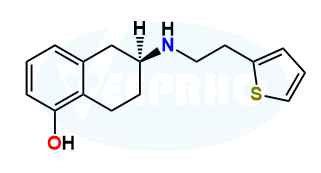
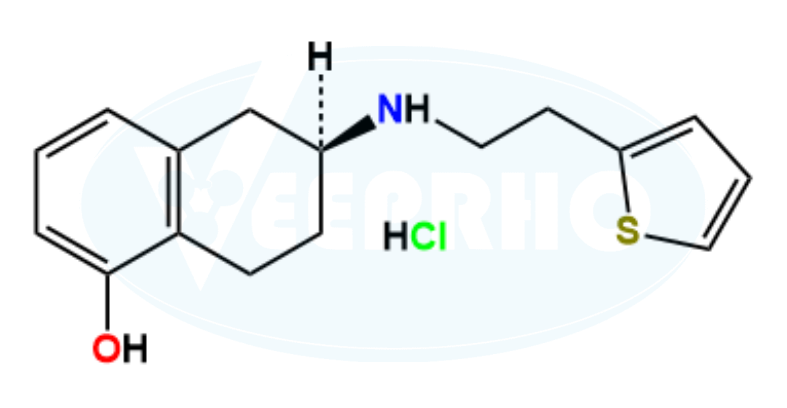
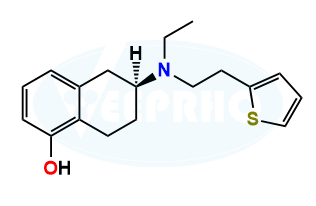
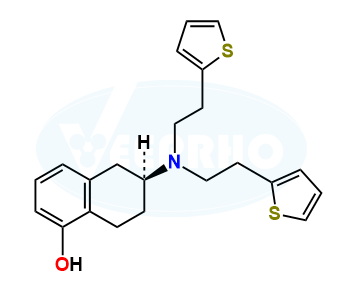


1–18 de 18 resultados18 en stock
| Estructura | Nombre del producto |
|---|---|
| N-Nitroso Rotigotine EP Impurity BVE0015505 · En stock | |
| N-Nitroso Rotigotine EP Impurity CVE0015507 · En stock | |
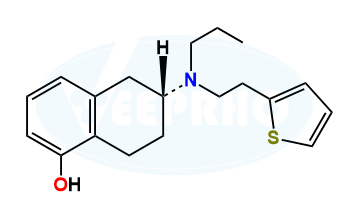 | Rotigotine EP Impurity A (Free Base)N.º CAS 112835-48-0 · VE0025632 · En stock |
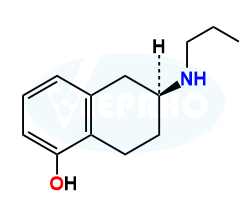 | Rotigotine EP Impurity B (Free Base)N.º CAS 101470-23-9 · VE0025635 · En stock |
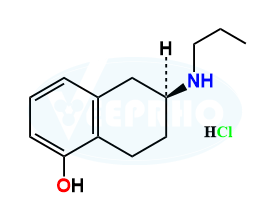 | Rotigotine EP Impurity B (HCl Salt)N.º CAS 1231158-77-2 · VE0025637 · En stock |
| Rotigotine EP Impurity CN.º CAS 153409-14-4 · VE0022334 · En stock | |
| Rotigotine EP Impurity C (HCl Salt)VE0025653 · En stock | |
| Rotigotine EP Impurity DN.º CAS 1369625-04-6 · VE0019952 · En stock | |
| Rotigotine EP Impurity EN.º CAS 2708278-87-7 · VE0019949 · En stock | |
| Rotigotine EP Impurity FN.º CAS 835654-68-7 · VE0019953 · En stock | |
| Rotigotine EP Impurity G (Free Base)N.º CAS 1422357-33-2 · VE0025230 · En stock | |
| Rotigotine EP Impurity H (Free Base)N.º CAS 1148154-91-9 · VE0025229 · En stock | |
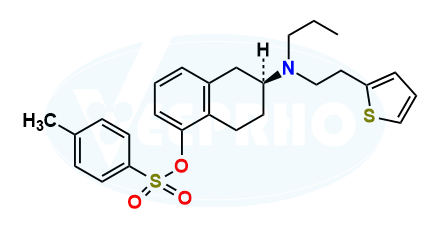 | Rotigotine EP Impurity IN.º CAS 1966941-11-6 · VE0025631 · En stock |
| Rotigotine EP Impurity I (HCl Salt)VE0025656 · En stock | |
 | Rotigotine EP Impurity JVE0019954 · En stock |
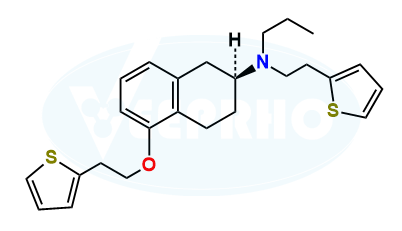 | Rotigotine EP Impurity J (Free Base)VE0025648 · En stock |
| Rotigotine EP Impurity K (Free Base)N.º CAS 51927-48-1 · VE0025652 · En stock | |
| (S)-2-Amino-5-methoxytetralin (S)-MandelateN.º CAS 439133-67-2 · VE0022869 · En stock |
Rotigotine Related Compound
Rotigotine synthesis usually entails a series of complex chemical reactions, and this process may lead to the formation of various impurities and related compounds. There are four main impurities that are present in Rotigotine viz., Impurity A, Impurity B, Impurity C and Impurity D. At certain stages during synthesis, there can be the formation of these impurities which must be kept under certain industry-specified limits for the drug to be safe for use. Presence of excessive impurities may affect the efficacy and safety of the drug.
Preguntas frecuentes
What is Rotigotine used for?
Rotigotine is used for the treatment of Parkinson’s disease and Restless Legs Syndrome (RLS). It helps to manage the symptoms of these conditions such as tremors, stiffness, and difficulty with movement in Parkinson’s disease, and unpleasant sensations in the legs and the urge to move them in RLS.
What is the method of administration for Rotigotine?
Rotigotine is administered through a transdermal patch which is applied directly to the skin. The patch allows for a slow and steady release of medication into the body.
What should I do if I miss a dose?
If you miss a dose, apply the missed patch as soon as you remember. If it is close to the time for your next dose, skip the missed dose and go back to your regular dosing schedule. Do not apply two doses at the same time or extra patches to make up for a missed dose.
What are the common side effects of Rotigotine?
The common side effects of Rotigotine include nausea, vomiting, sleepiness, dizziness, application site reactions, and increased sweating. If these side effects persist, consult your healthcare provider.