
Impuretés de Afatinib
Demander un devis pour un ensemble
- Demander un devis pour ce lot
Afatinib : toutes les impuretés nitrosamines
2 produitsVoir les 2 produits
- N-Nitroso Afatinib VE0020299
- N-Nitroso N-Desmethyl Afatinib VE0020300


1–32 sur 32 résultats18 en stock
| Structure | Nom du produit |
|---|---|
 | Afatinib Amino Pyrrolidinone ImpurityVL5510060 |
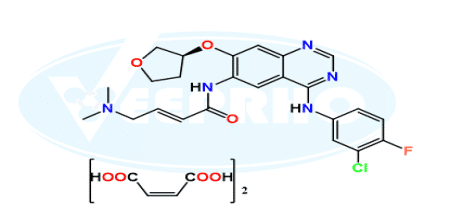 | Afatinib DimaleateN° CAS 850140-73-7 · VL5510061 · En stock |
| Afatinib Impurity 6N° CAS 2413212-07-2 · VL5510018 | |
| Afatinib Impurity 8N° CAS 2413212-09-4 · VE0012027 · En stock | |
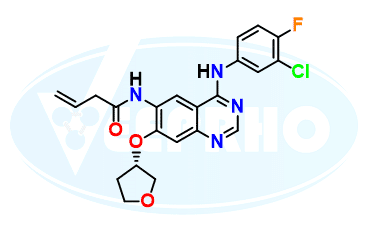 | Afatinib Impurity 11N° CAS 2413212-17-4 · VE0012028 · En stock |
| Afatinib Impurity 12N° CAS 2121530-37-6 · VE0012029 · En stock | |
 | Afatinib Impurity 14VE0012031 · En stock |
 | Afatinib Impurity 15VE0012032 · En stock |
| Afatinib Impurity 16N° CAS 2223677-60-7 · VE0012038 · En stock | |
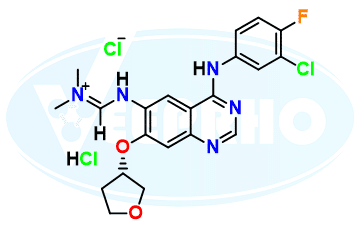 | Afatinib Impurity 17 HClVE0012039 · En stock |
| Afatinib Impurity 18N° CAS 2413212-25-4 · VE0012040 · En stock | |
| Afatinib Impurity 21N° CAS 2044709-72-8 · VE0012041 · En stock | |
| Afatinib Impurity 46N° CAS 2223677-58-3 · VE0012042 · En stock | |
| Afatinib Impurity 50N° CAS 2323570-72-3 · VE0012043 · En stock | |
| Afatinib Impurity 53N° CAS 402855-07-6 · VE0012025 · En stock | |
| Afatinib Impurity 55N° CAS 2223677-62-9 · VE0012026 · En stock | |
| Afatinib Impurity AN° CAS 314771-88-5 · VL5510004 | |
| Afatinib Impurity BN° CAS 314771-76-1 · VL5510005 | |
| Afatinib Impurity CN° CAS 945553-91-3 · VL5510006 | |
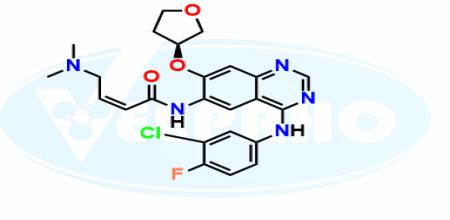 | Afatinib Impurity DN° CAS 1680184-59-1 · VL5510007 · En stock |
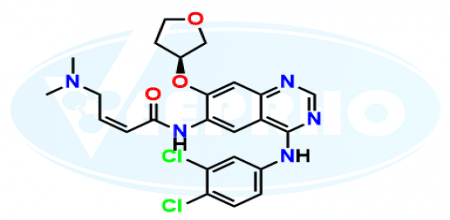 | Afatinib Impurity EVL5510008 |
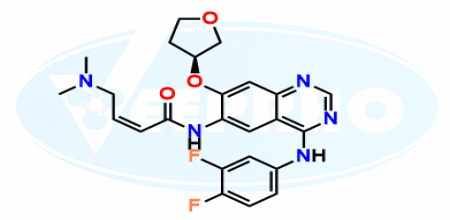 | Afatinib Impurity FVL5510009 · En stock |
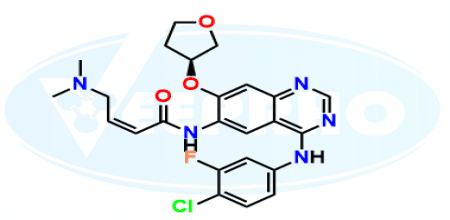 | Afatinib Impurity GVL5510010 |
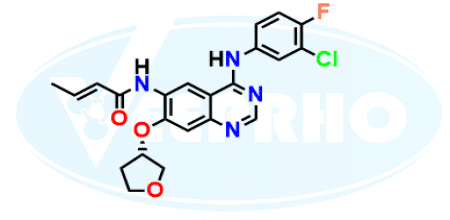 | Afatinib Impurity HVL5510011 |
 | Afatinib Impurity IVL5510012 |
| Afatinib Impurity JN° CAS 1456696-14-2 · VL5510013 | |
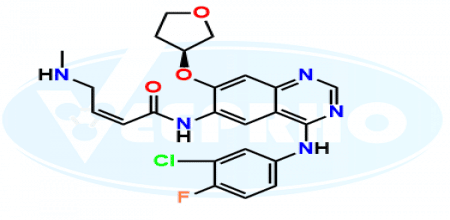 | Afatinib Impurity KVL5510024 |
| Afatinib impurity VN° CAS 2223677-61-8 · VE009821 · En stock | |
 | Afatinib Maleic Acid AdductVL5510057 |
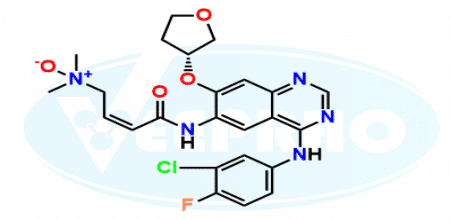 | Afatinib N-Oxide ImpurityVL5510023 |
| N-Nitroso AfatinibVE0020299 | |
| N-Nitroso N-Desmethyl AfatinibVE0020300 · En stock |
Afatinib Related Compound
Afatinib impurities can result from synthesis, formulation processes, or degradation, and must be controlled under ICH and regulatory guidelines to ensure drug safety, purity, and efficacy.
Types of Impurities in Afatinib
Process-Related Impurities
- Unreacted intermediates in the quinazoline or aniline pathways
- Residual solvents such as methanol, acetonitrile, or DMF
- Isomeric by-products or excess reagents from coupling reactions
Degradation Impurities
- Oxidative degradation products under air or light
- Hydrolysis products in high humidity or aqueous environments
- Thermal degradation from excessive heat during storage
Elemental Impurities
- Trace levels of heavy metals (e.g., arsenic, cadmium, lead, mercury) from catalysts or manufacturing equipment
Analytical Techniques for Impurity Detection
- High-Performance Liquid Chromatography (HPLC)
- Mass Spectrometry (MS)
- Gas Chromatography (GC)
- Fourier-Transform Infrared Spectroscopy (FT-IR)
- Nuclear Magnetic Resonance (NMR)
Questions fréquentes
Is Afatinib a chemotherapy drug?
No , Afatinib is not a traditional chemotherapy drug . It is a targeted therapy , specifically a tyrosine kinase inhibitor , designed to block EGFR and related pathways that drive cancer cell growth. Unlike chemotherapy, which kills both cancerous and healthy dividing cells, Afatinib selectively targets cancer cells with EGFR mutations .
Can Afatinib cure cancer?
Afatinib does not cure cancer , but it can significantly slow down or control its growth , particularly in EGFR-positive non-small cell lung cancer . It helps extend progression-free survival and improve quality of life , especially when used in early treatment lines. Cancer may eventually develop resistance , at which point alternative therapies may be required.
What is the mechanism of action of Afatinib?
Afatinib irreversibly binds to the ErbB family of receptors , including EGFR (ErbB1) , HER2 (ErbB2) , and ErbB4 , inhibiting tyrosine kinase activity . This blocks downstream signaling pathways responsible for: Cell proliferation Survival Angiogenesis By blocking these pathways, Afatinib helps prevent tumor growth and spread .
What is the life expectancy of someone on Afatinib?
Life expectancy depends on several factors, including: Type and stage of cancer Specific EGFR mutation present Overall health and response to therapy In clinical trials, median progression-free survival was around 11–13 months , and overall survival can extend to 2 years or more in some patients. However, individual outcomes vary widely, and treatment plans are customized by oncologists .