
Impuretés de Cabergoline
Demander un devis pour un ensemble
- Demander un devis pour ce lot
Cabergoline : toutes les impuretés Ph. Eur.
4 produitsVoir les 4 produits
- Cabergoline EP Impurity A VE0013122
CAS 81409-74-7 - Cabergoline EP Impurity B VE0013124
CAS 166533-36-4 - Cabergoline EP Impurity C VE0013125
CAS 126554-50-5 - Cabergoline EP Impurity D VE0013126
CAS 85329-86-8
- Cabergoline EP Impurity A VE0013122
- Demander un devis pour ce lot
Cabergoline : toutes les impuretés USP
5 produitsVoir les 5 produits
- Cabergoline EP Impurity A VE0013122
CAS 81409-74-7 - Cabergoline EP Impurity B VE0013124
CAS 166533-36-4 - Cabergoline EP Impurity C VE0013125
CAS 126554-50-5 - Cabergoline EP Impurity D VE0013126
CAS 85329-86-8 - Cabergoline N-Oxide VE0013127
- Cabergoline EP Impurity A VE0013122
- Demander un devis pour ce lot
Cabergoline : toutes les impuretés nitrosamines
2 produitsVoir les 2 produits
- N-desallyl-N-Nitroso-Cabergoline VE0019322
- N-Nitroso Desmethyl Cabergoline VE0014152

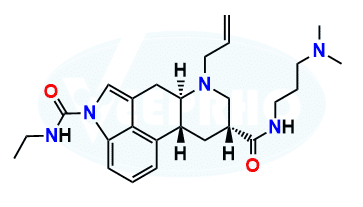
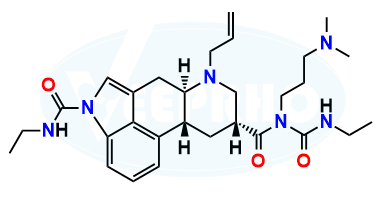
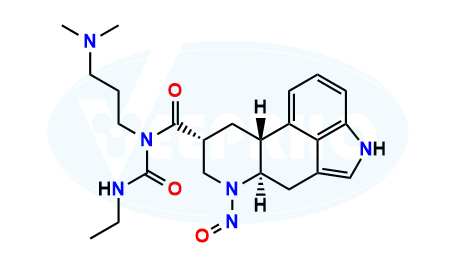
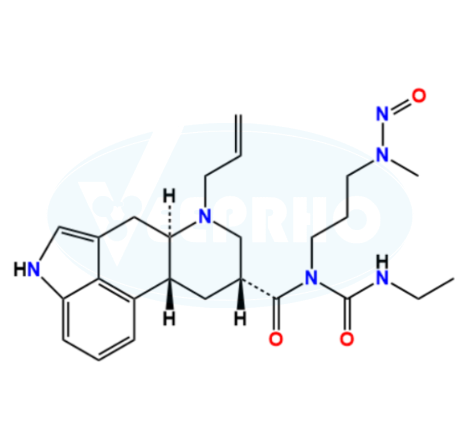
1–10 sur 10 résultats10 en stock
| Structure | Nom du produit |
|---|---|
| Cabergoline EP Impurity AN° CAS 81409-74-7 · VE0013122 · En stock | |
| Cabergoline EP Impurity BN° CAS 166533-36-4 · VE0013124 · En stock | |
| Cabergoline EP Impurity CN° CAS 126554-50-5 · VE0013125 · En stock | |
| Cabergoline EP Impurity DN° CAS 85329-86-8 · VE0013126 · En stock | |
| Cabergoline IsomerN° CAS 81409-91-8 · VE0023428 · En stock | |
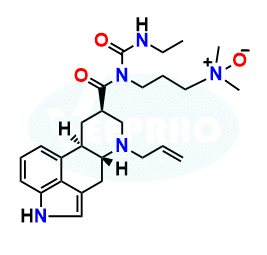 | Cabergoline N-OxideVE0013127 · En stock |
| N-desallyl-N-Nitroso-CabergolineVE0019322 · En stock | |
| N-Nitroso Desmethyl CabergolineVE0014152 · En stock | |
| 6-NorcabergolineN° CAS 153415-36-2 · VE0023718 · En stock | |
| 8S-CabergolineN° CAS 856676-33-0 · VE0023816 · En stock |
Cabergoline Related Compound
During the production and storage of Cabergoline, impurities may form, which must be controlled to ensure the drug’s safety and efficacy. Regulatory authorities, such as the U.S. Food and Drug Administration (FDA), set guidelines on permissible impurity levels in Cabergoline formulations. Common impurities in Cabergoline include:
- Related Substances: These are chemically similar compounds that may form during the synthesis of Cabergoline. Monitoring related substances is essential to maintain the drug’s safety and effectiveness.
- Degradation Products: Cabergoline may degrade over time due to environmental factors such as light, heat, or moisture. Degradation products can reduce the drug’s potency and effectiveness.
- Residual Solvents: Trace amounts of solvents used in the manufacturing process may remain in the final product. Regulatory guidelines specify permissible levels to ensure these solvents do not pose health risks.
Advanced analytical methods, such as High-Performance Liquid Chromatography (HPLC), are employed to detect and quantify these impurities, ensuring that Cabergoline meets stringent quality standards.
Questions fréquentes
What is the drug Cabergoline used for?
Cabergoline is primarily used to treat high levels of prolactin in the blood (hyperprolactinemia). It is also prescribed for conditions caused by prolactin-secreting tumors, such as pituitary adenomas, and may be used in other medical scenarios where prolactin reduction is needed.
Can Cabergoline cause hypersexuality?
Yes, Cabergoline, like other dopamine agonists, may cause behavioral changes in some individuals, including increased libido or hypersexuality. These side effects are rare but should be discussed with a healthcare provider if they occur.
What is the side effect of Cabergoline?
Common side effects of Cabergoline include nausea, dizziness, fatigue, and headaches. More severe but less common side effects may include heart valve problems, low blood pressure, and mental health changes, such as mood swings or compulsive behaviors.
Do you gain weight on Cabergoline?
Weight gain is not a common side effect of Cabergoline. In fact, by addressing high prolactin levels, it may help normalize metabolism and reduce weight-related issues in some patients. However, individual responses can vary, and any significant changes in weight should be reported to a healthcare provider.