
Impuretés de Capecitabine
Demander un devis pour un ensemble
- Demander un devis pour ce lot
Capecitabine : toutes les impuretés Ph. Eur.
7 produitsVoir les 7 produits
- Capecitabine EP Impurity A VL243001
CAS 66335-38-4 - Capecitabine EP Impurity B VL243002
CAS 3094-09-5 - Capecitabine EP Impurity C VL243010
CAS 161599-46-8 - Capecitabine EP Impurity D VL243008
CAS 910129-15-6 - Capecitabine EP Impurity E VL243009
CAS 162204-30-0 - Capecitabine EP Impurity F VL243003
CAS 921769-65-5 - Capecitabine EP Impurity G VL243004
CAS 162204-20-8
- Capecitabine EP Impurity A VL243001
- Demander un devis pour ce lot
Capecitabine : toutes les impuretés USP
9 produitsVoir les 9 produits
- Capecitabine EP Impurity A VL243001
CAS 66335-38-4 - Capecitabine EP Impurity B VL243002
CAS 3094-09-5 - Capecitabine EP Impurity C VL243010
CAS 161599-46-8 - Capecitabine EP Impurity D VL243008
CAS 910129-15-6 - Capecitabine EP Impurity E VL243009
CAS 162204-30-0 - Capecitabine EP Impurity F VL243003
CAS 921769-65-5 - Capecitabine EP Impurity G VL243004
CAS 162204-20-8 - Capecitabine Related Compound I VL243007
CAS 1262133-68-5 - Capecitabine USP Impurity H VL243006
CAS 1262133-66-3
- Capecitabine EP Impurity A VL243001


1–28 sur 28 résultats28 en stock
| Structure | Nom du produit |
|---|---|
| Capecitabine 3-O-BDR ImpurityN° CAS 1262133-64-1 · VE007562 · En stock | |
 | Capecitabine alpha-IsomerVE007563 · En stock |
 | Capecitabine Descarbamate Diacetyl alpha-IsomerVE007564 · En stock |
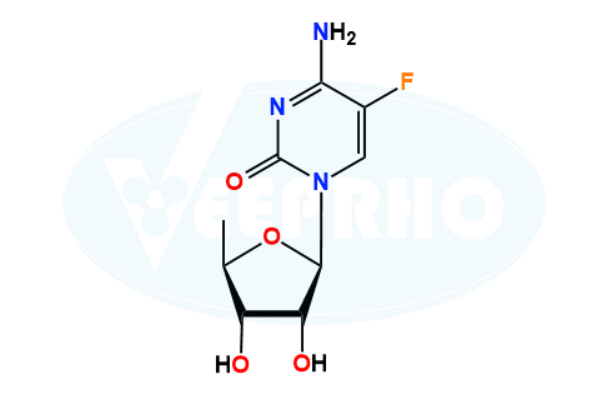
| Capecitabine EP Impurity AN° CAS 66335-38-4 · VL243001 · En stock | |
| Capecitabine EP Impurity BN° CAS 3094-09-5 · VL243002 · En stock | |
| Capecitabine EP Impurity CN° CAS 161599-46-8 · VL243010 · En stock | |
| Capecitabine EP Impurity DN° CAS 910129-15-6 · VL243008 · En stock | |
| Capecitabine EP Impurity EN° CAS 162204-30-0 · VL243009 · En stock | |
| Capecitabine EP Impurity FN° CAS 921769-65-5 · VL243003 · En stock | |
| Capecitabine EP Impurity GN° CAS 162204-20-8 · VL243004 · En stock | |
| Capecitabine Impurity 3N° CAS 216450-02-1 · VE007568 · En stock | |
 | Capecitabine Impurity 4N° CAS 1313238-38-8 · VE007569 · En stock |
 | Capecitabine Impurity 5VE0013142 · En stock |
| Capecitabine Impurity 12N° CAS 76497-54-6 · VE0013143 · En stock | |
| Capecitabine Impurity 13N° CAS 62211-93-2 · VE0013144 · En stock | |
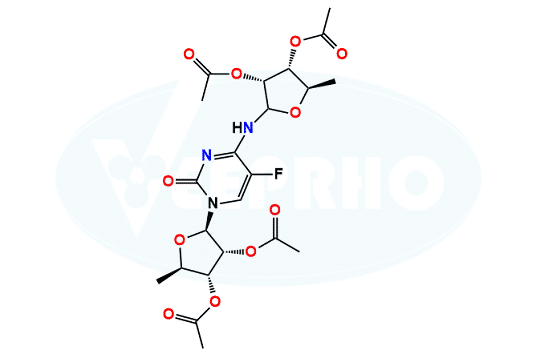 | Capecitabine Impurity 14 (Mixture of Diastereomers)VE0013146 · En stock |
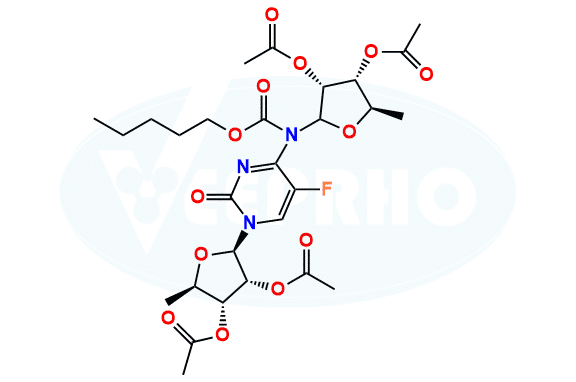 | Capecitabine Impurity 15 (Mixture of Diastereomers)VE0013148 · En stock |
 | Capecitabine Impurity 16VE0013151 · En stock |
 | Capecitabine Impurity 19VE0013153 · En stock |
| Capecitabine Methoxy AnalogN° CAS 1446089-83-3 · VE007565 · En stock | |
| Capecitabine Related Compound IN° CAS 1262133-68-5 · VL243007 · En stock | |
| Capecitabine USP Impurity HN° CAS 1262133-66-3 · VL243006 · En stock | |
 | Capecitabine α-IsomerVE007025 · En stock |
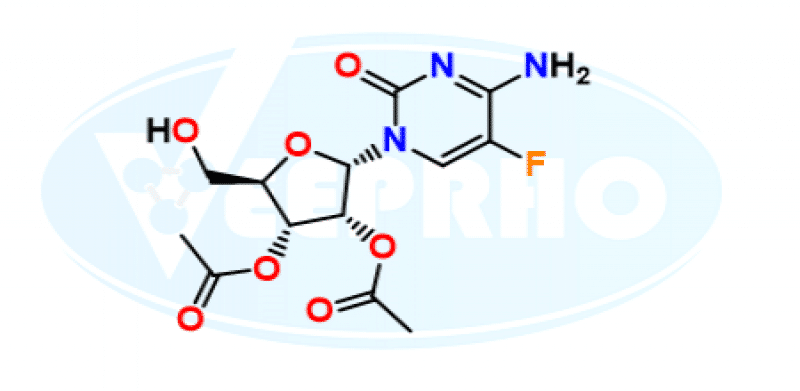 | Capecitabine α-Isomer Diacetyl ImpurityVE007566 · En stock |
| N-Carbamoyl-2-fluoro-β-alanineN° CAS 5006-64-4 · VE0010217 · En stock | |
| N-Nitroso CapecitabineVE0024381 · En stock | |
| TetrahydrouridineN° CAS 18771-50-1 · VE007567 · En stock | |
| 5-Fluoro-2-methoxypyrimidin-4-amineN° CAS 1993-63-1 · VE0019532 · En stock |
Capecitabine Related Compound
Impurities in Capecitabine can arise due to chemical synthesis, degradation, or storage conditions. Regulatory agencies such as the FDA, EMA, and ICH enforce strict impurity limits to ensure drug purity, stability, and efficacy.
Types of Impurities in Capecitabine
Process-Related Impurities • Unreacted precursors from the chemical synthesis process • Residual solvents (e.g., methanol, ethanol, acetone) used during manufacture • By-products generated during the synthesis of the prodrug Degradation Impurities • Oxidation by-products that may form upon exposure to air or light • Hydrolysis products due to moisture exposure • Thermal degradation compounds formed at elevated temperatures Elemental Impurities • Heavy metal residues originating from catalysts or reagents • Trace levels of metals such as lead, arsenic, cadmium, and mercury Analytical Techniques for Impurity Detection • High-Performance Liquid Chromatography (HPLC) • Gas Chromatography (GC) • Fourier-Transform Infrared Spectroscopy (FT-IR) • Mass Spectrometry (MS)
Questions fréquentes
What to avoid while taking Capecitabine?
• Avoid exposure to others’ bodily fluids: As Capecitabine is a cytotoxic agent, patients should take precautions to minimize accidental exposure to family members or caregivers, especially during handling of body fluids. • Avoid direct contact with broken tablets or residues: Handling Capecitabine without gloves or proper precautions can lead to unintended skin exposure. • Avoid sun exposure: Some patients are advised to limit excessive sun or UV exposure since chemotherapy drugs can increase photosensitivity. • Avoid alcohol: It may exacerbate certain side effects like gastrointestinal upset.
Why can't you touch Capecitabine?
• Handling precautions: Capecitabine is a chemotherapy agent and can be hazardous if it comes into direct contact with the skin. • Risk of exposure: Direct contact with the powder or residues can lead to unintended absorption, potentially causing local irritation or systemic exposure. • Proper handling required: Always use gloves and follow safety guidelines when handling the medication, particularly in its raw or powdered form.
What is the most common side effect of Capecitabine?
• Hand-foot syndrome (Palmar-Plantar Erythrodysesthesia): This is one of the most common side effects and is characterized by redness, swelling, pain, and peeling of the skin on the palms of the hands and soles of the feet. • Other common side effects include diarrhea, nausea, fatigue, and abdominal pain.
How long before Capecitabine side effects start?
• Onset of side effects: Side effects can begin to appear within the first week of treatment, although the most notable effects, such as hand-foot syndrome, often develop within 1 to 2 weeks after starting therapy. • The timing can vary depending on individual patient factors, dosage, and treatment schedule.