
Impuretés de Eliglustat
Demander un devis pour un ensemble
- Demander un devis pour ce lot
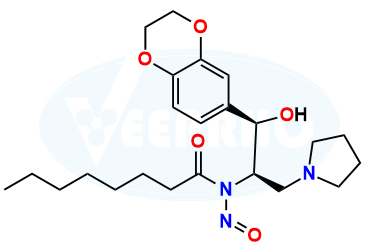
Eliglustat : toutes les impuretés nitrosamines
3 produitsVoir les 3 produits


1–3 sur 3 résultats2 en stock
| Structure | Nom du produit |
|---|---|
| Eliglustat Impurity 10N° CAS 491833-28-4 · VE0014706 · En stock | |
| Eliglustat Nitroso Impurity 1VE0028962 | |
| N-Nitroso EliglustatVE0024455 · En stock |
Eliglustat Impurities and Related Compound
The active pharmaceutical ingredient and finished product impurity profile is characterized and controlled by validated chromatographic and mass spectrometric methods; specified related compounds such as N-dealkylated, desmethyl, N-oxide, and hydroxylated derivatives are typically limited individually to low single-digit parts per thousand levels, with common specifications setting individual known impurities at or below 0.10 percent and total related substances at or below 0.50 percent by area percent on HPLC. Degradation products formed under forced degradation conditions include oxidative N-oxide species and hydrolytic cleavage products, which are routinely monitored and expected to remain below 0.2 to 0.3 percent under accelerated stability for compliant batches. Residual solvents, heavy metals, and other quality attributes are controlled to pharmacopeial and ICH guideline limits, and analytical release testing includes related-substance assays, purity profiling, and stability-indicating assessments to ensure impurity levels remain within established acceptance criteria throughout shelf life.
Questions fréquentes
What is eliglustat used for?
Eliglustat is used as oral substrate reduction therapy for adults with Gaucher disease type 1 to decrease the production and tissue accumulation of glucosylceramide, which leads to reductions in spleen and liver enlargement and improvements in hematologic parameters.
What is the cost of Eliglustat?
The cost of eliglustat varies widely by country, pharmacy, dose regimen, and insurance coverage. Without insurance out-of-pocket costs for specialty orphan drugs can be substantial; many patients obtain coverage through commercial or government payers or manufacturer patient support programs. For an exact price estimate contact your pharmacy, insurer, or the manufacturer for current list price and available assistance.
What is the difference between Miglustat and Eliglustat?
Both miglustat and eliglustat inhibit glucosylceramide synthase but they differ in chemistry, selectivity, and clinical profile. Miglustat is an iminosugar with broader enzyme interactions, crosses the blood brain barrier, and is associated with gastrointestinal and neurological adverse effects; it has been used when other options are unsuitable. Eliglustat is a more selective small molecule designed for type 1 Gaucher disease, has higher potency against the target enzyme, and requires CYP2D6 genotype-guided dosing because of its cytochrome P450 metabolism and drug interaction profile.
What is the therapeutic area of Eliglustat?
Eliglustat is used in the therapeutic area of lysosomal storage disorders, specifically as a treatment for Gaucher disease type 1 within the broader field of rare inherited metabolic diseases.