
Impuretés de Finerenone
Demander un devis pour un ensemble
- Demander un devis pour ce lot
Finerenone : toutes les impuretés nitrosamines
2 produitsVoir les 2 produits
1–14 sur 14 résultats12 en stock
| Structure | Nom du produit |
|---|---|
| Finerenone 2-Cyanoethyl Ester ImpurityN° CAS 1050477-44-5 · VE0025968 · En stock | |
| Finerenone Amide ImpurityN° CAS 3046142-41-7 · VE0028895 · En stock | |
| Finerenone Cyano Ethyl Ethoxy ImpurityN° CAS 2640574-73-6 · VE0023599 · En stock | |
| Finerenone Impurity 1N° CAS 2389020-00-0 · VE0016156 · En stock | |
| Finerenone Impurity 2N° CAS 1050477-45-6 · VE0016157 · En stock | |
| Finerenone Impurity 3N° CAS 2084136-51-4 · VE0016158 · En stock | |
| Finerenone Impurity 5N° CAS 2640280-85-7 · VE0016159 · En stock | |
| Finerenone Impurity 7N° CAS 2640280-84-6 · VE0016160 · En stock | |
| Finerenone Impurity 19N° CAS 1017082-75-5 · VE0029145 · En stock | |
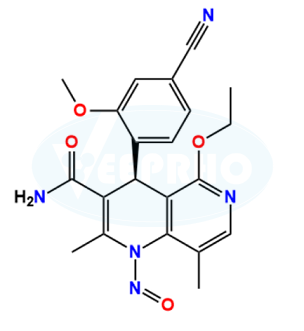
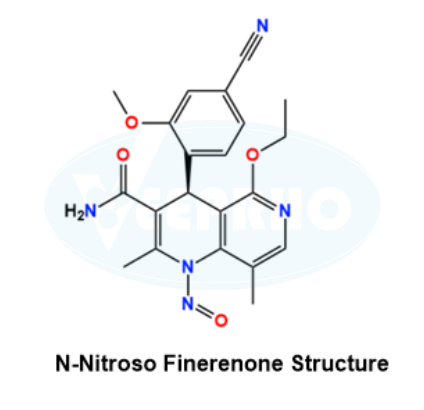
| N-Nitroso FinerenoneVE0014374 | |
| (Rac)-FinerenoneN° CAS 1050477-27-4 · VE0025987 | |
| 2-Chloro-5-methylpyridine 1-oxideN° CAS 20173-49-3 · VE0029118 · En stock | |
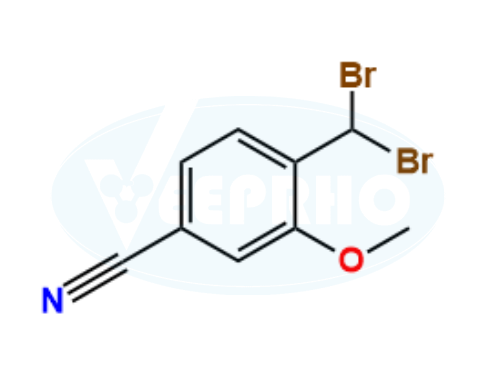 | 4-(Dibromomethyl)-3-methoxybenzonitrileN° CAS 914106-35-7 · VE0028702 · En stock |
| 4-Cyano-2-methoxybenzyl BromideN° CAS 104436-60-4 · VE0028703 · En stock |
Finerenone Related Compound
Impurities in finerenone primarily arise from its multi-step synthetic route, which involves heterocyclic ring construction, chiral center introduction, and amide coupling. Finerenone contains a dihydropyridine-based non-steroidal core, and impurity control is governed by ICH Q3A/B for organic impurities, ICH M7 for potential genotoxic impurities, and ICH Q3D for elemental impurities.
Types of Impurities in Finerenone
Process-Related Impurities • Unreacted starting materials like substituted pyridines or carboxylic acid derivatives • Intermediate compounds from partial or failed coupling steps • Regioisomeric and stereoisomeric impurities (important due to chirality) • Residual solvents such as acetonitrile, DMF, or ethyl acetate • Coupling reagent by-products (e.g., carbodiimide-related residues) Degradation Impurities • Hydrolytic degradation of the amide bond • Oxidation of heterocyclic or aromatic components • Isomerization or rearrangement of the dihydropyridine ring • Photodegradation under light exposure Elemental Impurities • Trace metals such as palladium, iron, or copper used in synthesis • Controlled under ICH Q3D limits for oral drug products Analytical Techniques for Impurity Detection
- HPLC – primary technique for related substance analysis and assay • LC-MS/MS – for identification and characterization of unknown impurities • GC – for residual solvent analysis • Chiral HPLC – for detection of stereoisomeric impurities • ICP-MS – for elemental impurity profiling • Photostability testing (ICH Q1B) – due to sensitivity to light • Forced degradation studies (ICH Q1A) – to assess stability under thermal, oxidative, and acidic/basic conditions
Questions fréquentes
What is Finerenone used for?
Finerenone is used to treat chronic kidney disease in adults with type 2 diabetes, helping to slow disease progression and reduce cardiovascular risk.
How does Finerenone work?
It blocks the mineralocorticoid receptor, reducing inflammation and fibrosis in the kidneys and heart without hormonal side effects.
What are the common side effects of Finerenone?
Hyperkalemia (elevated potassium) • Hypotension • Dizziness • Rare: renal function decline requiring dose adjustment
Is Finerenone different from Spironolactone?
Yes. Finerenone is non-steroidal and more selective for the mineralocorticoid receptor, with fewer hormonal side effects and improved tolerability.
How should Finerenone be stored?
Store at 20–25°C in a dry, tightly closed container, protected from light and moisture.