
Impuretés de Flupirtine
Demander un devis pour un ensemble
- Demander un devis pour ce lot
Flupirtine : toutes les impuretés nitrosamines
8 produitsVoir les 8 produits
- Isopropyl (2-amino-6-((4-fluorobenzyl)(nitroso)amino)pyridin-3-yl)carbamate VE007901
- Methyl (2-amino-6-((4-fluorobenzyl)(nitroso)amino)pyridin-3-yl)carbamate VE007903
- N-Nitroso AFBP Impurity (Flupirtine) VE007888
- N-Nitroso ANFP Impurity (Flupirtine) VE007887
- N-Nitroso Flupirtine VE006870
- N-Nitroso Flupirtine Dimer Impurity VE0024437
- N-Nitroso Flupirtine Related Compound 9 VE0010473
- Propyl (2-amino-6-((4-fluorobenzyl)(nitroso)amino)pyridin-3-yl)carbamate VE007902


1–15 sur 15 résultats15 en stock
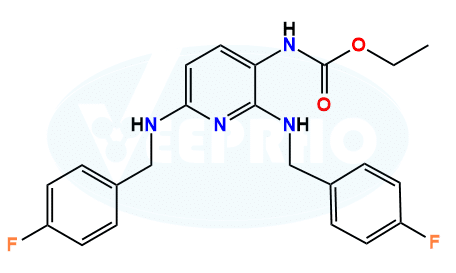
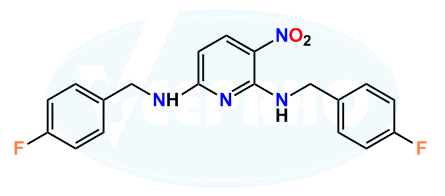
Flupirtine and Related Compound
Analytical control of flupirtine raw material and formulated products focuses on related substances arising from incomplete synthesis, dealkylation, N-oxidation, oxidative ring transformations and acetylated or conjugated species formed during manufacture or storage; typical quality specifications applied by manufacturers and compendial monographs limit individual known or unknown related compounds to about 0.1 percent w by weight and total impurities to about 0.5 percent w by weight as routine acceptance criteria, with lower reporting thresholds for unidentified peaks at 0.05 percent and with potential genotoxic or mutagenic impurities assessed against ICH M7 permissible daily intake limits often expressed in micrograms per day rather than percent, specific impurity profiling uses validated HPLC, LC-MS and related stability studies to identify and quantify the primary related compounds and to ensure limits are met for safe release.
Questions fréquentes
What is flupirtine used for?
Flupirtine was used to treat various acute and chronic pain conditions including musculoskeletal pain and certain neuropathic pain states when other therapies were ineffective or contraindicated, due to its non-opioid mechanism and muscle-relaxant properties.
Is flupirtine better than tramadol?
Flupirtine and tramadol have different mechanisms and risk profiles so direct superiority depends on the clinical context; flupirtine is non-opioid and lacks typical opioid adverse effects but has a higher risk of severe liver injury, while tramadol is an opioid analgesic with serotonergic activity and a distinct set of tolerability concerns including dependency potential; choice should be based on individual efficacy, safety and regulatory status.
Is flupirtine toxic to the liver?
Yes, flupirtine has been associated with drug induced liver injury including serious and sometimes fatal cases, which led regulatory authorities to restrict or suspend its use and to recommend liver function monitoring for any patients exposed for more than short durations.
Is flupirtine FDA approved?
No, flupirtine is not approved by the U.S. Food and Drug Administration for marketing in the United States and its European marketing authorizations were restricted and later withdrawn following safety reviews related to hepatotoxicity.