
Linagliptin 2-Chloromethyl Impurity
Parent: Linagliptin


Linagliptin Bromo Impurity (Z-Isomer)
Parent: Linagliptin

Linagliptin Diene Impurity
Parent: Linagliptin

Linagliptin Dimer Impurity
Parent: Linagliptin

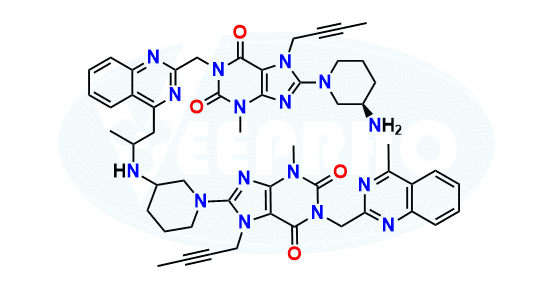
Linagliptin Dimer Impurity 3 (Mixture of Diastereomers)
Parent: Linagliptin

Linagliptin Dimer Impurity 4
Parent: Linagliptin

Linagliptin Dimer Impurity 6
Parent: Linagliptin


Linagliptin Fumaric Acid Adduct (2Na Salt)
Parent: Linagliptin

Linagliptin Glucoside (Mixture of Diastereomers)
Parent: Linagliptin


Linagliptin Impurity 55 (Mixture of Z and E Isomers)
Parent: Linagliptin


Linagliptin and Related Compound
Typical impurity and related compound control for linagliptin API addresses residual starting materials, synthesis intermediates, regioselective and stereochemical isomers, oxidative N-oxide species, dealkylated and hydroxylated degradation products, and trace solvent residues; analytical control is most commonly performed by validated reversed phase HPLC with photodiode array detection and orthogonal LC-MS confirmation for unknowns. Manufacturer specifications and pharmacopeial monographs commonly set assay acceptance at high purity, for example greater than or equal to 98.0 percent by HPLC, with individual unspecified impurities commonly limited to the range of 0.10 percent to 0.30 percent and total impurities limited to 1.0 percent or lower, supplemented by reporting and identification thresholds and qualification studies in accordance with ICH Q3A and Q3B guidance. Stability studies evaluate known degradants under hydrolytic, oxidative, photolytic and thermal stress and control strategies include impurity identification, process optimization to minimize key byproducts, and routine batch release testing to ensure consistent related substances profiles.
FAQ
Linagliptin is used to improve glycemic control in adults with type 2 diabetes mellitus as an adjunct to diet and exercise, either as monotherapy when metformin is unsuitable or as add on therapy to other antihyperglycemic agents. It works by inhibiting the enzyme DPP-4 to increase endogenous incretin hormones, producing glucose dependent increases in insulin and decreases in glucagon.
Metformin and linagliptin have distinct mechanisms and clinical roles. Metformin primarily reduces hepatic gluconeogenesis and improves peripheral insulin sensitivity and is the recommended first line agent for most patients with type 2 diabetes. Linagliptin is an incretin based therapy that inhibits DPP-4 and augments GLP-1 and GIP activity, lowering postprandial glucose with a low risk of hypoglycemia when used alone. Tolerability and contraindications differ, for example metformin carries a rare risk of lactic acidosis and requires renal function assessment for dosing, while linagliptin does not require dose adjustment for renal impairment.
Linagliptin is eliminated predominantly via a nonrenal route and only a small fraction of the parent compound is excreted unchanged in urine, so dose adjustment for renal impairment is generally not required and the drug has been used in patients with a wide range of renal function including dialysis. Despite this, patients with renal disease should be monitored for overall glycemic control and comorbid conditions, and clinicians should follow current product labeling and local guidelines.
Linagliptin should not be used in patients with known hypersensitivity to linagliptin or any excipient, and it is not indicated for treatment of type 1 diabetes or diabetic ketoacidosis. Caution or alternative therapy is recommended for patients with a history of pancreatitis, and clinicians should evaluate risks and benefits in pregnancy, breastfeeding, and severe hepatic impairment. Concomitant use with insulin or insulin secretagogues requires monitoring for hypoglycemia and dose adjustment of the other agents may be needed.