
Impuretés de Nortriptyline
Demander un devis pour un ensemble
- Demander un devis pour ce lot
Nortriptyline : toutes les impuretés Ph. Eur.
3 produitsVoir les 3 produits
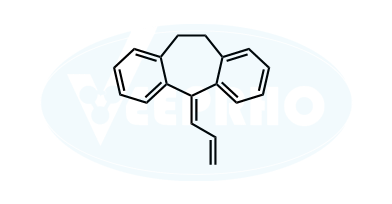
- Amitriptyline EP Impurity A VL6350007
CAS 1210-35-1 - Nortriptyline EP Impurity G VE0025065
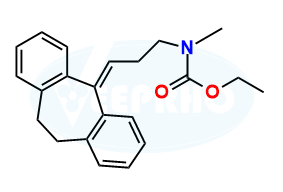
CAS 16234-88-1 - Nortriptyline Hydrochloride EP Impurity H VE0021802
CAS 24755-73-5
- Amitriptyline EP Impurity A VL6350007
- Demander un devis pour ce lot
Nortriptyline : toutes les impuretés nitrosamines
2 produitsVoir les 2 produits
- N-Nitroso Nortriptyline VE008160
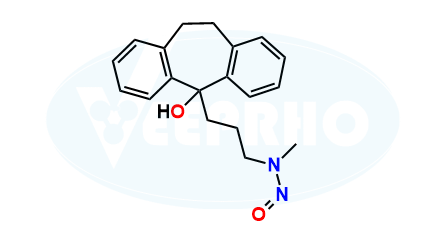
CAS 55855-42-0 - N-Nitroso-5-Hydroxy Nortriptyline VE0022670
- N-Nitroso Nortriptyline VE008160


1–8 sur 8 résultats8 en stock
| Structure | Nom du produit |
|---|---|
| Amitriptyline EP Impurity AN° CAS 1210-35-1 · VL6350007 · En stock | |
| N-Nitroso NortriptylineN° CAS 55855-42-0 · VE008160 · En stock | |
| N-Nitroso-5-Hydroxy NortriptylineVE0022670 · En stock | |
| Nortriptyline EP Impurity GN° CAS 16234-88-1 · VE0025065 · En stock | |
| Nortriptyline Hydrochloride EP Impurity HN° CAS 24755-73-5 · VE0021802 · En stock | |
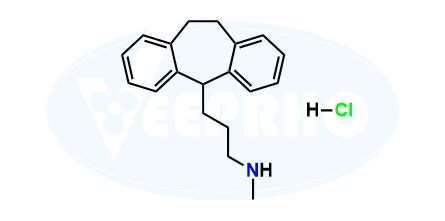 | Nortriptyline Impurity 1 (HCl Salt)N° CAS 1750-07-8 · VE0019813 · En stock |
 | Nortriptyline Impurity 3 (HCl Salt)VE0019842 · En stock |
| 5-(3-(Methylamino)propyl)-10,11-dihydro-5H-dibenzo[a,d][7]annulen-5-olN° CAS 2939-66-4 · VE0021803 · En stock |
Nortriptyline Impurities and Related Compound
Pharmaceutical grade nortriptyline is manufactured and controlled to limit related compounds, degradation products and residual process impurities; known related substances include N-oxides, hydroxylated or demethylated analogs such as 10-hydroxynortriptyline, trace amounts of parent tricyclic analogs and potential ring-modified byproducts. Typical specification approaches used by manufacturers and pharmacopeial monographs set individual known related compound limits in the low parts-per-thousand to parts-per-ten-thousand range, commonly with individual impurity acceptance criteria around 0.1 to 0.2 percent by mass and total impurities limited to approximately 0.5 to 1.0 percent, while reporting and identification thresholds follow ICH guidance and are often at or below 0.05 to 0.1 percent depending on exposure; impurity profiling is performed by validated chromatographic and mass spectrometric methods, and residual solvents and elemental impurities are controlled to limits consistent with ICH Q3C and Q3D.
Questions fréquentes
What is nortriptyline used for?
Nortriptyline is approved and commonly used for major depressive disorder and is prescribed off label for neuropathic pain, migraine prophylaxis, certain chronic pain syndromes, and in some cases for attention deficit hyperactivity disorder and smoking cessation support; choice and dosing depend on the clinical indication and patient factors.
Is nortriptyline a sleeping pill?
No, nortriptyline is not classified as a sleeping pill; however, because of antihistaminic and anticholinergic properties it can cause sedation and be used to improve sleep as a secondary effect in some patients, but it is not a hypnotic and should not be used solely for short term insomnia without medical supervision.
Is nortriptyline a high risk medication?
Nortriptyline can be considered higher risk than many newer antidepressants due to its anticholinergic effects, potential for cardiotoxicity at overdose or in vulnerable patients, drug interaction potential especially via CYP2D6, and need for dose adjustments in elderly or medically complex patients; monitoring, ECG when indicated and careful dose titration reduce risk.
What are the bad side effects of nortriptyline?
Common adverse effects include dry mouth, constipation, urinary retention, blurred vision, sedation, orthostatic hypotension and weight changes due to anticholinergic and antihistaminic activity; more serious effects can include cardiac conduction abnormalities, tachycardia, worsening of glaucoma or urinary retention, seizures in predisposed individuals, and risk of severe toxicity in overdose, so clinicians weigh benefits versus risks and monitor accordingly.