Impuretés de Ranolazine

La ranolazine est un médicament cardiaque utilisé pour traiter l’angine de poitrine chronique (douleur thoracique). Elle ne soulage pas les épisodes aigus de douleur thoracique, mais contribue à améliorer le flux sanguin vers le cœur. Elle est commercialisée sous le nom de marque Ranexa.

Demander un devis pour un ensemble

1–28 sur 28 résultats28 en stock
StructureNom du produitN° CASRéf. cat.Disponibilité
OOOHN+O−NONHLidocaine Dimer N-OxidePrincipe actif : Lidocaine / RanolazineSynonymes: Ranolazine 4N-OxideC24H33N3O5N° CAS 2725395-82-2 · VE0016054 · En stock2725395-82-2VE0016054En stock
OOOHNNONHm-RanolazineC₂₄H₃₃N₃O₄N° CAS 1393717-46-8 · VL770017 · En stock1393717-46-8VL770017En stock
OOOHNNONHN-(2,4-dimethylphenyl)-2-(4-(2-hydroxy-3-(2-methoxyphenoxy)propyl)piperazin-1-yl)acetamideC24H33N3O4VE0021719 · En stockVE0021719En stock
ONHHON-(2,6-Dimethylphenyl)-2-hydroxyacetamideC10H13NO2N° CAS 29183-14-0 · VE0010656 · En stock29183-14-0VE0010656En stock
OOOHNNONNON-Nitroso RanolazineC24H32N4O5VE0010066 · En stockVE0010066En stock
OOHONNNON-Nitroso Ranolazine Impurity 1C14H21N3O4VE0010326 · En stockVE0010326En stock
NNOONHNN-Nitroso Ranolazine Impurity 2C14H20N4O2VE0024720 · En stockVE0024720En stock
NNOONNNON-Nitroso Ranolazine Impurity 3C14H19N5O3VE0024731 · En stockVE0024731En stock
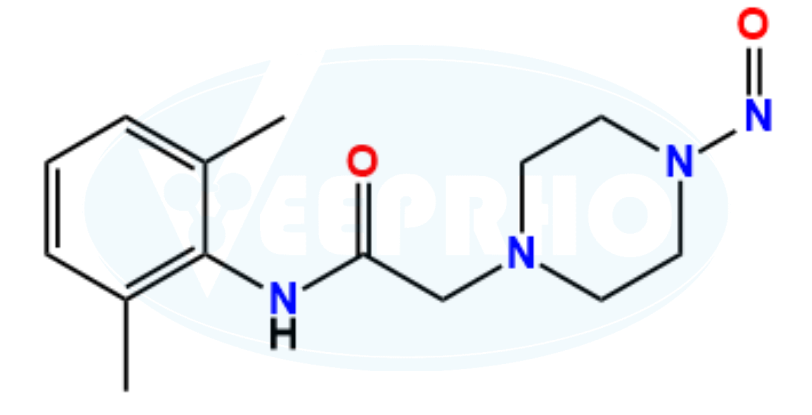
ONHNNNONitroso Piperazine AcetamidePrincipe actif : RANOLAZINESynonymes: N-(2,6-Dimethylphenyl)-2-(4-nitrosopiperazin-1-yl)acetamideC14H20N4O2N° CAS 3038740-93-8 · VE007754 · En stock3038740-93-8VE007754En stock
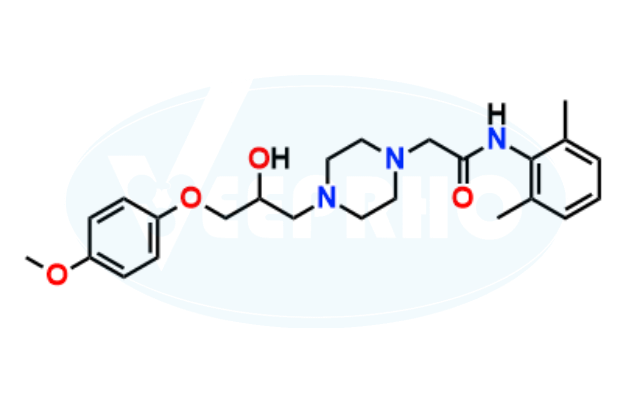
ONHNNOHOOp-RanolazineC24H33N3O4N° CAS 1393717-45-7 · VL770016 · En stock1393717-45-7VL770016En stock
OOHONNOHOORanolazine Alcohol DimerC24H34N2O6N° CAS 333749-57-8 · VL770010 · En stock333749-57-8VL770010En stock
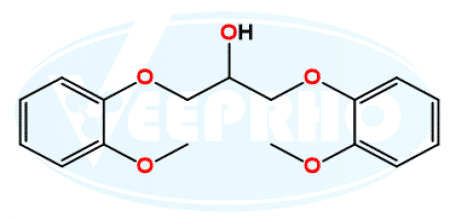
Structure de Ranolazine DianisylglycerolRanolazine DianisylglycerolC17H20O5N° CAS 16929-60-5 · VL770019 · En stock16929-60-5VL770019En stock
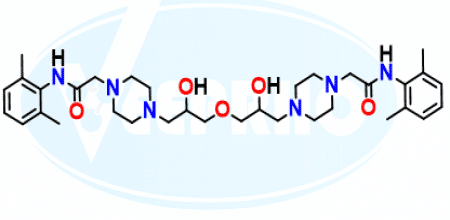
Structure de Ranolazine ether dimerRanolazine ether dimerC₃₃H₅₀N₆O₅VL770018 · En stockVL770018En stock
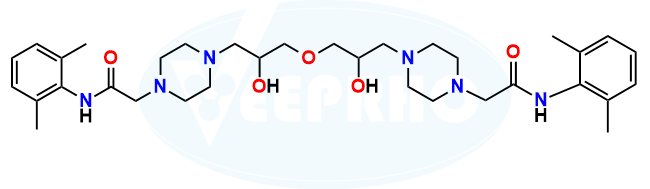
Structure de Ranolazine Impurity 3Ranolazine Impurity 3C34H52N6O5VE0019790 · En stockVE0019790En stock
OOOHNNONHOOORanolazine Impurity CC34H45N3O7N° CAS 2724549-66-8 · VE0021561 · En stock2724549-66-8VE0021561En stock
OOOHNHNRanolazine N-Desacetamido ImpurityC14H22N2O3N° CAS 162712-35-8 · VL770015 · En stock162712-35-8VL770015En stock
OOOHN+O−N+O−ONHRanolazine N,N-Dioxide ImpurityC24H33N3O6N° CAS 1246816-00-1 · VL770002 · En stock1246816-00-1VL770002En stock
OOOHOOONNONHRanolazine O-alkylated ImpurityC33H43N3O7VE0021717 · En stockVE0021717En stock
NHONNOHHORanolazine O-desaryl impurityC₁₇H₂₇N₃O₃N° CAS 172430-46-5 · VL770014 · En stock172430-46-5VL770014En stock
NHONNOHOOHRanolazine O-Desmethyl ImpurityC23H31N3O4N° CAS 172430-45-4 · VL770021 · En stock172430-45-4VL770021En stock
OOORanolazine Related Compound AC10H12O3N° CAS 2210-74-4 · VL770008 · En stock2210-74-4VL770008En stock
NHONNOHORanolazine Related Compound BC23H31N3O3N° CAS 755711-09-2 · VL770009 · En stock755711-09-2VL770009En stock
NHONHNRanolazine Related Compound CC14H21N3ON° CAS 5294-61-1 · VL770004 · En stock5294-61-1VL770004En stock
NHONNONHRanolazine Related Compound DC24H32N4O2N° CAS 380204-72-8 · VL770003 · En stock380204-72-8VL770003En stock
OOOHNNONH(S)-2-(4-(2-hydroxy-3-(2-methoxyphenoxy)propyl)piperazin-1-yl)-N-(p-tolyl)acetamideC23H31N3O4VE0021877 · En stockVE0021877En stock
ONHNHNHH2N2-((2-((2-aminoethyl)amino)ethyl)amino)-N-(2,6-dimethylphenyl)acetamideC14H24N4OVE0029068 · En stockVE0029068En stock
OOOHNNONH2-(4-(2-hydroxy-3-(2-methoxyphenoxy)propyl)piperazin-1-yl)-N-(o-tolyl)acetamideC23H31N3O4VE0021721 · En stockVE0021721En stock
NHONNOHOCl2-(4-(3-(2-chlorophenoxy)-2-hydroxypropyl)piperazin-1-yl)-N-(2,6-dimethylphenyl)acetamideC23H30ClN3O3VE0021715 · En stockVE0021715En stock

Ranolazine Related Compound

Impurities in Ranolazine may arise due to synthesis, degradation, or storage conditions. These impurities must comply with ICH Q3A/Q3B guidelines to ensure drug purity and safety.

Types of Impurities in Ranolazine

  1. Process-Related Impurities
  • Unreacted intermediates from synthesis
  • Residual solvents (e.g., ethanol, methanol, acetone)
  • By-products from manufacturing
  1. Degradation Impurities
  • Oxidative degradation (due to oxygen exposure)
  • Hydrolytic degradation (moisture-induced breakdown)
  • Photodegradation (chemical changes from light exposure)
  1. Elemental Impurities
  • Heavy metals (e.g., lead, arsenic, mercury, cadmium)
  • Residual catalysts from synthesis

Analytical Techniques for Impurity Detection

  • High-Performance Liquid Chromatography (HPLC)
  • Gas Chromatography (GC)
  • Fourier-Transform Infrared Spectroscopy (FT-IR)
  • Mass Spectrometry (MS)

Questions fréquentes

What does ranolazine do for the heart?

Ranolazine helps improve blood flow to the heart by reducing the sodium and calcium overload in heart cells, allowing the heart to function more efficiently without increasing heart rate or blood pressure.

What is the mechanism of action of ranolazine?

Ranolazine inhibits the late sodium current (INa) in cardiac cells , preventing calcium overload and reducing myocardial oxygen demand, thus relieving chronic angina symptoms .

Is ranolazine a calcium channel blocker?

No, ranolazine is not a calcium channel blocker . It works by modulating sodium and calcium levels in heart cells, rather than directly blocking calcium channels.

What drug group is ranolazine?

Ranolazine belongs to the anti-anginal medication It is classified as a late sodium current inhibitor , a unique mechanism compared to traditional anti-anginal drugs like beta-blockers or nitrates.