Le ribociclib, commercialisé sous le nom de marque Kisqali, est un médicament utilisé dans le traitement de certaines formes de cancer du sein. Le ribociclib est un inhibiteur de kinases. Il a été développé par Novartis et Astex Pharmaceuticals. Sur le plan technique, le ribociclib est un inhibiteur sélectif des kinases dépendantes des cyclines 4 et 6, qui bloque la phosphorylation de la protéine du rétinoblastome et stoppe la progression du cycle cellulaire en phase G1 ; le schéma thérapeutique approuvé pour les cancers du sein avancés ou métastatiques à récepteurs hormonaux positifs et HER2 négatif associe le ribociclib par voie orale à une hormonothérapie, à raison en général de 600 mg une fois par jour pendant 21 jours, suivis de 7 jours d’arrêt par cycle de 28 jours, avec des adaptations posologiques en cas de toxicité et d’interactions avec les modulateurs puissants du CYP3A ; l’absorption est suffisante pour une administration orale, le médicament est principalement métabolisé par CYP3A4, et la surveillance biologique et électrocardiographique cliniquement importante comprend le suivi des numérations de polynucléaires neutrophiles et l’évaluation de l’intervalle QT.
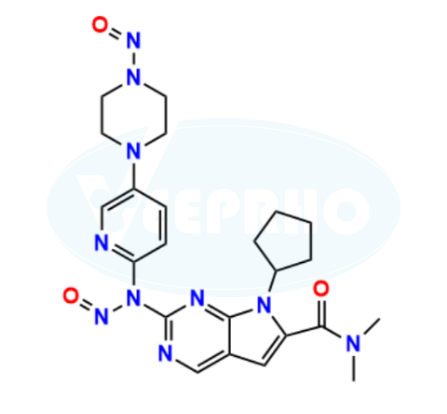
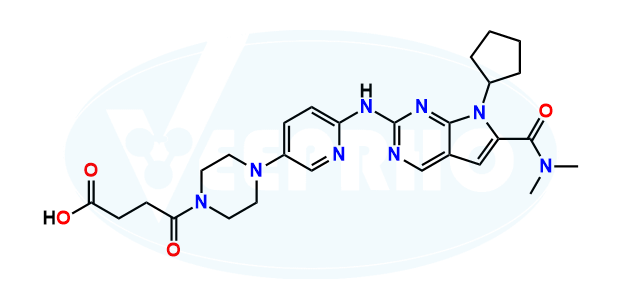
API impurity control for ribociclib is normally defined in the drug substance specification and stability plans and typically distinguishes process related impurities, degradation products and residual solvents; a representative specification framework used by manufacturers and accepted in regulatory dossiers often sets limits such as individual identified impurities controlled in the range of 0.1 percent to 0.5 percent, unspecified impurities limited to 0.05 percent to 0.10 percent, and total impurities typically limited to about 1.0 percent to 2.0 percent, with tighter limits applied to genotoxic or toxicologically concerning species and specific identification and control of known related compounds from the synthetic route such as demethylated, dealkylated or N-oxide variants; exact numerical limits and impurity identities are established case by case in the master batch record and regulatory submission based on toxicity qualification and ICH Q3 guidance.
Questions fréquentes
Is ribociclib a chemotherapy drug?
No, Ribociclib is not traditional cytotoxic chemotherapy; it is a targeted small molecule inhibitor of CDK4 and CDK6 that interferes with cell cycle signaling and is used together with endocrine therapy for certain hormone receptor positive breast cancers.
What are the side effects of ribociclib?
Common adverse effects include neutropenia, leukopenia, anemia, fatigue, nausea, diarrhea, and elevated liver enzymes; less common but clinically important effects include QT interval prolongation, hepatotoxicity and interstitial lung disease, so regular blood counts, liver function tests and ECG monitoring are recommended during treatment.
How long is ribociclib treatment?
Duration depends on disease response and tolerability; in metastatic settings ribociclib is typically continued until disease progression or unacceptable toxicity, whereas in adjuvant or trial settings duration may be defined by the study protocol; standard metastatic dosing cycles are repeated every 28 days with clinical review and safety monitoring between cycles.
Is ribociclib better than chemotherapy?
Comparison depends on clinical context; for hormone receptor positive, HER2 negative advanced breast cancer, ribociclib combined with endocrine therapy has demonstrated progression free survival benefit versus endocrine therapy alone and is generally preferred over single agent cytotoxic chemotherapy in patients for whom endocrine options remain appropriate because it provides disease control with a different safety profile, but direct comparison to chemotherapy varies by patient characteristics, disease burden and treatment goals and should be determined by treating oncology specialists.