Impuretés de Teneligliptin

Teneligliptin is an oral antidiabetic drug that belongs to the DPP-4 (dipeptidyl peptidase-4) inhibitor class. It helps manage type 2 diabetes mellitus (T2DM) by increasing the levels of incretin hormones (GLP-1 and GIP), which in turn enhance insulin secretion and suppress glucagon release in a glucose-dependent manner. This leads to improved glycemic control without a significant risk of hypoglycemia. Teneligliptin is often used alone or in combination with other antidiabetic agents like metformin, sulfonylureas, or SGLT2 inhibitors. Indications include: ∙ Type 2 diabetes mellitus (as monotherapy or add-on therapy)

Demander un devis pour un ensemble

1–22 sur 22 résultats22 en stock
StructureNom du produitN° CASRéf. cat.Disponibilité
Structure de N-Nitroso 3-MPPP TeneligliptinN-Nitroso 3-MPPP TeneligliptinC14H17N5OVE007898 · En stockVE007898En stock
OONNNON-Nitroso N-BOC Piperazine TeneligliptinC9H17N3O3N° CAS 877177-42-9 · VE007899 · En stock877177-42-9VE007899En stock
NNONSNNONNN-Nitroso TeneligliptinC22H29N7O2SVE0010120 · En stockVE0010120En stock
OONNNON-Nitroso Teneligliptin R-isomerC22H29N7O2SVE007900 · En stockVE007900En stock
NNHNONSNNTeneligliptin (2R,4R)-IsomerC22H30N6OSN° CAS 1404559-17-6 · VE0019973 · En stock1404559-17-6VE0019973En stock
Structure de Teneligliptin (2R,4S)-IsomerTeneligliptin (2R,4S)-IsomerVE0019977 · En stockVE0019977En stock
NNHNONSNNTeneligliptin (2S,4R)-IsomerC22H30N6OSN° CAS 1404559-15-4 · VE0019974 · En stock1404559-15-4VE0019974En stock
Structure de Teneligliptin Boc Acid ImpurityTeneligliptin Boc Acid ImpurityC24H33N5O4VE007726 · En stockVE007726En stock
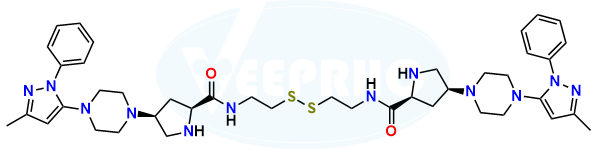
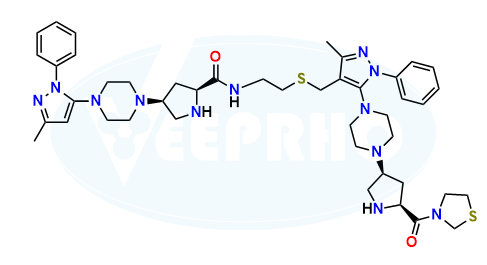
Structure de Teneligliptin Impurity 1Teneligliptin Impurity 1C42H58N12O2S2VE0019986 · En stockVE0019986En stock
Structure de Teneligliptin Impurity 2Teneligliptin Impurity 2C44H60N12O2S2VE0019987 · En stockVE0019987En stock
Structure de Teneligliptin Impurity 4Teneligliptin Impurity 4C45H60N12O2S2VE005889 · En stockVE005889En stock
Structure de Teneligliptin Impurity 6Teneligliptin Impurity 6C13H20N2O4SN° CAS 1415908-67-6 · VE0019988 · En stock1415908-67-6VE0019988En stock
NNHNOOHNNTeneligliptin Impurity 8C19H25N5O2N° CAS 2407632-38-4 · VE0019979 · En stock2407632-38-4VE0019979En stock
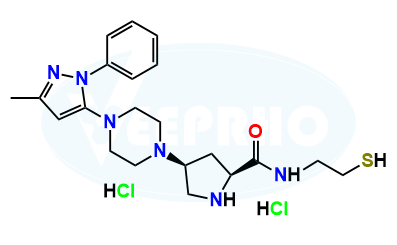
Structure de Teneligliptin Impurity 9 (DiHCl Salt)Teneligliptin Impurity 9 (DiHCl Salt)C21H30N6OS. 2 HClVE0019981 · En stockVE0019981En stock
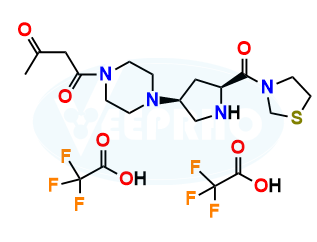
Structure de Teneligliptin Impurity 10 (Di-Trifluoroacetate)Teneligliptin Impurity 10 (Di-Trifluoroacetate)C16H26N4O3S. 2 C2HF3O2VE0019982 · En stockVE0019982En stock
NNHNNTeneligliptin Impurity AC14H18N4N° CAS 401566-79-8 · VL3100001 · En stock401566-79-8VL3100001En stock
NNONSNOONNTeneligliptin Impurity BC27H38N6O3SN° CAS 401566-80-1 · VL3100003 · En stock401566-80-1VL3100003En stock
OONHOONSTeneligliptin Inhouse Impurity CC13H22N2O4SN° CAS 401564-34-9 · VL3100002 · En stock401564-34-9VL3100002En stock
NNHNONSNNTeneligliptin R-Isomer (Hemipentahydrochloride Hydrate)C22H30N6OS.2.5HCl2H2OVE0023462 · En stockVE0023462En stock
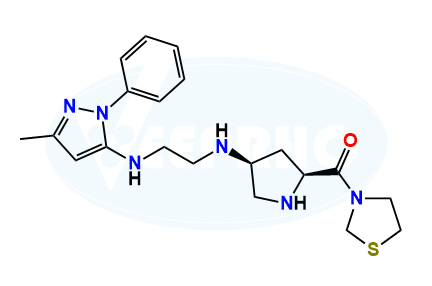
Structure de ((2S,4S)-4-((2-((3-methyl-1-phenyl-1H-pyrazol-5-yl)amino)ethyl)amino)pyrrolidin-2-yl)(thiazolidin-3-yl)methanone((2S,4S)-4-((2-((3-methyl-1-phenyl-1H-pyrazol-5-yl)amino)ethyl)amino)pyrrolidin-2-yl)(thiazolidin-3-yl)methanoneC20H28N6OSVE0020023 · En stockVE0020023En stock
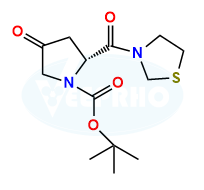
OONOONS(2S)-4-Oxo-2-(3-thiazolidinylcarbonyl)-1-pyrrolidinecarboxylic Acid 1,1-Dimethylethyl EsterC13H20N2O4SN° CAS 401564-36-1 · VE0023378 · En stock401564-36-1VE0023378En stock
NNHNONSONN[(2S,4S)-4-[4-(5-methyl-2-phenylpyrazol-3-yl)piperazin-1-yl]pyrrolidin-2-yl]-(1-oxo-1,3-thiazolidin-3-yl)methanoneC22H30N6O2SN° CAS 2478551-43-6 · VZA000066 · En stock2478551-43-6VZA000066En stock

Teneligliptin Related Compound

Impurities in teneligliptin arise from its multi-step chemical synthesis, including thiazolidine ring formation, piperazine coupling, and quinoline derivative incorporation, as well as from degradation under stress conditions such as oxidation or hydrolysis. As a long-term oral medication, impurity control must follow ICH Q3A/B, USP, and EP standards.

Types of Impurities in Teneligliptin

Process-Related Impurities

  • Unreacted intermediates such as piperazine derivatives, quinoline aldehydes, or thiazolidine analogs
  • By-products from n-alkylation, amide formation, or ring-closure reactions
  • Residual solvents like methanol, dimethylformamide (DMF), or dichloromethane

Degradation Impurities

  • Hydrolyzed amide bonds or ring-opened products
  • Oxidized sulfur or nitrogen moieties
  • Des-alkylated forms due to thermal stress
  • Photodegradation products under light exposure

Elemental Impurities

  • Trace metals such as palladium, copper, or iron from catalysts or equipment
  • Controlled under ICH Q3D for chronic oral therapies

Analytical Techniques for Impurity Detection

  • High-Performance Liquid Chromatography (HPLC) – for assay and related substance profiling
  • LC-MS/MS (Liquid Chromatography–Mass Spectrometry) – for structure elucidation and low-level impurity detection
  • Gas Chromatography (GC) – for residual solvents
  • ICP-MS – for elemental impurity determination
  • Photostability and forced degradation studies – to evaluate stability profile

Questions fréquentes

What is Teneligliptin used for?

Teneligliptin is used to manage type 2 diabetes mellitus by improving blood glucose control , especially in patients with inadequate control on diet and exercise alone or with other antidiabetic agents .

How does Teneligliptin work?

It inhibits DPP-4 , increasing GLP-1 and GIP levels , which enhance glucose-dependent insulin secretion and suppress glucagon , lowering postprandial and fasting glucose.

What are common side effects of Teneligliptin?

Headache Constipation Hypoglycemia (when used with sulfonylureas or insulin) Rare: Liver enzyme elevation or skin rash

Is Teneligliptin safe for patients with kidney or liver impairment?

It may be used with dose adjustments or caution , depending on severity. Unlike some other DPP-4 inhibitors, teneligliptin has a mixed hepatic and renal route of elimination .

Is Teneligliptin chemically stable?

Yes, but it should be stored in a cool, dry place , protected from light and moisture , as it may degrade under acidic, basic, or oxidative conditions.