
Betahistine 불순물
세트 견적 요청
- 이 세트 견적 요청
Betahistine의 EP 불순물 전체
4개 제품4개 제품 보기
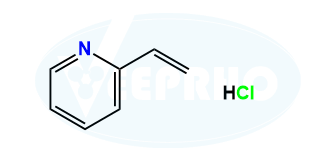
- Betahistine EP Impurity A (HCl Salt) VE0019992
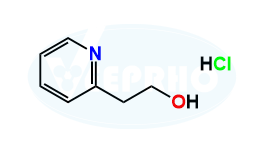
CAS 2479-59-6 - Betahistine EP Impurity B (HCl Salt) VE0020572
CAS 101948-60-1 - Betahistine EP Impurity C VL178001
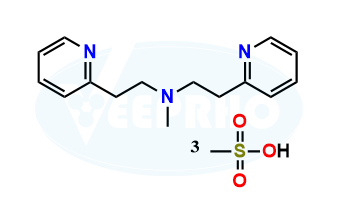
CAS 2095467-43-7 - Betahistine EP Impurity C Trimesilate VE0012720
CAS 2731369-07-4
- Betahistine EP Impurity A (HCl Salt) VE0019992
- 이 세트 견적 요청
Betahistine의 USP 불순물 전체
3개 제품3개 제품 보기
- Betahistine EP Impurity A (HCl Salt) VE0019992
CAS 2479-59-6 - Betahistine EP Impurity B (HCl Salt) VE0020572
CAS 101948-60-1 - Betahistine EP Impurity C Trimesilate VE0012720
CAS 2731369-07-4
- Betahistine EP Impurity A (HCl Salt) VE0019992
- 이 세트 견적 요청
Betahistine의 니트로사민 불순물 전체
2개 제품2개 제품 보기
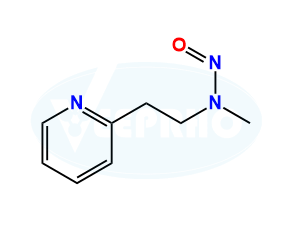
- N-Nitroso Betahistine VE007663
CAS 32635-81-7 - N-Nitroso Betahistine EP Impurity C VE0010864
- N-Nitroso Betahistine VE007663

14개 중 1–1414 재고 있음
| 구조 | 제품명 |
|---|---|
| Betahistine EP Impurity ACAS 번호 100-69-6 · VL178002 · 재고 있음 | |
| Betahistine EP Impurity A (HCl Salt)CAS 번호 2479-59-6 · VE0019992 · 재고 있음 | |
| Betahistine EP Impurity BCAS 번호 103-74-2 · VL178003 · 재고 있음 | |
| Betahistine EP Impurity B (HCl Salt)CAS 번호 101948-60-1 · VE0020572 · 재고 있음 | |
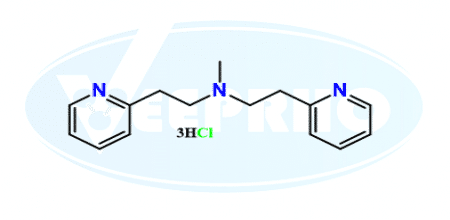 | Betahistine EP Impurity CCAS 번호 2095467-43-7 · VL178001 · 재고 있음 |
| Betahistine EP Impurity C TrimesilateCAS 번호 2731369-07-4 · VE0012720 · 재고 있음 | |
| Betahistine Impurity 3CAS 번호 13585-92-7 · VE0012721 · 재고 있음 | |
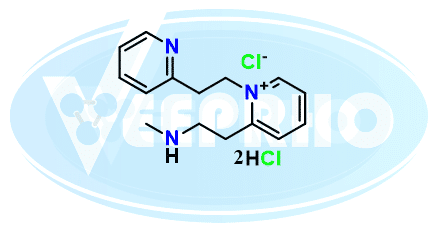 | Betahistine Impurity 6 Chloride (2HCl Salt)VE0012712 · 재고 있음 |
| Betahistine Impurity 8CAS 번호 88780-61-4 · VE0012719 · 재고 있음 | |
| Betahistine Impurity 9CAS 번호 6304-27-4 · VE0012176 · 재고 있음 | |
| Betahistine Lactose adduct ImpurityVE0028995 · 재고 있음 | |
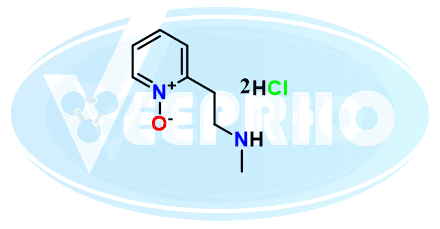 | Betahistine N-Oxide (2HCl Salt)VE0012711 · 재고 있음 |
| N-Nitroso BetahistineCAS 번호 32635-81-7 · VE007663 · 재고 있음 | |
| N-Nitroso Betahistine EP Impurity CVE0010864 · 재고 있음 |
Betahistine Related Compound
Impurities in Betahistine can arise due to synthesis processes, degradation, and storage conditions. These impurities are monitored based on ICH Q3A/Q3B guidelines.
Types of Impurities in Betahistine
- Process-Related Impurities
- Residual solvents (e.g., methanol, ethanol, acetone)
- Unreacted intermediates from synthesis
- By-products of chemical reactions
- Degradation Impurities
- Oxidation products (exposure to oxygen or moisture)
- Hydrolysis products (breakdown in humid conditions)
- Isomerization products (structural modifications over time)
- Elemental Impurities
- Heavy metals (e.g., lead, cadmium, arsenic) from raw materials
Analytical Techniques for Impurity Detection
- High-Performance Liquid Chromatography (HPLC)
- Mass Spectrometry (MS)
- Fourier-Transform Infrared Spectroscopy (FT-IR)
- Gas Chromatography (GC)
자주 묻는 질문
Why was betahistine banned?
Betahistine is not banned globally, but its effectiveness is debated in some countries. It was withdrawn in the U.S. due to insufficient clinical evidence but remains widely used in Europe and other regions .
What to avoid when taking betahistine?
Avoid alcohol as it can worsen dizziness. Caution with antihistamines , as they may reduce betahistine’s effectiveness . Avoid taking it on an empty stomach to prevent mild gastrointestinal discomfort.
Is betahistine a strong antihistamine?
No, betahistine is not a traditional antihistamine . It acts as a histamine H1 agonist and H3 antagonist , improving blood flow in the inner ear. Unlike typical antihistamines, it does not cause drowsiness .
Can I take betahistine every day?
Yes, betahistine is typically taken daily for Ménière’s disease . Dosage is usually 8 mg to 48 mg per day, divided into doses . It may take a few weeks to notice improvements. Always follow a doctor’s advice on dosage and duration.