
Chlortetracycline 불순물
세트 견적 요청
- 이 세트 견적 요청
Chlortetracycline의 EP 불순물 전체
8개 제품8개 제품 보기
- Anhydrotetracycline hydrochloride VL4230002
CAS 13803-65-1 - Chlortetracycline EP Impurity A VE006508
CAS 101342-45-4 - Chlortetracycline EP Impurity A VE0016810
CAS 14297-93-9 - Chlortetracycline EP Impurity B VE0016767
CAS 127-33-3 - Chlortetracycline EP Impurity C VE008303
CAS 129044-45-7 - Chlortetracycline EP Impurity E VE008304
CAS 14206-59-8 - Chlortetracycline EP Impurity K VE0016804
CAS 81163-11-3 - 4-Epitetracycline hydrochloride VL4230007
CAS 23313-80-6
- Anhydrotetracycline hydrochloride VL4230002
- 이 세트 견적 요청
Chlortetracycline의 USP 불순물 전체
2개 제품2개 제품 보기
- Anhydrotetracycline hydrochloride VL4230002
CAS 13803-65-1 - 4-Epitetracycline hydrochloride VL4230007
CAS 23313-80-6
- Anhydrotetracycline hydrochloride VL4230002


10개 중 1–1010 재고 있음
| 구조 | 제품명 |
|---|---|
| AnhydrochlortetracyclineCAS 번호 4497-08-9 · VE0013581 · 재고 있음 | |
| Anhydrotetracycline hydrochlorideCAS 번호 13803-65-1 · VL4230002 · 재고 있음 | |
| Chlortetracycline EP Impurity ACAS 번호 101342-45-4 · VE006508 · 재고 있음 | |
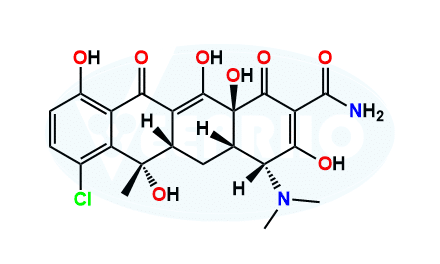 | Chlortetracycline EP Impurity ACAS 번호 14297-93-9 · VE0016810 · 재고 있음 |
| Chlortetracycline EP Impurity BCAS 번호 127-33-3 · VE0016767 · 재고 있음 | |
| Chlortetracycline EP Impurity CCAS 번호 129044-45-7 · VE008303 · 재고 있음 | |
| Chlortetracycline EP Impurity ECAS 번호 14206-59-8 · VE008304 · 재고 있음 | |
| Chlortetracycline EP Impurity KCAS 번호 81163-11-3 · VE0016804 · 재고 있음 | |
| Chlortetracycline Impurity 2CAS 번호 769895-23-0 · VE0016806 · 재고 있음 | |
| 4-Epitetracycline hydrochlorideCAS 번호 23313-80-6 · VL4230007 · 재고 있음 |
Chlortetracycline Related Compound
As a naturally derived and semi-synthetically modified antibiotic, chlortetracycline may contain several impurities that arise from biosynthesis, degradation, or manufacturing processes. These impurities must be strictly regulated under ICH and pharmacopeial guidelines.
Types of Impurities in Chlortetracycline
Process-Related Impurities
- Fermentation by-products from Streptomyces cultures
- Analogous tetracycline derivatives such as demethylchlortetracycline or anhydrotetracycline
- Residual solvents like ethanol or acetone used during extraction or purification
Degradation Impurities
- Epimers and isomers formed through epimerization of stereocenters
- Dehydration products (e.g., anhydrochlortetracycline) under high heat or acidic conditions
- Oxidized derivatives upon exposure to light or air
Elemental Impurities
- Trace heavy metals (e.g., iron, zinc, arsenic) from fermentation media or manufacturing equipment
Analytical Techniques for Impurity Detection
- High-Performance Liquid Chromatography (HPLC)
- UV-Visible Spectroscopy (due to characteristic absorption peaks of tetracyclines)
- Mass Spectrometry (MS)
- Thin-Layer Chromatography (TLC) for qualitative impurity checks
- ICP-MS for elemental impurity analysis
자주 묻는 질문
What is chlortetracycline used for?
Chlortetracycline is used to treat a range of bacterial infections , especially in veterinary medicine. In humans, it’s occasionally used in topical formulations for eye or skin infections . In agriculture, it has been used as a feed additive to promote growth and prevent disease in livestock, although this use is restricted or banned in several countries due to concerns over antibiotic resistance.
How does chlortetracycline work?
Chlortetracycline works by binding to the 30S ribosomal subunit of bacteria. This blocks the attachment of tRNA , inhibiting protein synthesis and stopping bacterial growth. It is bacteriostatic rather than bactericidal, meaning it halts growth rather than directly killing bacteria.
Is chlortetracycline safe for human use?
While chlortetracycline is approved for topical use in humans (e.g., as an eye ointment), its systemic use is limited due to the development of newer tetracyclines (like doxycycline or minocycline) that are more effective and better tolerated. Like all tetracyclines, it is not recommended in children under 8 years or in pregnant women due to risks of tooth discoloration and bone growth inhibition .
What are the side effects of chlortetracycline?
Common side effects may include: Photosensitivity (increased sensitivity to sunlight) Gastrointestinal upset (nausea, vomiting, diarrhea) Tooth discoloration (in children) Allergic reactions , though rare Resistance development with overuse, particularly in agriculture