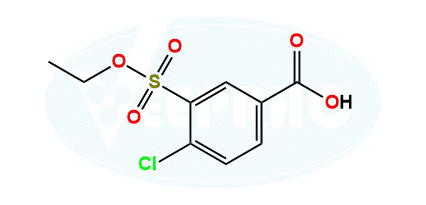
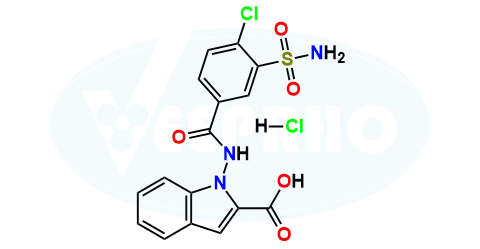
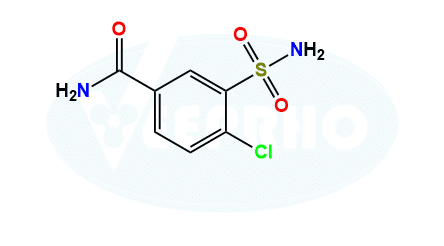
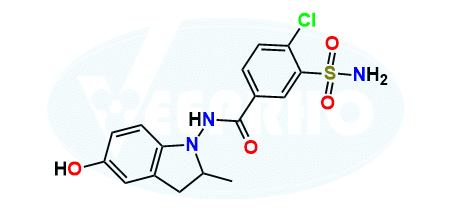
Indapamide is a thiazide-like diuretic drug used in the treatment of hypertension, as well as decompensated heart failure. Combination preparations with perindopril are available. It acts primarily at the distal convoluted tubule to inhibit sodium and chloride reabsorption, producing natriuresis and diuresis with a consequent reduction in plasma volume and cardiac preload; antihypertensive benefit is also supported by reductions in peripheral vascular resistance attributable to direct vascular effects. Indapamide is administered once daily because of its sustained pharmacodynamic effect; it is orally active, well absorbed, extensively protein bound, and cleared by both metabolic biotransformation and renal excretion. Clinical use requires monitoring of electrolytes and renal function, and dose adjustments are recommended in patients with significant renal or hepatic impairment. Typical therapeutic dosing ranges from 1.25 mg to 2.5 mg once daily for most indications.

Parent: Indapamide

Parent: Indapamide

Parent: Indapamide

Parent: Indapamide

Parent: Indapamide
Active pharmaceutical ingredient lots are controlled to meet pharmacopeial and regulatory limits for related substances and assay purity; a commonly applied specification profile requires assay of indapamide to be greater than or equal to 98.0 to 99.0 percent by mass and sets acceptance limits for individual unspecified impurities at approximately 0.1 to 0.2 percent and for total related compounds at approximately 0.5 percent or lower, while specified known impurities may have individual limits defined by stability and safety data. Known related compounds and degradation products typically include hydrolysis and oxidative derivatives and minor synthetic byproducts; genotoxic impurity risk is assessed per ICH M7 and controlled to limits much lower than routine related substances, often at the parts-per-million level or below an acceptable intake threshold. Release and stability testing use validated HPLC and mass spectrometry methods for identification and quantitation, and manufacturers establish tighter internal limits where appropriate to ensure batch-to-batch consistency and patient safety.
Indapamide is used to treat hypertension and to manage fluid overload in conditions such as decompensated heart failure; it lowers blood pressure through diuresis and reductions in peripheral vascular resistance and is sometimes combined with an ACE inhibitor such as perindopril for additive antihypertensive effect.
Indapamide is not directly nephrotoxic in standard doses, but it alters intravascular volume and electrolytes and can precipitate renal function deterioration, particularly in volume-depleted patients or those with preexisting renal impairment; regular monitoring of serum creatinine and electrolytes is recommended and dose adjustment or discontinuation may be needed if renal function worsens.
Disadvantages include electrolyte disturbances such as hypokalemia and hyponatremia, orthostatic hypotension, dizziness, potential worsening of gout due to hyperuricemia, metabolic effects including changes in glucose and lipid profiles, photosensitivity reactions in some patients, and the need for careful monitoring in renal or hepatic impairment and in pregnancy.
Indapamide inhibits sodium-chloride transport in the distal convoluted tubule, reducing sodium and chloride reabsorption and increasing urinary excretion of sodium and water; this decreases intravascular volume and cardiac preload and, through direct vascular actions that reduce peripheral resistance, contributes to sustained antihypertensive effects.