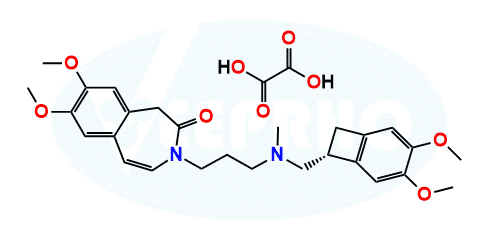
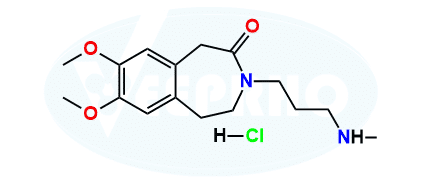
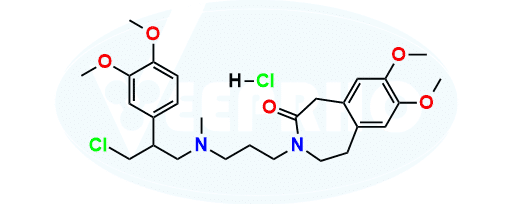
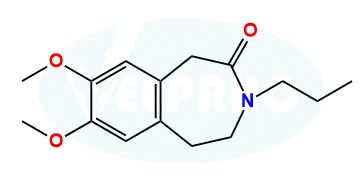
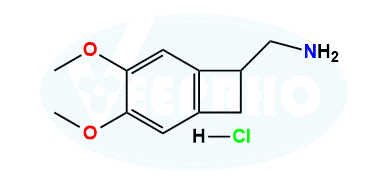
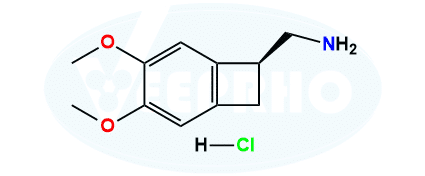
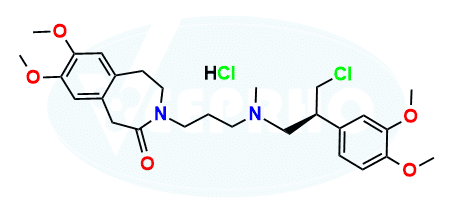
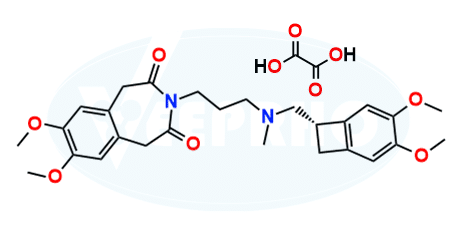
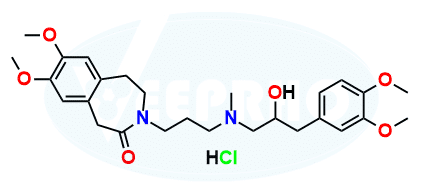
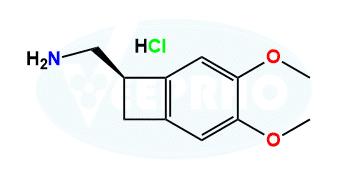
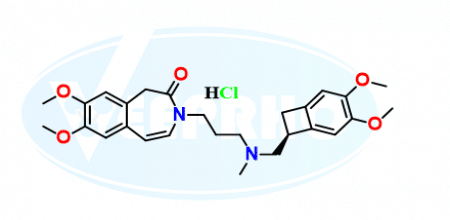
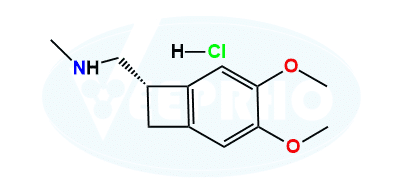
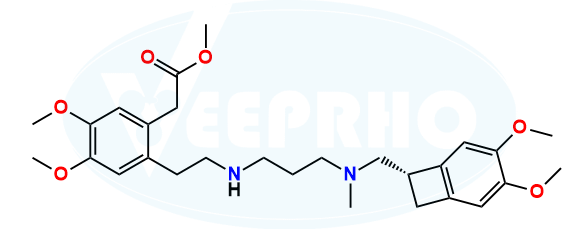
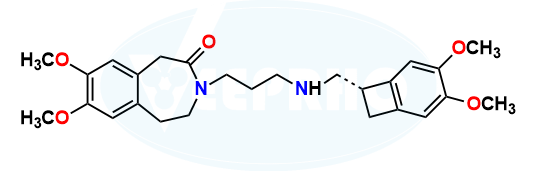
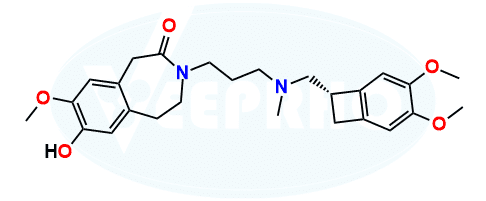
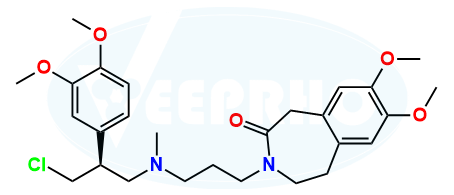
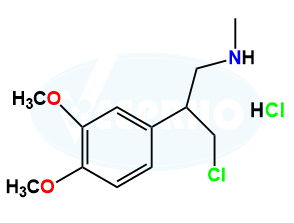
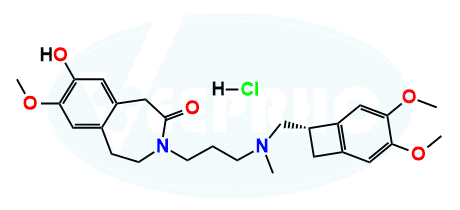
Ivabradine, sold under the brand name Procoralan among others, is a medication, which is a pacemaker current inhibitor, used for the symptomatic management of heart-related chest pain and heart failure. It is a selective inhibitor of the sinoatrial node funny current If, acting on hyperpolarization-activated cyclic nucleotide-gated HCN channels to reduce spontaneous pacemaker activity and lower heart rate without direct negative inotropic effects; ivabradine is administered orally, has an oral bioavailability around 40 percent, undergoes extensive hepatic metabolism primarily via CYP3A4 to an active N-dealkylated metabolite, exhibits a plasma elimination half-life of approximately 2 hours with a longer pharmacodynamic or effective half-life in the range of several hours, and is contraindicated or dose-adjusted when coadministered with potent CYP3A4 inhibitors or in patients with symptomatic bradycardia, sick sinus syndrome, or pacemaker dependence.
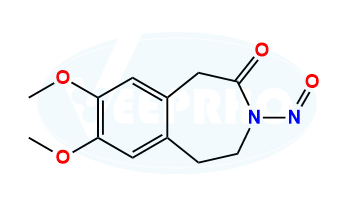
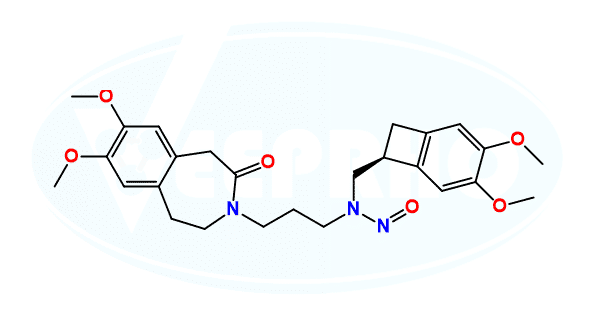
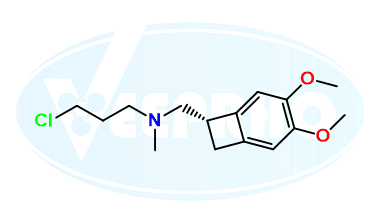
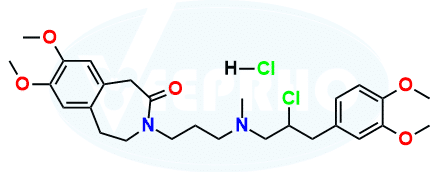
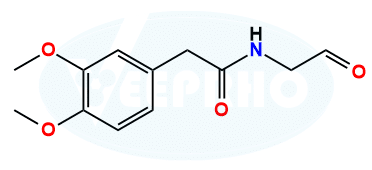
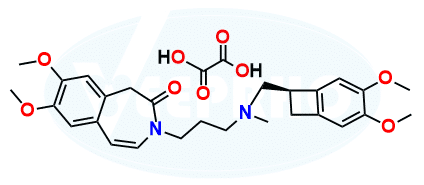
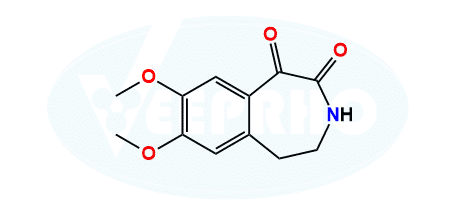
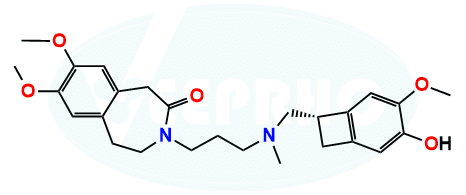
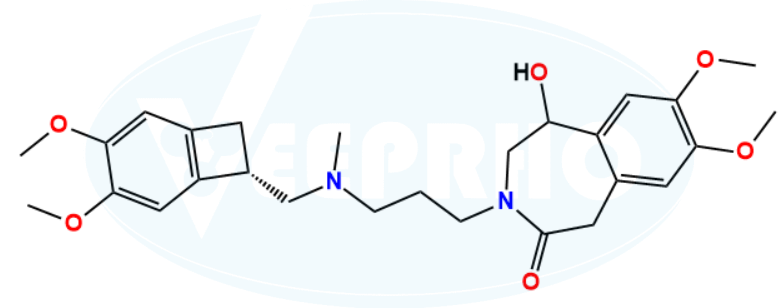
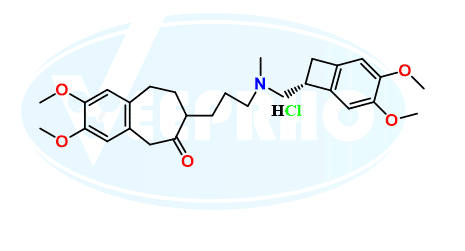
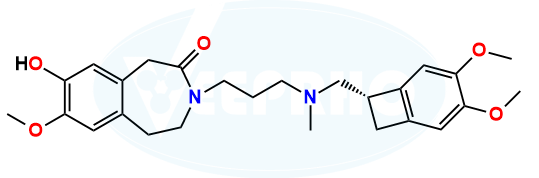
Ivabradine drug substance and finished product are typically controlled with impurity specifications that reflect ICH-driven thresholds and practical analytical capability: specified related substances (known process or degradant impurities) are commonly limited individually to the range of 0.1 to 0.5 percent relative to the API, total impurities are normally limited to about 1.0 percent maximum, and unspecified or unknown impurities are monitored and reported down to low parts per million using validated HPLC or LC-MS methods; typical additional quality controls include limits for residual solvents in line with ICH Q3C, elemental impurities in line with ICH Q3D, and acceptance criteria for degradation products such as N-dealkylated species, oxidative byproducts, and ring-modified derivatives that arise under forced-degradation conditions.
자주 묻는 질문
What kind of drug is ivabradine?
Ivabradine is in a class of medications called hyperpolarization-activated cyclic nucleotide-gated (HCN) channel blockers. It works by slowing the heart rate so the heart can pump more blood through the body each time it beats.
How does ivabradine differ from beta blockers in mechanism and hemodynamic effect?
Ivabradine selectively targets the If current in the sinoatrial node to reduce heart rate without significantly affecting myocardial contractility or blood pressure, whereas beta blockers reduce heart rate and contractility via adrenergic blockade and can lower blood pressure; this selective action makes ivabradine useful when heart rate reduction is desired without additional negative inotropic effect.
What are common metabolic and drug interaction considerations?
Ivabradine is metabolized mainly by CYP3A4 to an active metabolite, so coadministration with strong CYP3A4 inhibitors such as certain azole antifungals or macrolide antibiotics can substantially increase plasma levels and risk of bradycardia, while strong CYP3A4 inducers can reduce efficacy; dose adjustments or avoidance are typically recommended based on the interacting agent.
What analytical methods are used to quantify ivabradine and its impurities?
Quantification typically uses reversed-phase HPLC with UV detection or LC-MS/MS for greater sensitivity, with forced-degradation studies to identify degradation pathways, validated stability-indicating methods for assay and related substances, and orthogonal techniques such as NMR and high-resolution mass spectrometry for structural confirmation of identified impurities.