
Mitoxantrone 불순물
세트 견적 요청
- 이 세트 견적 요청
Mitoxantrone의 EP 불순물 전체
5개 제품5개 제품 보기
- Mitoxantrone EP Impurity A VE0021461
CAS 89991-52-6 - Mitoxantrone EP Impurity A (HCl Salt) VE0021462
CAS 89991-54-8 - Mitoxantrone EP Impurity B VE0021458
CAS 80189-44-2 - Mitoxantrone EP Impurity C VE0021460
CAS 1796928-50-1 - Mitoxantrone EP Impurity D VE0021463
CAS 137132-70-8
- Mitoxantrone EP Impurity A VE0021461
- 이 세트 견적 요청
Mitoxantrone의 니트로사민 불순물 전체
2개 제품2개 제품 보기
- N-Nitroso Mitoxantrone Impurity 1 VE0014197
- N-Nitroso Mitoxantrone Impurity 2 VE0014199
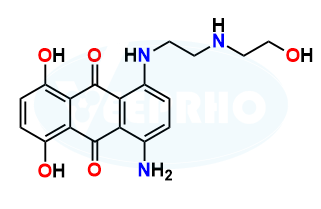

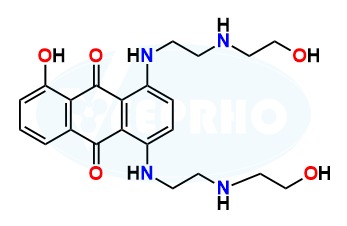


7개 중 1–75 재고 있음
| 구조 | 제품명 |
|---|---|
| Mitoxantrone EP Impurity ACAS 번호 89991-52-6 · VE0021461 · 재고 있음 | |
| Mitoxantrone EP Impurity A (HCl Salt)CAS 번호 89991-54-8 · VE0021462 · 재고 있음 | |
| Mitoxantrone EP Impurity BCAS 번호 80189-44-2 · VE0021458 · 재고 있음 | |
| Mitoxantrone EP Impurity CCAS 번호 1796928-50-1 · VE0021460 · 재고 있음 | |
| Mitoxantrone EP Impurity DCAS 번호 137132-70-8 · VE0021463 · 재고 있음 | |
| N-Nitroso Mitoxantrone Impurity 1VE0014197 | |
| N-Nitroso Mitoxantrone Impurity 2VE0014199 |
Mitoxantrone and Related Compound
Related substances for mitoxantrone typically arise from incomplete synthesis, counterion variations, and oxidative or hydrolytic degradation and include demethylated and hydroxylated analogs, N-dealkylation products, ring-modified species and low molecular weight cleavage products; these are routinely characterized by HPLC with UV detection complemented by LC-MS for structural confirmation. Typical quality control approaches follow ICH principles and set analytical limits according to qualification status: unidentified individual impurities are commonly controlled at or below 0.1 to 0.5 percent of the active pharmaceutical ingredient, identified related compounds are limited according to toxicological qualification often in the 0.2 to 0.5 percent range, and total related substances are generally specified not to exceed about 1.0 percent; tighter limits are applied for genotoxic or otherwise high-risk impurities. Forced degradation studies, stability testing, and validated related-substance methods are used to define acceptable amounts and to support shelf life and packaging decisions.
자주 묻는 질문
What is the mechanism of action of mitoxantrone?
Mitoxantrone intercalates into DNA and stabilizes topoisomerase II-mediated DNA cleavage complexes, leading to double strand breaks and inhibition of DNA and RNA synthesis; it also exerts immunosuppressive effects and can generate oxidative damage that contributes to cytotoxicity.
What is another name for mitoxantrone?
Mitoxantrone is commonly marketed under the trade name Novantrone and is available as mitoxantrone hydrochloride for intravenous use.
Is mitoxantrone an antitumor antibiotic?
Mitoxantrone is not classically categorized as an antitumor antibiotic; it is an anthracenedione cytotoxic agent that shares some mechanistic features with antibiotic-derived antitumor agents but is chemically distinct from the antibiotic classes.
Is mitoxantrone an anthracycline?
No, mitoxantrone is an anthracenedione, not an anthracycline; although it has similar DNA intercalating and topoisomerase II inhibitory actions, its core chemical structure differs from anthracyclines.