Amikacin is a powerful, water-soluble antibiotic from the aminoglycoside group that acts against a range of bacteria. This medicine is indicated for the treatment of serious bacterial infections, including those of the brain (meningitis), blood, abdomen, lungs, skin, bones, and joints. The amikacin injection solution is clear and colorless, characterized by its immediate rapid bactericidal activity. It stops bacterial proliferation by binding to the 30S ribosomal subunit of susceptible bacteria, causing incorrect alignment of the amino acids, leading to a faulty and non-functioning protein.

Parent: Amikacin

Parent: Amikacin

Parent: Amikacin / Amikacin Sulfate
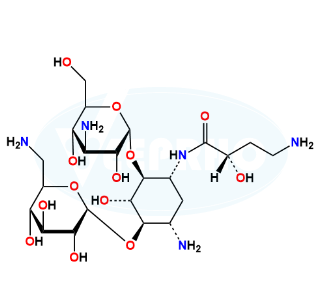
Parent: Amikacin
Amikacin, like other pharmaceutical substances, may contain certain impurities that result from the manufacturing process or the degradation over time. The amounts of amikacin impurities and related compounds in the final product are rigorously controlled and kept to a very minimum to maintain the consistently high quality of amikacin products. These impurities, often found in minimal amounts, are benign and monitored strictly to ensure they fall within the stringent safety limits set by pharmacological standards.
Amikacin is a potent antibiotic used for the treatment of a diverse range of severe bacterial infections. This includes meningitis (infection of the brain and spinal cord’s surrounding membranes), infections of the blood, abdomen, lungs, skin, bones, and joints.
Amikacin is classified as a restricted antibiotic due to its highly potent nature and potential side effects, including kidney and ear damage. It’s typically administered when other less potent antibiotics have proved ineffective. This restriction also serves to prevent overuse, which could lead to antibiotic resistance.
No, amikacin and amoxicillin are not the same. While both are antibiotics, amikacin is an aminoglycoside antibiotic used to treat serious bacterial infections, while amoxicillin is a penicillin-type, often used for mild to moderate infections.
Amikacin is primarily effective against gram-negative bacteria, including several strains of pseudomonas, E. coli, and enterobacter. However, it also demonstrates some effectiveness against certain types of gram-positive bacteria.


