
Asenapine Impurities
Request a quote for a set
- Request quote for this set
All nitrosamine impurities of Asenapine
2 productsSee the 2 products
1–12 of 12 results11 in stock
| Structure | Product Name |
|---|---|
 | Asenapine 11-Sulfate ImpurityCAS No. 1399103-21-9 · VE006784 · In stock |
 | Asenapine Amide ImpurityVE006437 · In stock |
| Asenapine Lactam ImpurityCAS No. 934996-79-9 · VE006785 · In stock | |
| Asenapine N-Desmethyl ImpurityCAS No. 128915-56-0 · VL380002 · In stock | |
 | Asenapine N-Desmethyl Impurity (HCl Salt)CAS No. 1170701-78-6 · VE006786 · In stock |
| Asenapine N-OxideCAS No. 128949-51-9 · VL380001 · In stock | |
| Asenapine Pyrrole FumarateCAS No. 1688678-60-5 · VE006789 · In stock | |
| Asenapine Tetradehydro ImpurityCAS No. 129385-60-0 · VL380005 · In stock | |
 | Asenapine-N-Glucuronide (Mixture of Diastereomers)VE0012378 · In stock |
| Cis-AsenapineCAS No. 65621-78-5 · VL380004 · In stock | |
| Deschloro AsenapineCAS No. 65576-39-8 · VE006788 · In stock | |
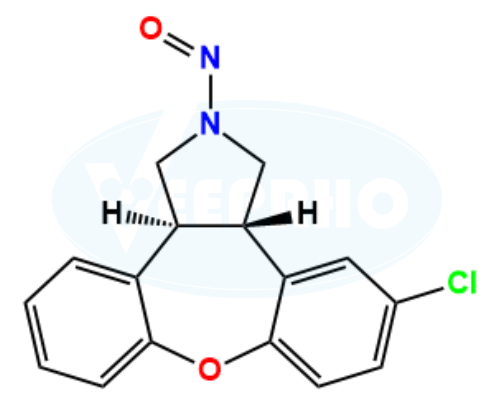
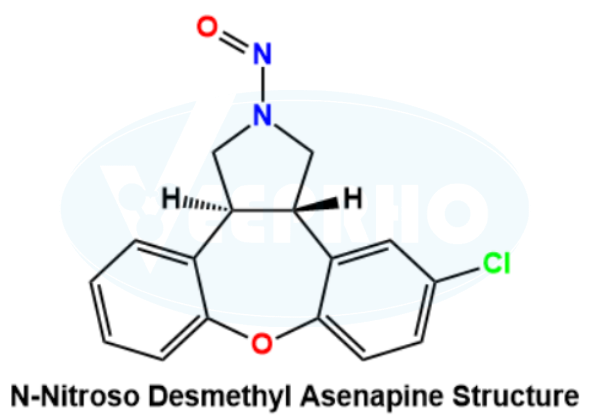
| N-Nitroso Desmethyl AsenapineVE0028726 |
Asenapine Impurities and Related Compound
Typical quality control for asenapine active pharmaceutical ingredient and related substances covers identification and quantification of known related compounds such as the maleate salt form, desmethyl and dealkylated degradation products, N-oxide species, stereoisomeric or epimeric variants, and residual synthetic intermediates or reagents; analysis is routinely performed by validated HPLC or UHPLC methods often supported by LC-MS and NMR for structural confirmation. Common specification limits used by manufacturers and regulators designate low acceptance thresholds for impurities to ensure safety and stability, for example individual unspecified impurities commonly limited to the 0.1 to 0.2 percent range and total impurities typically limited to about 1.0 percent, while identified/qualified related substances may have slightly higher specific limits depending on toxicological qualification and regulatory filings. Exact limits and impurity identification profiles vary by manufacturer and dossier, so release specifications should be referenced in the approved regulatory documentation for a given product lot.
FAQ
What is the mechanism of action of asenapine?
Asenapine exerts antipsychotic and mood-related effects primarily through antagonism of dopamine D2 receptors and multiple serotonin receptors including strong 5-HT2A antagonism and 5-HT1A partial agonism, together with affinity for adrenergic and histamine receptors; this multi-receptor profile modulates dopaminergic and serotonergic neurotransmission implicated in psychosis and mood symptoms.