
Betaxolol Impurities
Request a quote for a set
- Request quote for this set
All EP impurities of Betaxolol
7 productsSee the 7 products
- Betaxolol EP Impurity A VL2940005
CAS 67193-95-7 - Betaxolol EP Impurity A (HCl Salt) VE0020574
CAS 464877-45-0 - Betaxolol EP Impurity B (Free Base) VL2940001
CAS 62572-94-5 - Betaxolol EP Impurity B (Free Base) VL103014
CAS 62572-94-5 - Betaxolol EP Impurity C VE007363
CAS 63659-17-6 - Betaxolol EP Impurity D VL2940002
CAS 63659-16-5 - Betaxolol EP Impurity E VL2940004
CAS 1329613-85-5
- Betaxolol EP Impurity A VL2940005
- Request quote for this set
All USP impurities of Betaxolol
6 productsSee the 6 products
- Betaxolol EP Impurity A VL2940005
CAS 67193-95-7 - Betaxolol EP Impurity A (HCl Salt) VE0020574
CAS 464877-45-0 - Betaxolol EP Impurity B (Free Base) VL103014
CAS 62572-94-5 - Betaxolol EP Impurity C VE007363
CAS 63659-17-6 - Betaxolol EP Impurity D VL2940002
CAS 63659-16-5 - Betaxolol EP Impurity E VL2940004
CAS 1329613-85-5
- Betaxolol EP Impurity A VL2940005



1–12 of 12 results12 in stock
| Structure | Product Name |
|---|---|
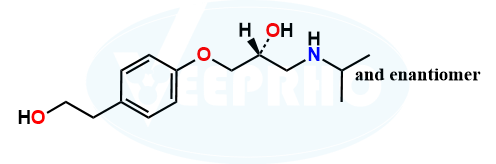
| Betaxolol EP Impurity ACAS No. 67193-95-7 · VL2940005 · In stock | |
| Betaxolol EP Impurity A (HCl Salt)CAS No. 464877-45-0 · VE0020574 · In stock | |
| Betaxolol EP Impurity B (Free Base)CAS No. 62572-94-5 · VL2940001 · In stock | |
| Betaxolol EP Impurity B (Free Base)CAS No. 62572-94-5 · VL103014 · In stock | |
| Betaxolol EP Impurity CCAS No. 63659-17-6 · VE007363 · In stock | |
| Betaxolol EP Impurity DCAS No. 63659-16-5 · VL2940002 · In stock | |
| Betaxolol EP Impurity ECAS No. 1329613-85-5 · VL2940004 · In stock | |
| Betaxolol Impurity 5CAS No. 87549-35-7 · VE0012728 · In stock | |
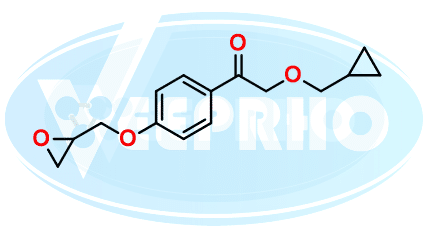 | Betaxolol Impurity 6VE0012729 · In stock |
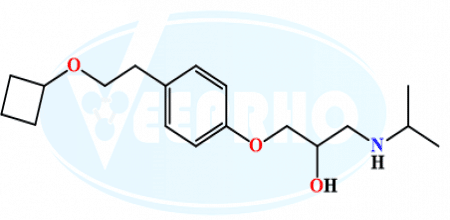 | Betaxolol Impurity FCAS No. 2490668-09-0 · VL2940003 · In stock |
| N-Nitroso-BetaxololVE0012730 · In stock | |
| 1-[4-(2-Cyclobutoxyethyl)phenoxy]-3-(isopropylamino)propan-2-ol HydrochlorideCAS No. 2724510-56-7 · VE0022370 · In stock |
Betaxolol Related Compound
Impurities in betaxolol can result from chemical synthesis, involving aryl and ethanolamine derivatives, as well as from degradation during formulation or storage. As it is used both orally and ophthalmically, impurity levels must comply with ICH Q3A/B and USP/EP standards.
Types of Impurities in Betaxolol
Process-Related Impurities
- Unreacted starting materials such as aryl ketones or epichlorohydrin derivatives
- By-products from etherification or amine derivatization
- Residual solvents like methanol, isopropanol, or dichloromethane
Degradation Impurities
- Hydrolysis of the ether or amide linkage
- Oxidation products of the secondary alcohol group
- Impurities formed under acidic or basic conditions, especially in eye drop formulations
Elemental Impurities
- Trace metals (e.g., iron, copper, or zinc) from manufacturing equipment
- Must comply with ICH Q3D guidelines for both systemic and ophthalmic administration
Analytical Techniques for Impurity Detection
- High-Performance Liquid Chromatography (HPLC) – for related substances and purity profile
- LC-MS (Liquid Chromatography–Mass Spectrometry) – for unknown or trace impurity identification
- Gas Chromatography (GC) – for quantifying residual solvents
- ICP-MS – for elemental impurities
- UV-Vis Spectroscopy – for stability and assay support
FAQ
What is Betaxolol used for?
Betaxolol is used to treat high blood pressure and to lower intraocular pressure in patients with open-angle glaucoma or ocular hypertension .
How does Betaxolol work?
It blocks β₁-adrenergic receptors, reducing heart rate and cardiac output (systemic use) or decreasing aqueous humor production in the eye (ophthalmic use).
What are common side effects of Betaxolol?
Fatigue or dizziness (oral use) Bradycardia Eye irritation or blurred vision (ophthalmic use) Rare: Bronchospasm, though less likely than with non-selective beta-blockers
Is Betaxolol safe for asthma patients?
Betaxolol is β₁-selective , so it has less bronchoconstrictive effect than non-selective beta-blockers, but caution is still advised in asthma patients.
Does Betaxolol degrade easily?
It is generally stable under standard storage conditions but may degrade under strong light, heat, or pH extremes . Ophthalmic solutions should be used within their shelf life and stored properly.