
Brilliant Blue Impurities
Request a quote for a set
- Request quote for this set
All nitrosamine impurities of Brilliant Blue
6 productsSee the 6 products
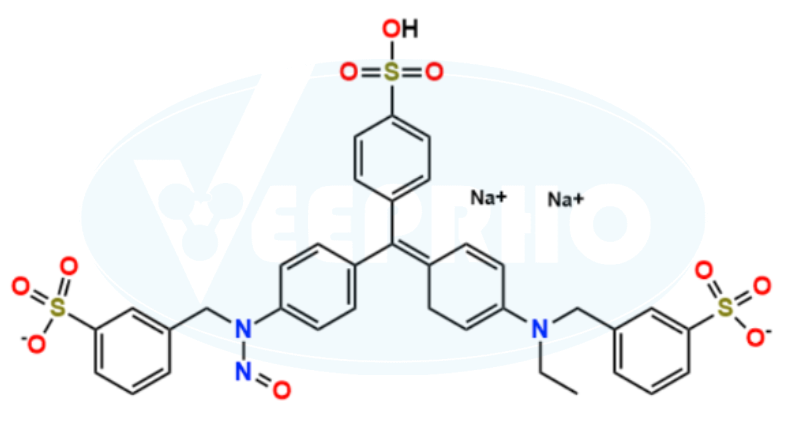
- N-Nitroso Brilliant Blue Impurity-1 VE0028816
- N-Nitroso Brilliant Blue Impurity-1; Synthesis Attempts and Failure Report (NAP Test) (Starting Material Brilliant Blue dye) VE0023118
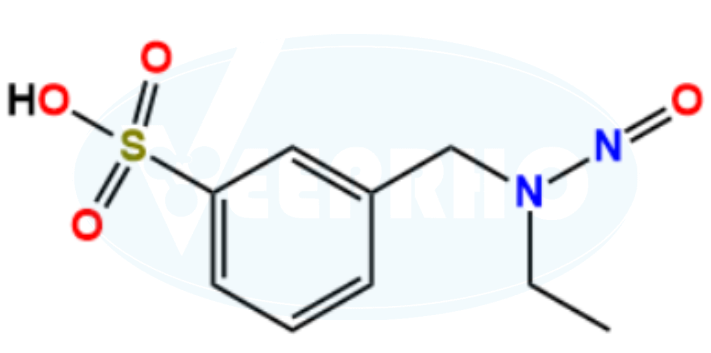
- N-Nitroso Brilliant Blue Impurity-2 VE0028818
- N-Nitroso Brilliant Blue Impurity-2; Synthesis Attempts and Failure Report VE0028819
- N-Nitroso Brilliant Blue Impurity-3 VE0028817
- N-Nitroso Brilliant Blue Impurity-3 ; Synthesis Attempts and Failure Report VE0026331

1–3 of 3 results
| Structure | Product Name |
|---|---|
| N-Nitroso Brilliant Blue Impurity-1VE0028816 | |
| N-Nitroso Brilliant Blue Impurity-2VE0028818 | |
| N-Nitroso Brilliant Blue Impurity-3VE0028817 |
Brilliant Blue and Related Compound
Commercial grades contain a main dye fraction together with low levels of structurally related byproducts and inorganic residues that derive from synthesis and isolation. Typical food grade material specifications report a dye assay in the high 80s to mid 90s percent range on a dried basis, with total related organic compounds commonly controlled to below about 5 percent by weight, and pharmaceutical grade material commonly controlled to below about 2 percent by weight. Individual related compounds and isomeric sulfonation products are usually present at trace to low percentage levels, most often below 1 percent each. Inorganic contaminants such as residual salts and sulfates are monitored and reported as part of standard quality tests; elemental impurities for critical applications are controlled to low parts per million levels and verified by ICP-MS. Residual solvents are normally absent or at trace concentrations that comply with applicable limits. Identification and quantification of impurities is typically performed by HPLC with reference standards, supported by spectroscopic methods as needed.
FAQ
What is a brilliant blue?
Brilliant blue is a synthetic triarylmethane dye known commercially as Brilliant Blue FCF or Blue 1; it is a water soluble disodium trisulfonated compound used to impart blue color in a variety of food, pharmaceutical and technical applications.
What is brilliant blue used for?
Brilliant blue is used as a colorant in processed foods, beverages, confections, medications, dietary supplements, personal care products and some diagnostic reagents; it is selected for its intense blue hue, high water solubility and compatibility with common formulation ingredients.
What is brilliant color?
In this context brilliant color refers to the high chroma and strong visible absorption of the dye that produces an intense, saturated blue at low concentration; formulation factors such as solvent, pH, ionic strength and presence of other dyes influence the perceived brilliance.