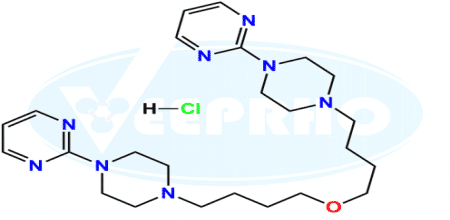
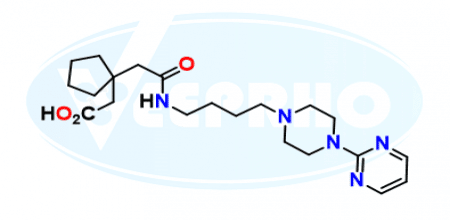
Buspirone is used to treat anxiety disorders or for the short-term treatment of symptoms of anxiety. It belongs to a class of medications called anxiolytics, which work by altering the levels of certain natural substances in the brain to help manage anxiety. Unlike benzodiazepines, Buspirone does not produce sedative effects and is considered non-habit-forming, making it suitable for long-term anxiety management. Buspirone works as a serotonin 5-HT1A receptor partial agonist, balancing serotonin levels and reducing anxiety symptoms over time. It is typically taken orally with consistent dosing.

Parent: Buspirone

Parent: Buspirone

Parent: Buspirone

Parent: Buspirone
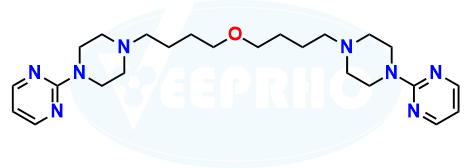
Parent: Buspirone

Parent: Buspirone

Parent: Buspirone

Parent: Buspirone

Parent: Buspirone
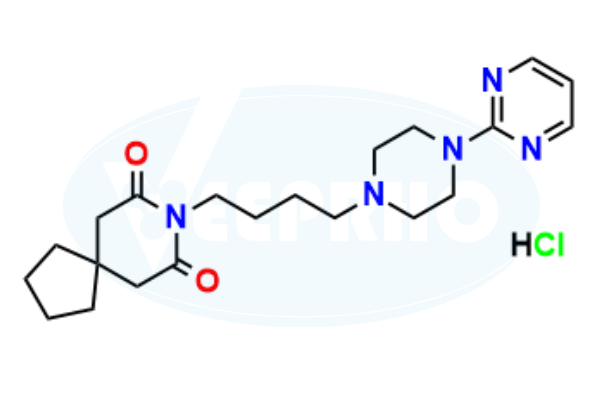
Parent: Buspirone Hydrochloride
![7,9-Dioxo-8-azaspiro[4.5]decane-8-butanoic Acid](https://veeprho.com/wp-content/uploads/2025/01/VE0022882-7-9-Dioxo-8-azaspiro-4-5-decane-8-butanoic-Acid.png "7,9-Dioxo-8-azaspiro[4.5]decane-8-butanoic Acid")
Parent: Buspirone
During the production and storage of Buspirone, impurities may form, which must be controlled to ensure the drug’s safety and efficacy. Regulatory authorities, such as the U.S. Food and Drug Administration (FDA) and the European Medicines Agency (EMA), set guidelines on permissible impurity levels in Buspirone formulations.
No, Buspirone is not like Xanax. While both drugs are used to treat anxiety, Buspirone is a non-benzodiazepine anxiolytic, which does not cause sedation or dependence like Xanax. Xanax is a benzodiazepine with quick-acting effects, whereas Buspirone works gradually and is better suited for long-term anxiety management.
The most common side effects of Buspirone include dizziness, drowsiness, and headaches. These effects are typically mild and may subside as the body adjusts to the medication.
Yes, Buspirone can help reduce anxiety symptoms and provide a calming effect, though it works gradually. It doesn’t produce immediate calming effects like some other anxiety medications, but with regular use, it helps to alleviate generalized anxiety over time.
Buspirone usually takes several weeks (typically 2-4) to produce noticeable effects in reducing anxiety symptoms. It’s important to take it consistently as prescribed, as it does not work on an “as-needed” basis.