
Frovatriptan Impurities
Request a quote for a set
- Request quote for this set
All USP impurities of Frovatriptan
2 productsSee the 2 products
- D-Camphor Sulfonic Acid VE0020100
CAS 3144-16-9 - Frovatriptan Racemate VE0020098
CAS 147009-08-3
- D-Camphor Sulfonic Acid VE0020100
- Request quote for this set
All nitrosamine impurities of Frovatriptan
3 productsSee the 3 products
- Frovatriptan Nitroso Impurity 1 VE0010499
- Frovatriptan Nitroso Impurity 2 VE0010501
- N,N-dinitroso Frovatriptan VE0024126


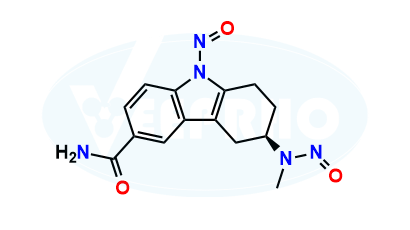
1–14 of 14 results12 in stock
| Structure | Product Name |
|---|---|
| D-Camphor Sulfonic AcidCAS No. 3144-16-9 · VE0020100 · In stock | |
| Frovatriptan Impurity 6CAS No. 29280-23-7 · VE0017895 · In stock | |
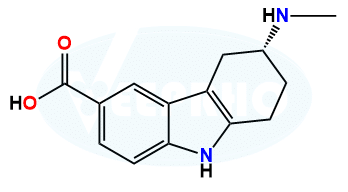 | Frovatriptan Impurity 9VE0016441 · In stock |
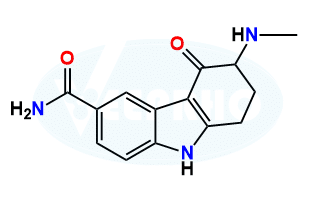 | Frovatriptan Impurity 11VE0016442 · In stock |
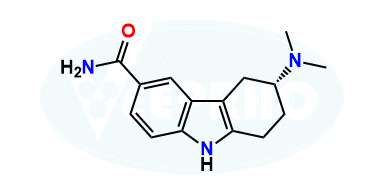 | Frovatriptan N6-Methyl ImpurityVE0017894 · In stock |
| Frovatriptan Nitroso Impurity 1VE0010499 | |
| Frovatriptan Nitroso Impurity 2VE0010501 | |
| Frovatriptan RacemateCAS No. 147009-08-3 · VE0020098 · In stock | |
| Frovatriptan Succinate Impurity ACAS No. 147009-17-4 · VE0020099 · In stock | |
| N,N-dinitroso FrovatriptanVE0024126 · In stock | |
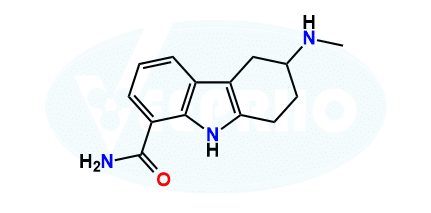 | rac-Frovatriptan 1-Carboxamide AnalogVE0017891 · In stock |
 | (8R)-Hydroxy FrovatriptanVE0017890 · In stock |
| (R)-3-Amino-2,3,4,9-tetrahydro-1H-carbazole-6-carboxamideCAS No. 147008-88-6 · VE0020892 · In stock | |
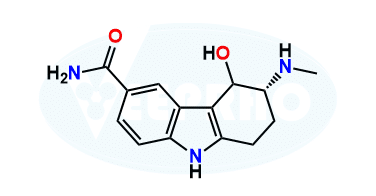 | 5-Hydroxy FrovatriptanVE0017893 · In stock |
Frovatriptan hydroxytoluene and Related Compound
Impurity control for frovatriptan active pharmaceutical ingredient and finished product typically targets low limits for both specified and unspecified related substances consistent with ICH Q3A and Q3B expectations; common industry specifications set individual specified impurities up to 0.1 to 0.3 percent weight by weight, unspecified impurities no greater than 0.10 percent, and total impurities generally not to exceed about 1.0 percent, with specific limits adjusted based on toxicological qualification. Typical related compounds and degradants observed or monitored during synthesis, manufacture, and stability testing include N-desmethyl-frovatriptan, N-oxide derivatives, hydroxylated positional isomers, synthetic precursors and intermediates, ring-opening or cleavage products, and residual solvent species; control strategies include optimized synthetic route selection, impurity-tracking by LC with MS and UV detection, forced-degradation studies to establish degradation pathways, and adherence to residual solvent and heavy metal limits per ICH Q3C and pharmacopeial monographs.
FAQ
Is frovatriptan stronger than sumatriptan?
Strength depends on the metric used. Frovatriptan is not typically described as pharmacologically stronger than sumatriptan; rather it has a longer elimination half-life and slower onset, which yields prolonged duration of action and lower headache recurrence. Sumatriptan often produces faster initial pain relief at its commonly used oral doses, while frovatriptan provides more sustained control for some patients, particularly for menstrual migraine.
Does frovatriptan cause weight gain?
Weight gain is not a recognized or common adverse effect of frovatriptan in clinical trials or postmarketing experience. Reported adverse reactions are more frequently transient effects such as fatigue, dizziness, paresthesia, chest discomfort or sensations of pressure, and gastrointestinal symptoms. If a patient perceives weight change after starting any medication, evaluation for alternative causes and a review with the prescriber are appropriate.
How fast does frovatriptan work?
Frovatriptan has a relatively slow onset compared with several other triptans; time to peak plasma concentration is typically about 2 to 4 hours and many patients experience meaningful pain relief within 2 to 4 hours after dosing. Its long half-life of approximately 25 to 26 hours contributes to sustained effect and reduced recurrence, but acute onset is generally slower than for faster-acting agents such as sumatriptan.