
Gatifloxacin Impurities
Request a quote for a set
- Request quote for this set
All USP impurities of Gatifloxacin
3 productsSee the 3 products
- Gatifloxacin Related Compound A VL239001
CAS 616205-76-6 - Gatifloxacin Related Compound D VL239004
CAS 112811-57-1 - Gatifloxacin Related Compound E VL239005
CAS 1029364-65-5
- Gatifloxacin Related Compound A VL239001
- Request quote for this set
All nitrosamine impurities of Gatifloxacin
6 productsSee the 6 products
- Dinitroso-Methyl piperazine Gatifloxacin VE008163
CAS 55556-94-0 - N-Nitroso Gatifloxacin VE008153
- N-Nitroso of GAT-II VE008154
- N-Nitroso-3-Methyl Piperazine Impurity VE008376
- Nitroso HPED [Nitroso Hydroxy Propylethyl Diamine] VE008152
- Nitroso Quinoline Ester Gatifloxacin VE008162
- Dinitroso-Methyl piperazine Gatifloxacin VE008163
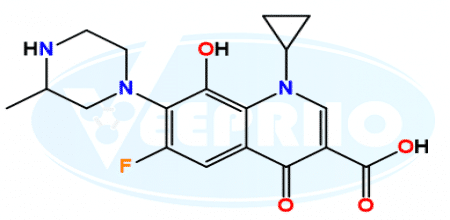
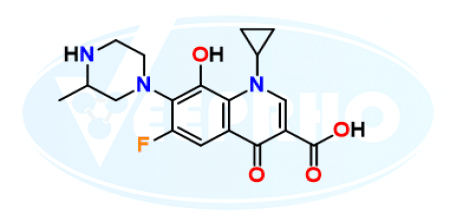
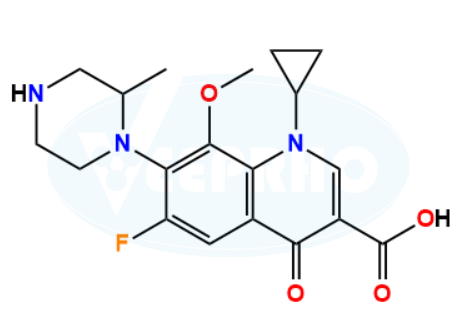


1–18 of 18 results17 in stock
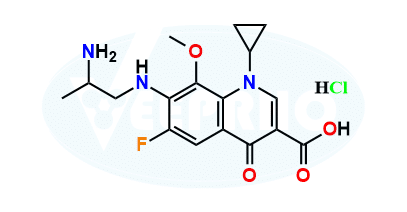
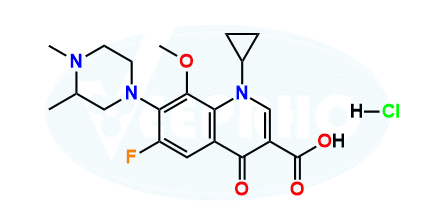

Gatifloxacin Related Compound
Impurities in gatifloxacin can arise during chemical synthesis, formulation, or storage, and must be controlled under ICH guidelines to ensure drug safety and efficacy.
Types of Impurities in Gatifloxacin
Process-Related Impurities
- Unreacted starting materials from fluoroquinolone ring synthesis
- Residual solvents (e.g., acetonitrile, methanol)
- Synthetic by-products from piperazine or carboxylation steps
Degradation Impurities
- Photodegradation products, as gatifloxacin is sensitive to light
- Oxidation products under exposure to air
- Hydrolysis products in aqueous formulations, especially under improper pH
Elemental Impurities
- Trace metals like iron, copper, or palladium from catalysts and manufacturing equipment
Analytical Techniques for Impurity Detection
- High-Performance Liquid Chromatography (HPLC)
- Gas Chromatography (GC)
- Mass Spectrometry (MS)
- Nuclear Magnetic Resonance (NMR)
- Inductively Coupled Plasma Mass Spectrometry (ICP-MS) for elemental impurities
FAQ
What is gatifloxacin used for?
Gatifloxacin is used to treat bacterial eye infections , particularly bacterial conjunctivitis . It was also previously used orally for respiratory and urinary tract infections , but these formulations have been discontinued in many countries due to safety concerns. As an ophthalmic solution, it is prescription-only and applied directly to the eye .
Why was gatifloxacin taken off the market?
Oral gatifloxacin was withdrawn in several countries, including the United States , because of its association with serious glucose metabolism disturbances , including hyperglycemia (high blood sugar) and hypoglycemia (low blood sugar) . However, topical formulations (eye drops) are still available and are considered safe and effective for localized eye infections.
Is gatifloxacin safe for the eyes?
Yes, gatifloxacin ophthalmic solution is generally well tolerated and safe for use in the eyes when prescribed. Side effects may include mild eye irritation , redness , blurred vision , or tearing , but serious reactions are rare.
Is gatifloxacin a strong antibiotic?
Yes, gatifloxacin is considered a strong, broad-spectrum antibiotic , effective against both Gram-positive and Gram-negative bacteria . It is especially potent against fluoroquinolone-sensitive strains of Staphylococcus , Streptococcus , and Haemophilus