
Impurezas de Mitomycin
Solicitar cotação de um conjunto
- Solicitar cotação para este conjunto
Todas as impurezas EP de Mitomycin
4 produtosVer os 4 produtos
- Mitomycin EP Impurity A VE0020295
CAS 621-79-4 - Mitomycin EP Impurity B VE008993
CAS 4055-39-4 - Mitomycin EP Impurity C VE0016729
CAS 4055-40-7 - Mitomycin EP Impurity D VE0016771
CAS 111750-67-5
- Mitomycin EP Impurity A VE0020295
- Solicitar cotação para este conjunto
Todas as impurezas de nitrosaminas de Mitomycin
2 produtosVer os 2 produtos
- N-Nitroso Moxifloxacin Impurity 7 VE0018538
- N-Mitroso Mitomycin C VE0024794
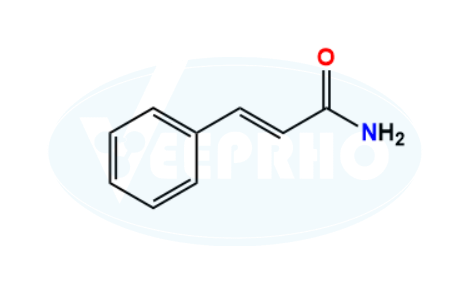

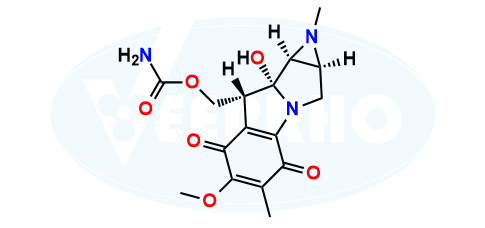
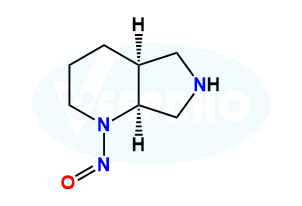
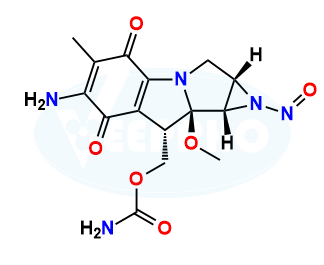
1–9 de 9 resultados5 em estoque
| Estrutura | Nome do produto |
|---|---|
| Mitomycin EP Impurity ANº CAS 621-79-4 · VE0020295 · Em estoque | |
| Mitomycin EP Impurity BNº CAS 4055-39-4 · VE008993 | |
| Mitomycin EP Impurity CNº CAS 4055-40-7 · VE0016729 | |
| Mitomycin EP Impurity DNº CAS 111750-67-5 · VE0016771 · Em estoque | |
| Mitomycin Related Compound 1Nº CAS 99745-88-7 · VE007031 | |
| Mitomycin Related Compound 2Nº CAS 98462-75-0 · VE007032 | |
| N-Mitroso Mitomycin CVE0024794 · Em estoque | |
| N-Nitroso Moxifloxacin Impurity 7VE0018538 · Em estoque | |
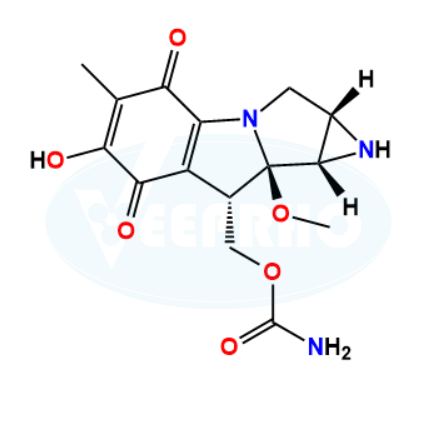 | 7-Hydroxy MitomycinNº CAS 7041-61-4 · VE0020414 · Em estoque |
Mitomycin Impurities and Related Compound
Mitomycin APIs and finished products are characterized by related natural congeners and degradation products including mitomycin A and B, reduced mitosene derivatives, N-demethyl and other N-alkyl variants, hydrolysis products such as 7-hydroxy or deoxy derivatives, and oxidation/reduction products formed during storage or processing; typical quality specifications used by manufacturers and pharmacopeial monographs set assay limits and related-substance limits, for example assay within the label claim (commonly 95 to 105 percent of stated content) with specified impurities such as mitomycin A and B often limited to low subpercent levels (for example each not more than 0.2 percent w by w), individually unspecified impurities typically controlled below 0.1 to 0.5 percent, and total related substances commonly limited to approximately 1.0 to 2.0 percent depending on the monograph and formulation, with acceptance criteria and analytical methods (HPLC with validated stability-indicating conditions) defined per regulatory guidance and manufacturer batch specifications.
Perguntas frequentes
Is mitomycin a chemo or immunotherapy?
Mitomycin is a cytotoxic chemotherapy agent in the antineoplastic antibiotic class; it acts by bioreductive activation to form DNA crosslinks and is not an immunotherapy.
What is the risk of mitomycin?
Risks include dose-related myelosuppression, local tissue injury with extravasation or intravesical irritation, renal impairment, pulmonary toxicity, and rare hemolytic uremic syndrome; long term risks include potential for secondary malignancies and cumulative organ toxicity, so patient selection and monitoring are important.
Which is better, BCG or mitomycin?
BCG and mitomycin serve different clinical roles for nonmuscle invasive bladder cancer; BCG is an immunotherapy often preferred for high-risk disease because it reduces progression risk, while mitomycin is a chemotherapeutic intravesical agent commonly used for low- to intermediate-risk disease or when BCG is contraindicated or not tolerated; the optimal choice depends on tumor risk stratification, prior therapy, patient factors, and institutional protocols.
How does mitomycin work for bladder cancer?
For intravesical bladder cancer treatment, mitomycin is instilled into the bladder where it penetrates tumor urothelium and undergoes local bioreductive activation to alkylating species that crosslink DNA and induce tumor cell death, while limited systemic absorption reduces systemic toxicity compared with intravenous administration; dwell time, concentration, and bladder mucosal integrity affect local efficacy.