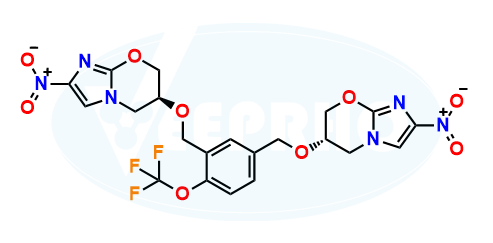
A pretomanida é um antibiótico usado para o tratamento da tuberculose multirresistente pulmonar. Em geral é utilizada em conjunto com bedaquilina e linezolida. É administrada por via oral. A pretomanida pertence à classe química das nitroimidazo-oxazinas e é um pró-fármaco ativado no interior do Mycobacterium tuberculosis pela nitrorredutase Ddn, dependente de desazaflavina, com o cofator F420, produzindo espécies reativas de nitrogênio que comprometem a síntese de ácidos micólicos e prejudicam o metabolismo respiratório, tanto em condições aeróbias quanto anaeróbias. O esquema oral aprovado no protocolo BPaL utiliza pretomanida 200 mg uma vez ao dia, com alimentos, durante o período de tratamento definido. Considerações-chave de desenvolvimento e uso incluem administração com alimentos para melhorar a exposição, metabolismo primário envolvendo enzimas CYP, com potencial de interações medicamentosas, especialmente com indutores fortes de CYP3A, meia-vida terminal compatível com posologia de uma vez ao dia e monitoramento de segurança para efeitos hepáticos, prolongamento do intervalo QT quando combinada com outros agentes que prolongam o QT e toxicidades aditivas, como neuropatia periférica, quando usada com linezolida.
Typical quality specifications for pretomanid drug substance and tablets align with ICH-related-substance and impurity control principles: assay by validated HPLC 98.0 to 102.0 percent; total related substances not more than 1.0 percent by area; any single unspecified impurity not more than 0.2 percent by area; specified known related compounds and degradants set at tighter limits depending on toxicologic qualification for each impurity, for example a primary process-related impurity limited to 0.5 percent, a key oxidative or reduced degradant limited to 0.2 percent, and genotoxic or structurally related nitro-reduction products limited to 0.1 percent or below where warranted by qualification data. Residual solvents are controlled per ICH Q3C with Class 2 solvents below established ppm limits, elemental impurities are controlled per ICH Q3D, and total impurities in finished product are verified by stability studies to remain within specification across shelf life.
Perguntas frequentes
What is a pretomanid?
Pretomanid is an oral nitroimidazooxazine-class antibiotic used as part of a combination regimen to treat pulmonary multi-drug-resistant and extensively drug-resistant tuberculosis; it is a prodrug that requires activation by mycobacterial enzymes to exert bactericidal effects against M. tuberculosis.
Is pretomanid a new drug?
Pretomanid received regulatory approval in recent years and is a relatively new treatment option for drug-resistant pulmonary tuberculosis, introduced after clinical trials established efficacy and safety as part of the BPaL regimen with bedaquiline and linezolid.
Is pretomanid available in India?
Availability varies by country and over time; access in India may be limited to national tuberculosis program channels, partner-supported programs, or special access schemes rather than broad retail distribution, so check current Indian regulatory listings and national TB program resources for up-to-date availability and access pathways.
What is the mechanism of action of delamanid and pretomanid?
Both delamanid and pretomanid are nitroimidazole-class prodrugs that require enzymatic reduction within M. tuberculosis; activation produces reactive species that inhibit mycolic acid synthesis and disrupt respiratory functions, with pretomanid activation dependent on the deazaflavin-dependent nitroreductase Ddn and cofactor F420, and both drugs can generate reactive nitrogen intermediates that contribute to bactericidal activity.