Impurezas de Ranolazine

A ranolazina é um medicamento para o coração usado para tratar a angina crônica (dor no peito). Não alivia episódios agudos de dor no peito, mas ajuda a melhorar o fluxo sanguíneo para o coração. É comercializada sob o nome comercial Ranexa.

Solicitar cotação de um conjunto

1–28 de 28 resultados28 em estoque
EstruturaNome do produtoNº CASNº cat.Disponibilidade
OOOHN+O−NONHLidocaine Dimer N-OxideFármaco: Lidocaine / RanolazineSinônimos: Ranolazine 4N-OxideC24H33N3O5Nº CAS 2725395-82-2 · VE0016054 · Em estoque2725395-82-2VE0016054Em estoque
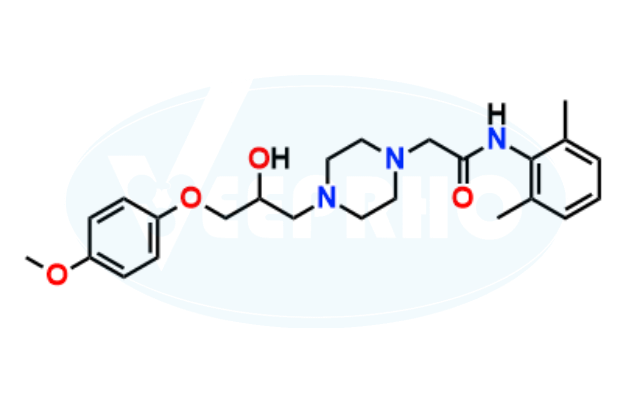
OOOHNNONHm-RanolazineC₂₄H₃₃N₃O₄Nº CAS 1393717-46-8 · VL770017 · Em estoque1393717-46-8VL770017Em estoque
OOOHNNONHN-(2,4-dimethylphenyl)-2-(4-(2-hydroxy-3-(2-methoxyphenoxy)propyl)piperazin-1-yl)acetamideC24H33N3O4VE0021719 · Em estoqueVE0021719Em estoque
ONHHON-(2,6-Dimethylphenyl)-2-hydroxyacetamideC10H13NO2Nº CAS 29183-14-0 · VE0010656 · Em estoque29183-14-0VE0010656Em estoque
OOOHNNONNON-Nitroso RanolazineC24H32N4O5VE0010066 · Em estoqueVE0010066Em estoque
OOHONNNON-Nitroso Ranolazine Impurity 1C14H21N3O4VE0010326 · Em estoqueVE0010326Em estoque
NNOONHNN-Nitroso Ranolazine Impurity 2C14H20N4O2VE0024720 · Em estoqueVE0024720Em estoque
NNOONNNON-Nitroso Ranolazine Impurity 3C14H19N5O3VE0024731 · Em estoqueVE0024731Em estoque
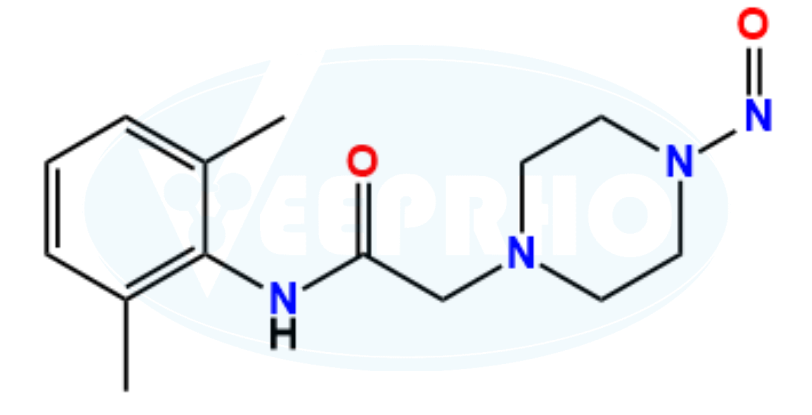
ONHNNNONitroso Piperazine AcetamideFármaco: RANOLAZINESinônimos: N-(2,6-Dimethylphenyl)-2-(4-nitrosopiperazin-1-yl)acetamideC14H20N4O2Nº CAS 3038740-93-8 · VE007754 · Em estoque3038740-93-8VE007754Em estoque
ONHNNOHOOp-RanolazineC24H33N3O4Nº CAS 1393717-45-7 · VL770016 · Em estoque1393717-45-7VL770016Em estoque
OOHONNOHOORanolazine Alcohol DimerC24H34N2O6Nº CAS 333749-57-8 · VL770010 · Em estoque333749-57-8VL770010Em estoque
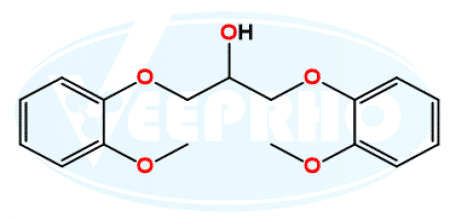
Estrutura de Ranolazine DianisylglycerolRanolazine DianisylglycerolC17H20O5Nº CAS 16929-60-5 · VL770019 · Em estoque16929-60-5VL770019Em estoque
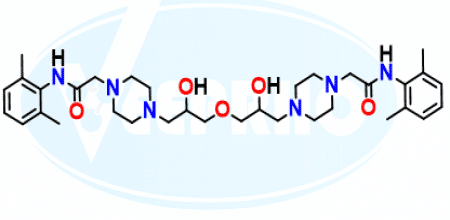
Estrutura de Ranolazine ether dimerRanolazine ether dimerC₃₃H₅₀N₆O₅VL770018 · Em estoqueVL770018Em estoque
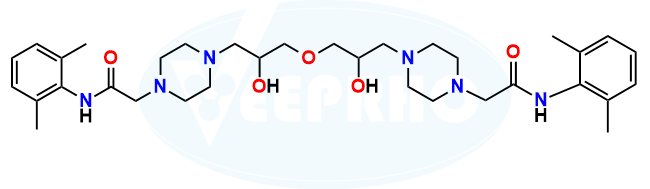
Estrutura de Ranolazine Impurity 3Ranolazine Impurity 3C34H52N6O5VE0019790 · Em estoqueVE0019790Em estoque
OOOHNNONHOOORanolazine Impurity CC34H45N3O7Nº CAS 2724549-66-8 · VE0021561 · Em estoque2724549-66-8VE0021561Em estoque
OOOHNHNRanolazine N-Desacetamido ImpurityC14H22N2O3Nº CAS 162712-35-8 · VL770015 · Em estoque162712-35-8VL770015Em estoque
OOOHN+O−N+O−ONHRanolazine N,N-Dioxide ImpurityC24H33N3O6Nº CAS 1246816-00-1 · VL770002 · Em estoque1246816-00-1VL770002Em estoque
OOOHOOONNONHRanolazine O-alkylated ImpurityC33H43N3O7VE0021717 · Em estoqueVE0021717Em estoque
NHONNOHHORanolazine O-desaryl impurityC₁₇H₂₇N₃O₃Nº CAS 172430-46-5 · VL770014 · Em estoque172430-46-5VL770014Em estoque
NHONNOHOOHRanolazine O-Desmethyl ImpurityC23H31N3O4Nº CAS 172430-45-4 · VL770021 · Em estoque172430-45-4VL770021Em estoque
OOORanolazine Related Compound AC10H12O3Nº CAS 2210-74-4 · VL770008 · Em estoque2210-74-4VL770008Em estoque
NHONNOHORanolazine Related Compound BC23H31N3O3Nº CAS 755711-09-2 · VL770009 · Em estoque755711-09-2VL770009Em estoque
NHONHNRanolazine Related Compound CC14H21N3ONº CAS 5294-61-1 · VL770004 · Em estoque5294-61-1VL770004Em estoque
NHONNONHRanolazine Related Compound DC24H32N4O2Nº CAS 380204-72-8 · VL770003 · Em estoque380204-72-8VL770003Em estoque
OOOHNNONH(S)-2-(4-(2-hydroxy-3-(2-methoxyphenoxy)propyl)piperazin-1-yl)-N-(p-tolyl)acetamideC23H31N3O4VE0021877 · Em estoqueVE0021877Em estoque
ONHNHNHH2N2-((2-((2-aminoethyl)amino)ethyl)amino)-N-(2,6-dimethylphenyl)acetamideC14H24N4OVE0029068 · Em estoqueVE0029068Em estoque
OOOHNNONH2-(4-(2-hydroxy-3-(2-methoxyphenoxy)propyl)piperazin-1-yl)-N-(o-tolyl)acetamideC23H31N3O4VE0021721 · Em estoqueVE0021721Em estoque
NHONNOHOCl2-(4-(3-(2-chlorophenoxy)-2-hydroxypropyl)piperazin-1-yl)-N-(2,6-dimethylphenyl)acetamideC23H30ClN3O3VE0021715 · Em estoqueVE0021715Em estoque

Ranolazine Related Compound

Impurities in Ranolazine may arise due to synthesis, degradation, or storage conditions. These impurities must comply with ICH Q3A/Q3B guidelines to ensure drug purity and safety.

Types of Impurities in Ranolazine

  1. Process-Related Impurities
  • Unreacted intermediates from synthesis
  • Residual solvents (e.g., ethanol, methanol, acetone)
  • By-products from manufacturing
  1. Degradation Impurities
  • Oxidative degradation (due to oxygen exposure)
  • Hydrolytic degradation (moisture-induced breakdown)
  • Photodegradation (chemical changes from light exposure)
  1. Elemental Impurities
  • Heavy metals (e.g., lead, arsenic, mercury, cadmium)
  • Residual catalysts from synthesis

Analytical Techniques for Impurity Detection

  • High-Performance Liquid Chromatography (HPLC)
  • Gas Chromatography (GC)
  • Fourier-Transform Infrared Spectroscopy (FT-IR)
  • Mass Spectrometry (MS)

Perguntas frequentes

What does ranolazine do for the heart?

Ranolazine helps improve blood flow to the heart by reducing the sodium and calcium overload in heart cells, allowing the heart to function more efficiently without increasing heart rate or blood pressure.

What is the mechanism of action of ranolazine?

Ranolazine inhibits the late sodium current (INa) in cardiac cells , preventing calcium overload and reducing myocardial oxygen demand, thus relieving chronic angina symptoms .

Is ranolazine a calcium channel blocker?

No, ranolazine is not a calcium channel blocker . It works by modulating sodium and calcium levels in heart cells, rather than directly blocking calcium channels.

What drug group is ranolazine?

Ranolazine belongs to the anti-anginal medication It is classified as a late sodium current inhibitor , a unique mechanism compared to traditional anti-anginal drugs like beta-blockers or nitrates.