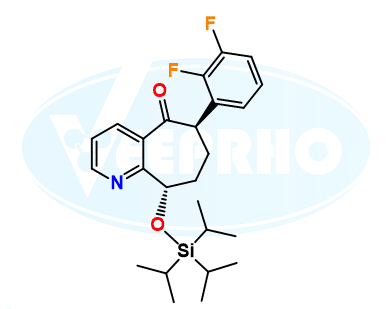
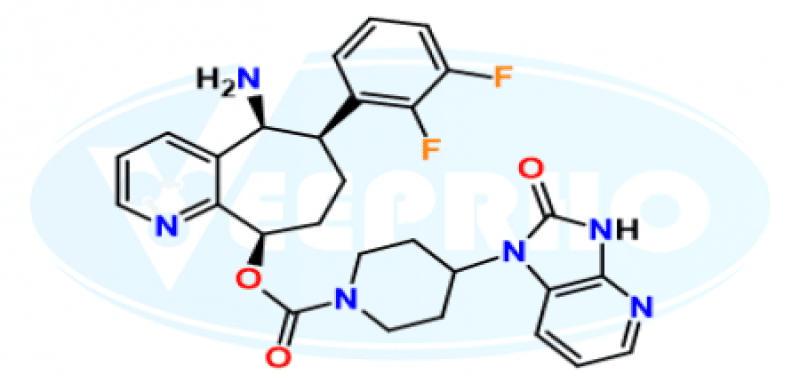
O rimegepante, comercializado sob o nome comercial Nurtec ODT, entre outros, é um medicamento usado para o tratamento agudo da enxaqueca com ou sem aura em adultos e para o tratamento profilático/ preventivo da enxaqueca episódica em adultos. É tomado por via oral para dissolver sobre a língua, na forma de comprimido orodispersível. O rimegepante é um antagonista de molécula pequena do receptor do peptídeo relacionado ao gene da calcitonina, da classe dos gepantes, que se liga seletivamente ao receptor de CGRP para bloquear a vasodilatação e a inflamação neurogênica mediadas pelo CGRP implicadas na fisiopatologia da enxaqueca. As características farmacocinéticas clinicamente relevantes incluem absorção oral rápida, com concentrações plasmáticas máximas normalmente em cerca de 1 a 2 horas, meia-vida de eliminação da ordem de 11 horas e metabolismo principalmente via CYP3A4, com envolvimento menor de CYP2C9; as vias renal e biliar respondem pela excreção do composto original e dos metabólitos. O fármaco tem atividade vasoconstritora mínima em comparação com os agonistas de 5-HT1B/1D e é formulado como comprimido orodispersível para permitir a administração sem água quando necessário.
Impurity control for rimegepant covers process-related impurities, degradation products from stress conditions, residual solvents and elemental impurities, and specified related compounds arising from synthesis and purification. Typical quality specifications follow global regulatory guidance and limit individual known related compounds to low parts per thousand or parts per ten thousand ranges, often controlled to about 0.05 to 0.20 percent by weight for specified impurities and with total impurities maintained below approximately 1.0 percent by weight depending on the manufacturer specification; unspecified impurities are typically controlled at tighter reporting and identification thresholds. Residual solvents are limited according to ICH Q3C classifications and elemental impurities are controlled per ICH Q3D. Analytical methods commonly used for profiling include HPLC with UV or MS detection, LC-MS for identification of unknowns, and forced-degradation studies to define degradants for shelf life and stability programs.
Perguntas frequentes
What kind of drug is rimegepant?
Rimegepant is a small-molecule CGRP receptor antagonist in the gepant class indicated for acute treatment of migraine attacks and for preventive treatment of episodic migraine in adults; it is an orally disintegrating tablet formulation.
What is the mechanism of action of rimegepant?
Rimegepant binds selectively to the calcitonin gene-related peptide receptor and blocks CGRP signaling, reducing CGRP-driven vasodilation and neurogenic inflammation that contribute to migraine pain and associated symptoms.
What are the side effects of rimegepant?
Common adverse events reported in clinical studies include nausea, somnolence and dry mouth; most events are mild to moderate. Rimegepant has not been associated with the vasoconstrictive effects seen with triptans, but hepatic and hypersensitivity reactions are monitored in postmarketing surveillance. Clinically relevant drug interactions can occur with strong CYP3A4 inhibitors or inducers.
Is rimegepant the same as sumatriptan?
No, Sumatriptan is a triptan that acts as a 5-HT1B/1D receptor agonist and exerts migraine relief in part through cranial vasoconstriction. Rimegepant is a CGRP receptor antagonist and does not cause the same vasoconstrictive action, so their mechanisms, safety profiles and some clinical considerations differ.