
Impurezas de Sunitinib
Solicitar cotação de um conjunto
- Solicitar cotação para este conjunto
Todas as impurezas de nitrosaminas de Sunitinib
5 produtosVer os 5 produtos
- N-(2-(ethyl(nitroso)amino)ethyl)-2,4-dimethyl-1H-pyrrole-3-carboxamide VE0010010
- N-(2-(ethyl(nitroso)amino)ethyl)-5-formyl-2,4-dimethyl-1H-pyrrole-3-carboxamide VE0010011
- N-Nitroso Sunitinib VE0015661
- Tert-butyl 4-((2-(ethyl(nitroso)amino)ethyl)carbamoyl)-3,5-dimethyl-1H-pyrrole-2-carboxylate VE0010009
- N-Nitroso N-Desethyl Sunitinib VE0010012


1–20 de 20 resultados18 em estoque
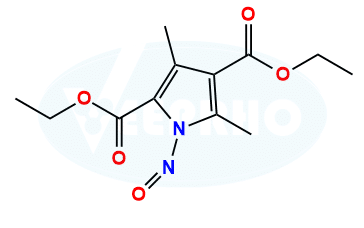
Sunitinib Related Compound
Impurities in Sunitinib can arise due to chemical synthesis, degradation, or improper storage conditions. Regulatory agencies such as the FDA, EMA, and ICH enforce impurity limits to ensure drug safety and efficacy.
Types of Impurities in Sunitinib
Process-Related Impurities
- Unreacted intermediates from chemical synthesis
- Residual solvents (e.g., methanol, ethanol, dichloromethane)
- By-products from multi-step kinase inhibitor synthesis
Degradation Impurities
- Oxidation products due to exposure to oxygen or light
- Hydrolysis impurities from moisture exposure
- Thermal degradation products from high-temperature conditions
Elemental Impurities
- Heavy metals from catalysts used in synthesis
- Trace levels of arsenic, cadmium, lead, and mercury
Analytical Techniques for Impurity Detection
- High-Performance Liquid Chromatography (HPLC)
- Gas Chromatography (GC)
- Mass Spectrometry (MS)
- Fourier-Transform Infrared Spectroscopy (FT-IR)
Perguntas frequentes
Is Sunitinib a chemo drug?
Sunitinib is not a traditional chemotherapy drug , but it is a targeted therapy that inhibits specific signaling pathways involved in cancer growth . It is classified as a tyrosine kinase inhibitor (TKI) and works differently from standard chemotherapy, which affects rapidly dividing cells.
What is the mechanism of action of Sunitinib?
Sunitinib works by inhibiting multiple receptor tyrosine kinases (RTKs) , including: Vascular endothelial growth factor receptors (VEGFR-1, VEGFR-2, VEGFR-3) Platelet-derived growth factor receptors (PDGFR-α, PDGFR-β) Stem cell factor receptor (c-KIT) By blocking these pathways, Sunitinib reduces tumor angiogenesis (blood supply) and tumor cell proliferation , leading to cancer cell death.
Is Sunitinib a VEGF inhibitor?
Yes, Sunitinib is a VEGF inhibitor , as it blocks vascular endothelial growth factor receptors (VEGFRs) , preventing tumor blood vessel formation ( angiogenesis ).
How long can you stay on Sunitinib?
The duration of Sunitinib treatment varies based on: Type and stage of cancer Patient response to treatment Side effects and tolerability Typically, Sunitinib is given in 6-week cycles (4 weeks on, 2 weeks off) for RCC and GIST. Some patients remain on Sunitinib for months or years as long as they tolerate it and the cancer remains controlled.